Reading Technique Selector
Match your goal to the perfect reading method
What is your current goal?
Select a goal on the left to see the recommended technique and a quick-start guide.
The Bird's Eye View
Use this when you need the gist without the details.
- Read headings and subheadings.
- Read the first and last sentences of paragraphs.
- Linger on bolded terms and bulleted lists.
- Skip anecdotal evidence or long descriptions.
The Search-and-Rescue Mission
Use this when you are hunting for specific data.
- Define your "target word" (e.g., "I'm looking for a date").
- Ignore all words that don't match your target pattern.
- Move eyes in a zigzag or "S" pattern.
- Stop only when the keyword is hit.
The Deep Dive
Use this for total mastery and precision.
- Slow down and read every word deliberately.
- Highlight key phrases and write margin notes.
- Stop to look up unfamiliar vocabulary.
- Reread complex paragraphs multiple times.
The Long Game
Use this for pleasure, fluency, and stamina.
- Read for the overall flow and enjoyment.
- Avoid stopping for every unknown word.
- Guess meanings from surrounding context clues.
- Focus on volume rather than minute detail.
Quick Takeaways
- Skimming: Fast glance to get the gist.
- Scanning: Hunting for a specific fact or keyword.
- Intensive Reading: Deep dive for total mastery.
- Extensive Reading: Reading for pleasure and general fluency.
When we talk about reading techniques is the strategic approach a reader uses to extract information from a text based on their specific goals. Whether you're studying for a certification or just trying to clear your email inbox, using the wrong method is a waste of time. Think of it like driving: you don't use a tractor to commute to the city, and you don't use a sports car to plow a field. You need the right tool for the job.
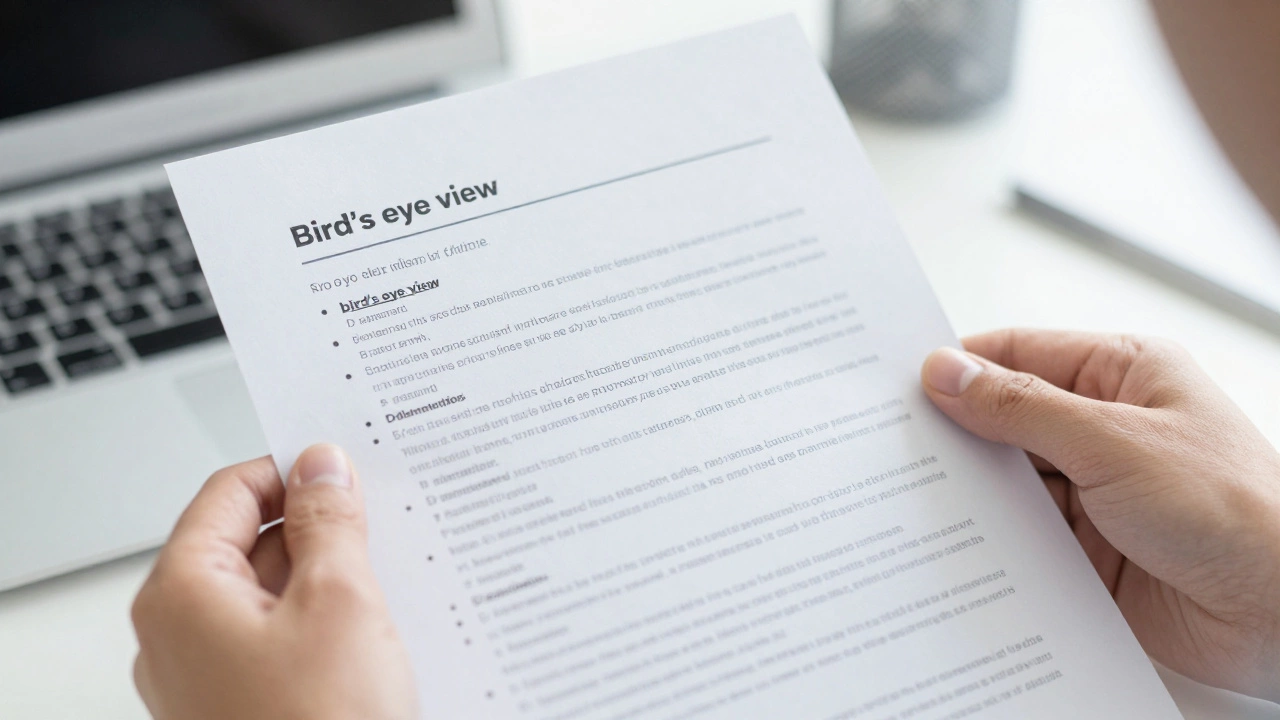
Skimming: The Bird's Eye View
Imagine you've just been handed a 20-page white paper on Artificial Intelligence and you have exactly three minutes to decide if it's worth reading. You aren't going to read every word. Instead, you use skimming. This is a high-speed technique where you focus on the structural elements of the text to grasp the main idea without getting bogged down in the details.
To skim effectively, your eyes should jump to headings, subheadings, and the first and last sentences of paragraphs. You're looking for the "skeleton" of the argument. If you see a bolded term or a bulleted list, linger there for a second. If you see a long paragraph of anecdotal evidence, skip it. The goal here isn't 100% comprehension; it's about understanding the general theme and the author's intent. For example, if you're browsing a news site, you skim the headlines and the first paragraph (the lead) to decide which story deserves your full attention.
Scanning: The Search-and-Rescue Mission
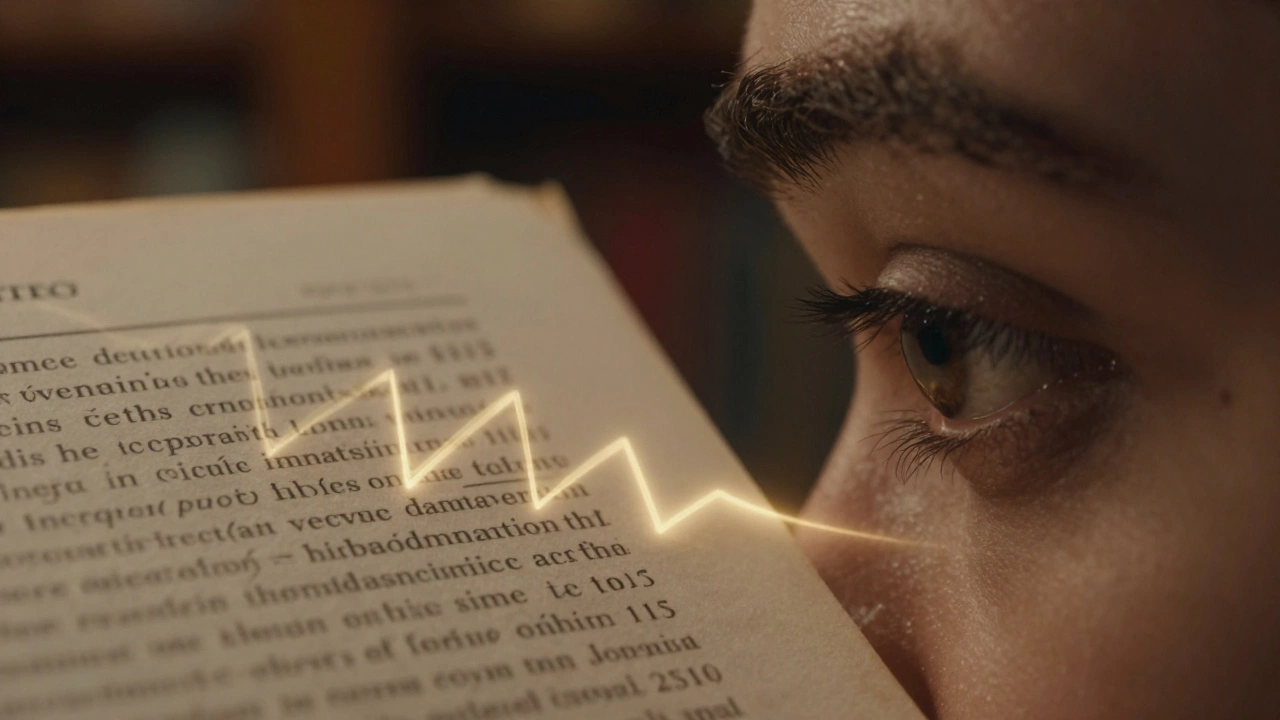
Scanning is different from skimming because you already know what you're looking for. You aren't trying to understand the "vibe" of the text; you're hunting for a specific piece of data. Think of it like using Ctrl+F but with your eyes. You might be looking for a date, a name, or a specific price in a contract.
When you scan, you ignore everything that doesn't match your target. If you're looking for the year a company was founded, your brain should ignore all verbs and adjectives and only look for numbers. Your eyes move in a zigzag or a "S" pattern across the page. A great real-world example is looking at a restaurant menu. You don't read every item from top to bottom; you scan the "Desserts" section specifically for the word "Chocolate." Once your eye hits that keyword, you stop and read the surrounding details.
| Feature | Skimming | Scanning |
|---|---|---|
| Goal | General overview / Gist | Specific information |
| Eye Movement | Fast, following structure | Rapid jumping, seeking keywords |
| Focus Point | Headings, Intro/Outro sentences | Numbers, Proper nouns, Dates |
| Outcome | "I know what this is about." | "I found the answer." |
Intensive Reading: The Deep Dive
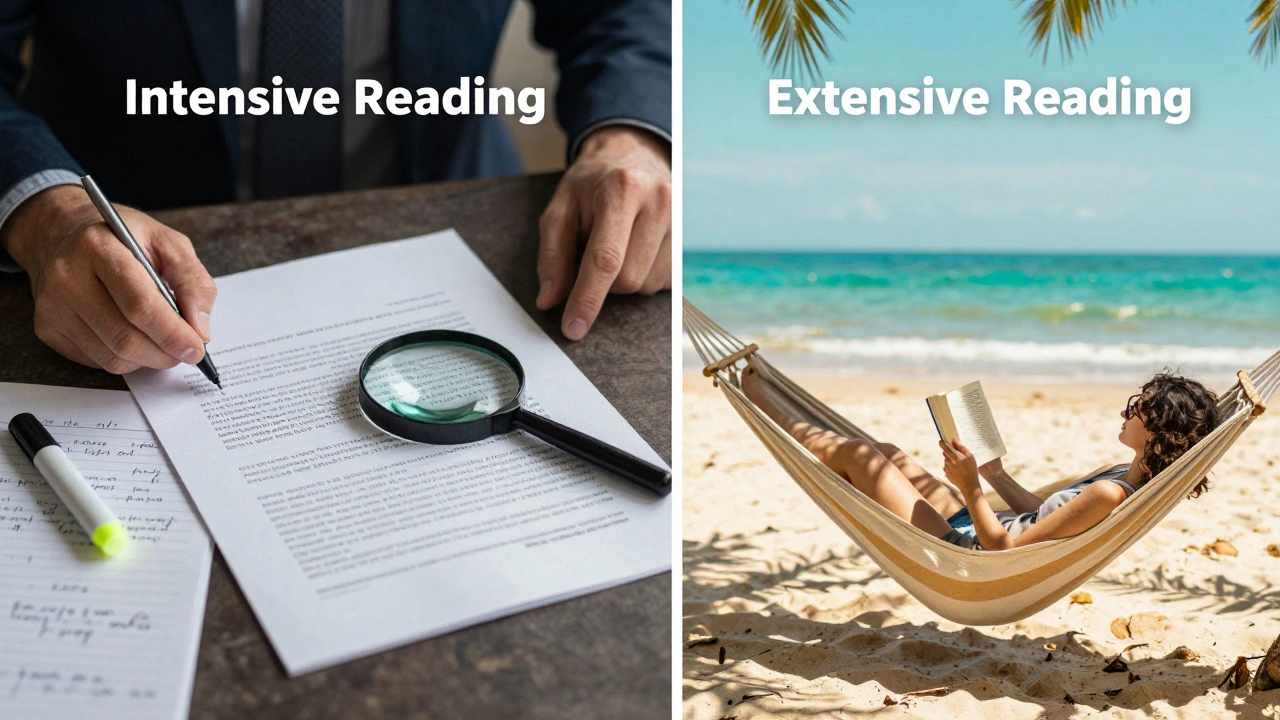
This is where reading techniques transition from speed to precision. Intensive reading is a slow, deliberate process where you aim for complete understanding. You aren't just absorbing information; you're analyzing it. This is the technique used for legal contracts, academic journals, or learning a new language.
In this mode, you often engage in Active Reading. This means you're highlighting key phrases, writing notes in the margins, and questioning the author's logic. If you encounter a word you don't know, you stop and look it up. You might read the same paragraph three times to ensure you've captured the nuance of a complex argument. For instance, if you're studying a Case Study for a business degree, you can't afford to miss a single detail because the entire conclusion depends on the specific data points provided in the text.
Extensive Reading: The Long Game
Extensive reading is the opposite of intensive reading. It's about volume and enjoyment. When you read a novel on the beach or a biography of your favorite athlete, you're reading extensively. You aren't stopping to look up every rare word, and you aren't trying to memorize the structure. You're letting the flow of the story carry you.
The primary value of extensive reading is that it builds "reading fluency." Because you're reading for pleasure, you're more likely to read longer texts, which subconsciously improves your vocabulary and your ability to recognize patterns in language. It reduces the mental friction of reading. If you only ever do intensive reading, you'll get exhausted quickly. Extensive reading provides the mental stamina needed for the harder work. It's the difference between a focused gym session (intensive) and going for a long, relaxing walk (extensive).
How to Choose the Right Technique
The biggest mistake people make is staying in one mode for too long. To maximize your efficiency, you should layer these techniques. Most professional readers use a pipeline: they start by scanning the table of contents, skim the introduction and conclusion, and then apply intensive reading only to the sections that actually matter.
Ask yourself: "What is my goal right now?"
- "I need to know if this book is useful." $ ightarrow$ Skim.
- "I need to find the deadline in this email." $ ightarrow$ Scan.
- "I need to learn how to implement this software." $ ightarrow$ Intensive.
- "I want to relax and enjoy a story." $ ightarrow$ Extensive.
By consciously choosing your approach, you stop fighting the text and start using it. You'll find that you can "read" more in a day than you used to in a week, simply because you've stopped treating every word as if it has the same weight. Some words are just noise; some are the signal. Your job is to find the signal as fast as possible.
Can I combine scanning and skimming in one session?
Absolutely. In fact, that's the most efficient way to work. You might skim a chapter to see if the main argument is relevant, and then immediately switch to scanning to find the specific data point that supports that argument. Switching between these modes allows you to filter out irrelevant information quickly.
Does intensive reading slow down my overall reading speed?
Yes, but that's the point. Speed is a liability when accuracy is required. Trying to read a medical prescription or a tax law using skimming techniques could lead to dangerous mistakes. The goal isn't to read fast; the goal is to read at the speed required for the specific task.
How do I improve my scanning speed?
The best way to improve scanning is to define your "target word" before you start. If you're looking for a date, tell yourself "I am looking for numbers." This primes your brain to ignore alphabetical characters and only trigger when a digit appears, which significantly reduces the amount of mental processing required per line.
Is extensive reading actually useful for learning a language?
Yes, it's one of the most powerful tools for language acquisition. While intensive reading teaches you grammar rules, extensive reading exposes you to how those rules are used naturally in context. It allows you to guess the meaning of words from surrounding clues, which is how the human brain naturally learns language.
What is the biggest pitfall of skimming?
The biggest risk is "confirmation bias." Because you're only reading bits and pieces, it's easy to project your own assumptions onto the text and believe the author is saying something they aren't. Always verify your skimmed conclusions with a few targeted intensive reads of the key sections.
Next Steps for Better Reading
If you're feeling overwhelmed by your reading list, start with a "triage" approach. Take your current stack of books or articles and categorize them. Which ones require an intensive deep dive, and which ones are just for general awareness? Once you categorize the material, apply the corresponding technique. You'll likely find that you can clear half your list using only skimming and scanning, leaving you more time for the deep, intensive work that actually moves the needle in your personal and professional life.