Book Review Trust Analyzer
Paste a review snippet below or check the attributes you see in a review to determine if it's a "Gold Mine" review or just "Noise".
Green Flags (Helpful)
Red Flags (Suspicious)
Analyzing...
Enter the attributes of the review to see the result.
The real value of a review isn't just a star rating. It's about finding a match for your specific mood. Some people love a slow-burn plot that takes 200 pages to get moving; others want a thriller that hits the ground running. A review acts as a filter, saving you from the 'DNF' (Did Not Finish) pile and guiding you toward a book that actually resonates with your current headspace.
Quick Summary of the Value of Reviews
- Risk Mitigation: Prevents wasting time and money on books that don't fit your taste.
- Discovery: Helps you find niche authors or genres you wouldn't normally browse.
- Context: Provides warnings about content or pacing that a blurb hides.
- Community: Connects you with other readers to discuss theories and emotional payoffs.
The Reader's Perspective: Why We Trust (and Distrust) Them
For most readers, a review is a shortcut. When you're staring at a wall of 5,000 titles on Amazon, you need a way to narrow it down. Goodreads is a social cataloging website that allows users to track books they've read and write reviews. It has become the gold standard for many, but it also introduces the 'herd mentality.' If a book has 10,000 five-star reviews, you feel like you're missing out on a cultural moment.
But there's a flip side. Have you ever read a glowing review for a book, only to find it boring? That's because taste is subjective. A professional critic from The New York Times might praise a book for its complex prose and structural experimentation, while a casual reader might find it pretentious and unreadable. The 'worth' of a review depends entirely on whose perspective you are reading.
The Author's Struggle: The Double-Edged Sword
For writers, reviews are a lifeline and a nightmare. In the modern publishing world, Algorithmic Discovery is the process by which online retailers use ratings and reviews to determine which books are promoted to new customers. If a book has a low average rating, it effectively disappears from the search results.
Many authors now rely on ARC Readers (Advance Review Copy readers) to build momentum before a launch. These are people who get a free copy in exchange for an honest review. While this helps with visibility, it can sometimes lead to "review inflation," where people are too nice because they got the book for free. This is where the value of the review starts to dip; when the feedback is too polished to be honest, it stops being a helpful tool for the buyer.
The Rise of "BookTok" and Social Reviews
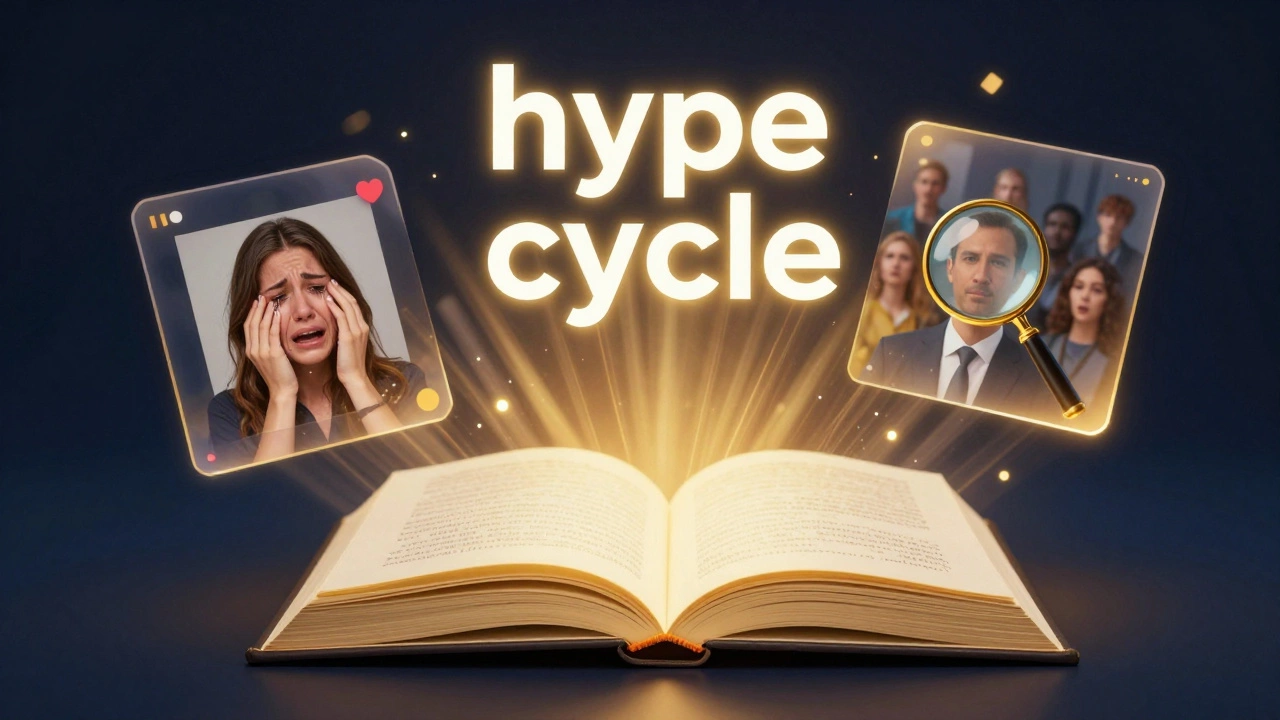
We've moved beyond the written paragraph. BookTok, a subcommunity of TikTok, has completely changed how books are marketed. Instead of a detailed analysis of themes, you get a 15-second clip of someone crying over a fictional character. Is this a "review"? Technically, no. But it's an emotional endorsement.
These short-form reviews are worth it if you care more about the vibe than the craft. If you want a book that will make you feel a specific emotion, a viral video is more useful than a 1,000-word essay in a literary journal. However, the danger here is the "hype cycle." A book can be praised into oblivion by influencers, only for the actual reading experience to feel hollow because the expectations were set impossibly high.
Comparing Different Types of Reviews
Not all reviews are created equal. Depending on what you're looking for, you should look in different places.
| Review Source | Best For... | Main Weakness | Trust Level |
|---|---|---|---|
| Professional Critics | Literary quality & craft | Can feel elitist or detached | High (Expertise) |
| Goodreads/Amazon | General consensus & tropes | Review bombing & fake reviews | Medium (Crowdsourced) |
| BookTok/Bookstagram | Emotional impact & aesthetics | Lack of depth; high hype | Low to Medium (Vibe-based) |
| Personal Friends | Perfect taste matching | Very limited sample size | Very High (Personal) |

How to Spot a Helpful Review
To make reviews actually "worth it," you have to learn how to read them. Most people just look at the stars, but that's a mistake. A star rating tells you nothing about why someone liked a book. To find the gold, look for specific attributes:
- The "Compare and Contrast": Look for reviews that say, "If you liked Project Hail Mary, you'll love this." This gives you a concrete benchmark for the style and tone.
- The Pacing Mention: If a reviewer mentions the book "starts slow but picks up in the second act," you know what to expect. This prevents the frustration of a slow start.
- The Content Warning: In the modern era, reviews often provide essential info about triggers or heavy themes that the publisher might have glossed over.
- The Critical Nuance: Avoid reviews that are just "Amazing!" or "Hated it!" Seek out the person who says, "The characters were great, but the ending felt rushed." That's where the real information lives.
The Pitfalls: When Reviews Do More Harm Than Good
There is a phenomenon known as "spoiler culture." Nothing kills the value of a review faster than a reader who summarizes the twist in the second paragraph. This has led to a defensive way of reading where we avoid reviews entirely for certain authors to preserve the surprise.
Then there's the issue of Review Bombing, which is the act of leaving a large number of negative reviews on a book for reasons unrelated to the quality of the writing, often due to political or social controversies. When a book is attacked for its ideas rather than its execution, the rating becomes a measure of social consensus rather than literary merit. In these cases, the reviews aren't worth it-they're just a battlefield.
Final Verdict: Are They Worth It?
Yes, but only if you use them as a compass, not a map. A review should give you a general direction, but the final destination-your opinion of the book-must be your own. If you rely too heavily on others' opinions, you stop trusting your own instincts and start reading for a checklist of traits rather than for pleasure.
The best way to use reviews is to find three or four "trusted readers"-people whose taste consistently aligns with yours. Whether it's a specific blogger or a friend in Sydney, their one-sentence recommendation is worth more than a thousand anonymous stars. Use the crowd for the general vibe, but use the experts for the craft, and use your friends for the truth.
Can I trust Amazon reviews for books?
Take them with a grain of salt. While they are great for seeing the general consensus, Amazon is prone to both "review stuffing" (fake positive reviews) and review bombing. Always look for reviews that provide specific examples of what they liked or disliked rather than generic praise.
Should I read reviews before starting a book?
It depends on your reading style. If you enjoy being surprised, avoid them. However, if you have limited time or a tight budget, reading a few reviews can help you avoid books that don't fit your current mood or taste.
What is the difference between a book review and a book critique?
A review is generally a recommendation-it tells you if you'll enjoy the book. A critique is a deeper analysis of the work's structure, themes, and literary merit, regardless of whether the critic "enjoyed" it or not.
Why do some books have high ratings but few reviews?
This usually happens with niche titles or new releases where a small, dedicated group of fans has read the book. It doesn't necessarily mean the book is better, just that the current audience is highly enthusiastic.
How do I write a review that actually helps others?
Avoid vague words like "good" or "bad." Instead, describe the pacing, the character growth, and the emotional tone. Mention who you think the book is for (e.g., "Perfect for fans of slow-burn mysteries") and be honest about what didn't work for you.