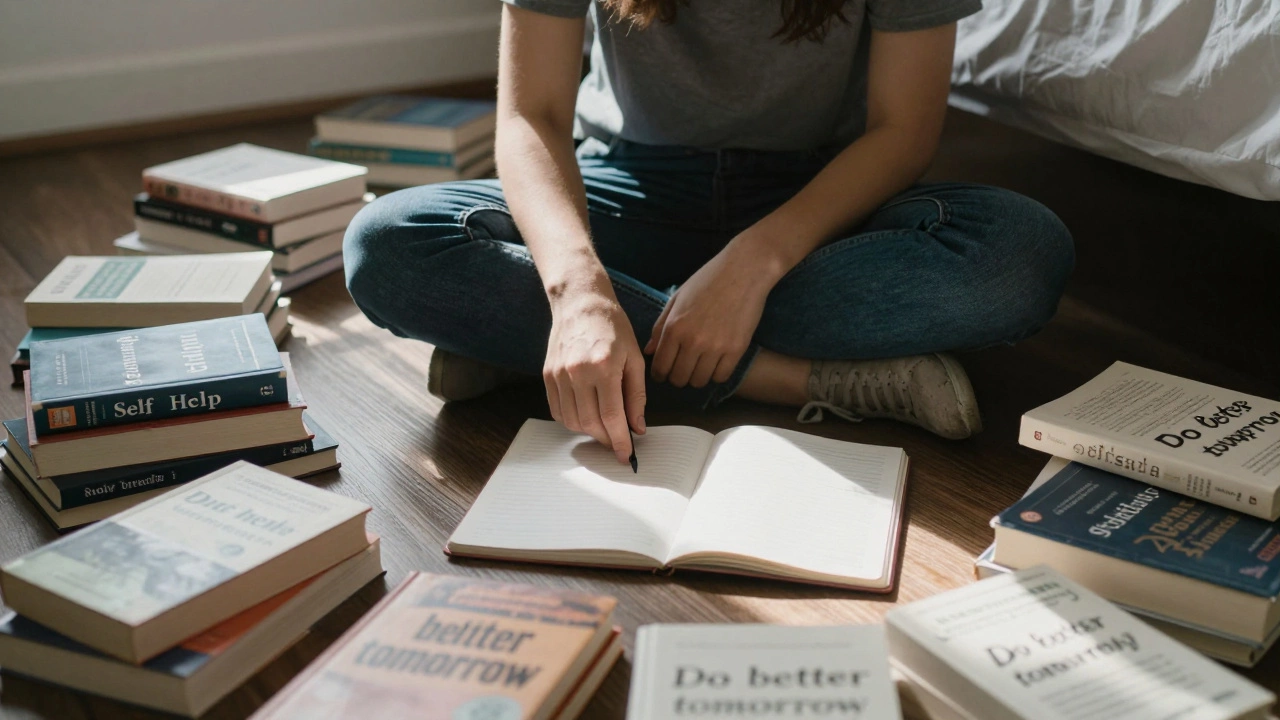
Self-Help Book Success Calculator
Only 18% of self-help readers report lasting change. This tool helps you assess your approach to self-help books based on key factors from research. Answer honestly to see if your reading habits lead to real action.
How Do You Use Self-Help Books?
Have you ever bought a self-help book with high hopes-only to finish it, feel motivated for a day, and then go right back to the same habits? You’re not alone. Millions of people buy these books every year. The global self-help market hit $15 billion in 2024. But how many actually change their lives because of them?
The promise vs. the reality
Self-help books promise transformation. Self-help books tell you how to get rich, find love, stop procrastinating, or finally be happy. They come with bold claims: "Change your life in 30 days," "Unlock your inner genius," "The one habit that changed everything."
But here’s the catch: most of these books don’t deliver what they promise. A 2023 study from the University of Sydney tracked 1,200 people who bought top-selling self-help books over a six-month period. Only 18% reported any lasting behavioral change. The rest felt briefly inspired-then slipped back into old patterns. Why?
Because self-help books rarely teach you how to build real habits. They give you ideas, not systems. They say "be more confident," but don’t show you how to practice confidence in real life. They say "stop overthinking," but don’t give you a step-by-step way to quiet your mind when anxiety hits at 2 a.m.
Why do they feel so convincing?
Self-help books are designed to feel personal. They use stories-real or fictionalized-about people who turned their lives around. You read about Sarah, a single mom who went from debt to six figures using "The 5-Minute Rule." You think, "That could be me."
But those stories are curated. They leave out the failed attempts, the relapses, the months of boredom before progress showed up. They don’t mention that Sarah also had a supportive partner, a flexible job, and no health issues. The book makes it look easy. Reality isn’t.
Also, the writing style tricks your brain. Short sentences. Bold statements. Repetition. It feels like a pep talk from someone who gets you. But it’s not therapy. It’s marketing.
When self-help books actually work
They’re not useless. Some do help-but only under specific conditions.
- You’re already motivated and ready to act
- You pick books with clear, actionable steps-not vague philosophy
- You pair reading with real-world practice
- You track progress, not just inspiration
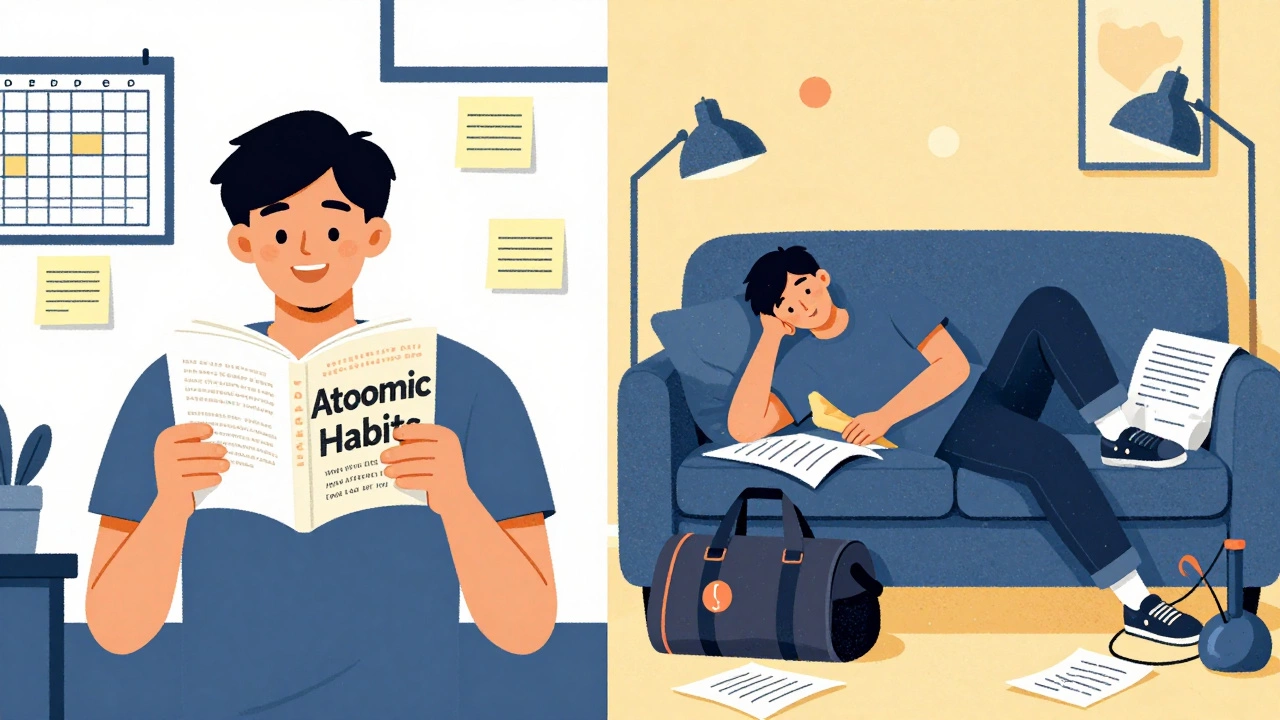
Take Atomic Habits by James Clear. It doesn’t say "be better." It says: "Stack one tiny habit on top of another. Make it so easy you can’t say no." That’s a system. People who followed the habit-stacking method saw real change-because they didn’t just read. They did.
Another example: The 7 Habits of Highly Effective People by Stephen Covey. It’s old, but it works for people who treat it like a workbook. They write down examples. They apply one habit at a time. They review weekly. That’s not reading. That’s training.
These books succeed because they give you something to do, not just something to believe.
The dark side of self-help
Not all self-help is harmless. Some books push dangerous ideas.
Books that say "think positive and money will flow" ignore systemic issues like wage gaps, discrimination, or mental illness. They blame the person for not being "positive enough" when they’re struggling with depression or financial stress.
Others promote toxic productivity: "You must wake up at 4 a.m. to be successful." Or "If you’re not growing, you’re failing." These messages make people feel guilty for resting, grieving, or taking a break.
There’s also the rise of "guru culture." Many self-help authors have no formal training in psychology or behavioral science. They sell books based on charisma, not evidence. A 2024 analysis by the Australian Psychological Society found that 67% of top-selling self-help books cited zero peer-reviewed research.
When you buy into that, you’re not investing in growth-you’re investing in a personality.
What actually changes people
Real change doesn’t come from a book. It comes from:
- Consistent small actions
- Accountability (a friend, coach, or journal)
- Feedback loops (tracking what works and what doesn’t)
- Time
Psychology research from Stanford and Harvard shows that behavior change happens through repetition, not revelation. One insight won’t rewire your brain. Three months of daily practice will.
Self-help books can be a starting point-but only if you treat them like a recipe, not a prayer.

How to pick a self-help book that won’t waste your time
Not all self-help is bad. Here’s how to pick one that might actually help:
- Look for authors with real credentials-psychologists, therapists, researchers-not just influencers.
- Check if they cite studies. Even one or two peer-reviewed references is a good sign.
- Does the book give you exercises? If it’s all stories and no action steps, walk away.
- Ask: "Can I do this tomorrow?" If the advice requires perfect conditions (no stress, no kids, no bills), it’s not realistic.
- Read one-star reviews. They often reveal what the book doesn’t say: "This didn’t work when I was depressed," or "Too vague to apply."
Good self-help books feel like a coach, not a cheerleader. They say: "This is hard. Here’s how to start. Keep going, even when it sucks."
Alternatives to self-help books
If you’re tired of reading and still stuck, try these instead:
- Therapy (even 6 sessions can shift your mindset)
- Coaching (especially for career or confidence issues)
- Journaling with prompts (not just gratitude lists-dig into why you feel stuck)
- Join a group (running club, writing circle, recovery group)
- Take a short course (Coursera, Skillshare, or even a local community class)
These work because they add human connection. Change doesn’t happen in isolation. Books can’t hold you accountable. A person can.
The bottom line
Self-help books aren’t magic. They’re tools. And like any tool, they only help if you use them right.
Don’t buy them to feel better. Buy them to do better. Read one page. Then do one thing. Repeat. That’s how real change happens-not from a chapter, but from a habit.
If you’ve read ten self-help books and still feel the same, it’s not you. It’s the books. They gave you ideas, not infrastructure. Time to build your own system.
Do self-help books actually change people’s lives?
Some do-but only if the reader takes action. Most people read for motivation, not implementation. Studies show that only about 1 in 5 people who buy self-help books make lasting changes. The difference? Those who succeed treat the book as a workbook, not a story. They write down plans, track progress, and repeat small actions daily.
Why do self-help books feel so inspiring but rarely lead to change?
They’re designed to trigger emotion, not behavior. They use storytelling, bold claims, and emotional language to make you feel understood and hopeful. But inspiration fades. Real change needs structure: clear steps, feedback, and repetition. Most self-help books skip the structure. They give you a spark, not a fire.
Are expensive self-help books worth the price?
Not usually. Price doesn’t equal quality. A $30 book with no research citations is no better than a $5 ebook from a librarian’s recommended list. Look for books that cite peer-reviewed studies or come from licensed professionals. Libraries and used bookstores often have the same titles for free or under $10.
Can self-help books make anxiety or depression worse?
Yes, if they promote toxic positivity. Books that say "just think happy thoughts" or "you’re attracting your problems" can make people feel guilty for struggling. This is especially harmful for those with clinical anxiety or depression. Mental health issues need professional support, not motivational quotes. If a book blames you for your pain, put it down.
What’s better than reading a self-help book?
Doing something. Therapy, coaching, journaling with prompts, joining a group, or taking a hands-on course. These provide feedback, accountability, and real-world practice. Change doesn’t happen in your head-it happens through action, repetition, and support from others. Books can guide you, but they can’t hold you accountable.
Should I stop reading self-help books altogether?
No-but be selective. If you enjoy reading and find a book that gives you clear, doable steps, keep going. But stop buying books just to feel better. Start treating them like tools: read one chapter, then do one thing. If you don’t act, you’re not reading-you’re consuming entertainment.
Next time you feel stuck, ask yourself: Am I reading to escape-or to act? The answer will tell you whether the next book you pick will help… or just collect dust.