Myth Reality Checker
Select a famous myth below to analyze its roots in reality versus fiction.
Likely Real Basis
Mythical Embellishment
Evidence Checklist
You pick up a book of Greek myths and read about Zeus hurling lightning bolts. You scroll through social media and see someone claiming that Atlantis was a real advanced civilization destroyed by a tsunami. Then you open a history textbook and see dry dates and verified archaeological finds. It leaves you wondering: is myth real or fake? The answer isn't a simple yes or no. It’s more like asking if a movie is "real." The actors are real, the emotions might be genuine, but the plot is constructed. Myths occupy a strange middle ground between hard historical fact and pure fantasy. They aren't just made-up stories to entertain kids; they are often coded memories of real events, exaggerated over thousands of years of oral tradition.
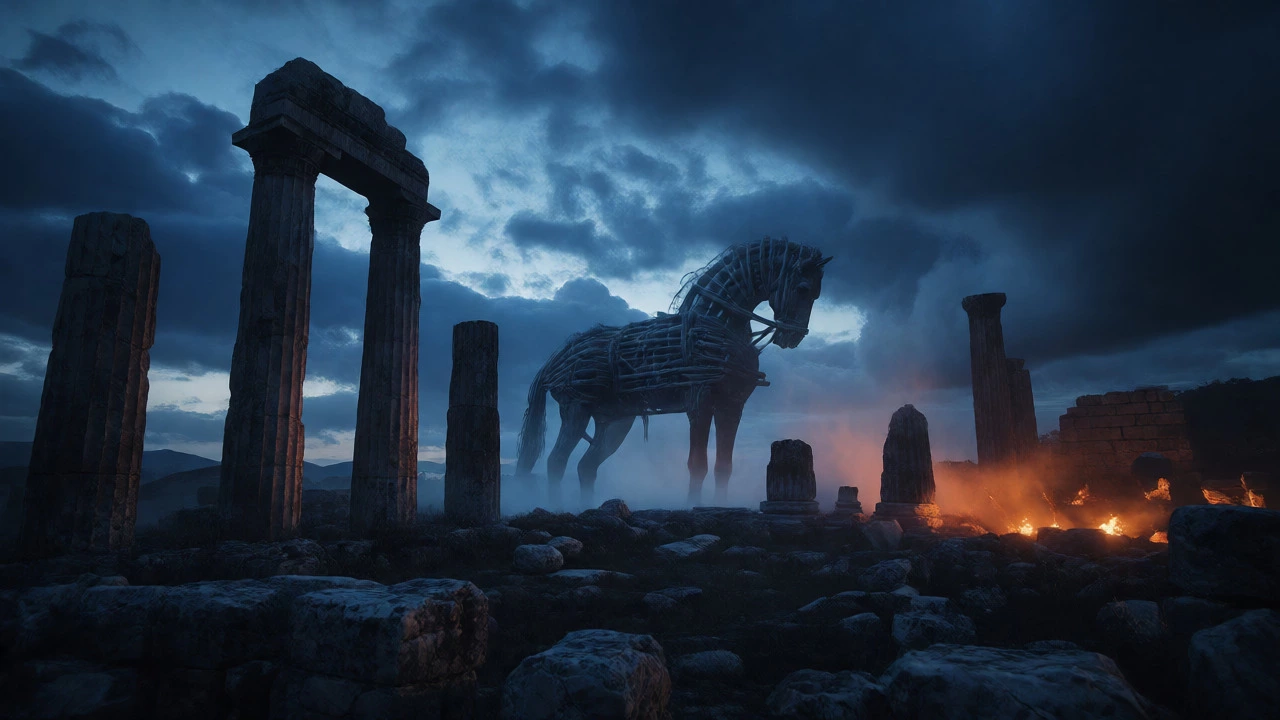
Think about the Trojan War. For centuries, scholars dismissed it as pure fiction-just Homer’s imagination running wild. Then Heinrich Schliemann dug up the ruins of Troy in modern-day Turkey. The city existed. The war likely happened. But did a wooden horse actually trick the Trojans? Probably not. Did Achilles have an invulnerable heel? Definitely not. This mix of concrete reality and supernatural embellishment is what makes myths so confusing yet so compelling. If you’re trying to figure out what’s true and what’s invented, you need to look at the layers beneath the story.
The Grain of Truth in Ancient Tales
Most myths start with something tangible. Humans are bad at remembering abstract concepts, but we are great at remembering dramatic narratives. When a massive volcano erupted on Santorini around 1600 BCE, destroying the Minoan civilization, survivors didn't write a scientific report. They told stories about gods being angry. Over generations, the details shifted, but the core event remained. This phenomenon is known as "euhemerism," the idea that gods were originally real humans who were deified after death. While modern historians don't take this literally for every deity, it highlights how human figures can morph into divine ones.
A prime example is King Arthur. Was he a real guy? Historians argue he might have been a Romano-British military leader who fought off Saxon invaders in the 5th or 6th century. The name "Arthur" appears in early Welsh poetry. However, the Round Table, Merlin, and the Holy Grail came much later, added by medieval French writers who wanted romantic adventure, not historical accuracy. So, is Arthur real? The person likely existed. The legend is fake. Recognizing this distinction helps you enjoy the story without getting frustrated by the lack of factual precision.
Science Explaining the Supernatural
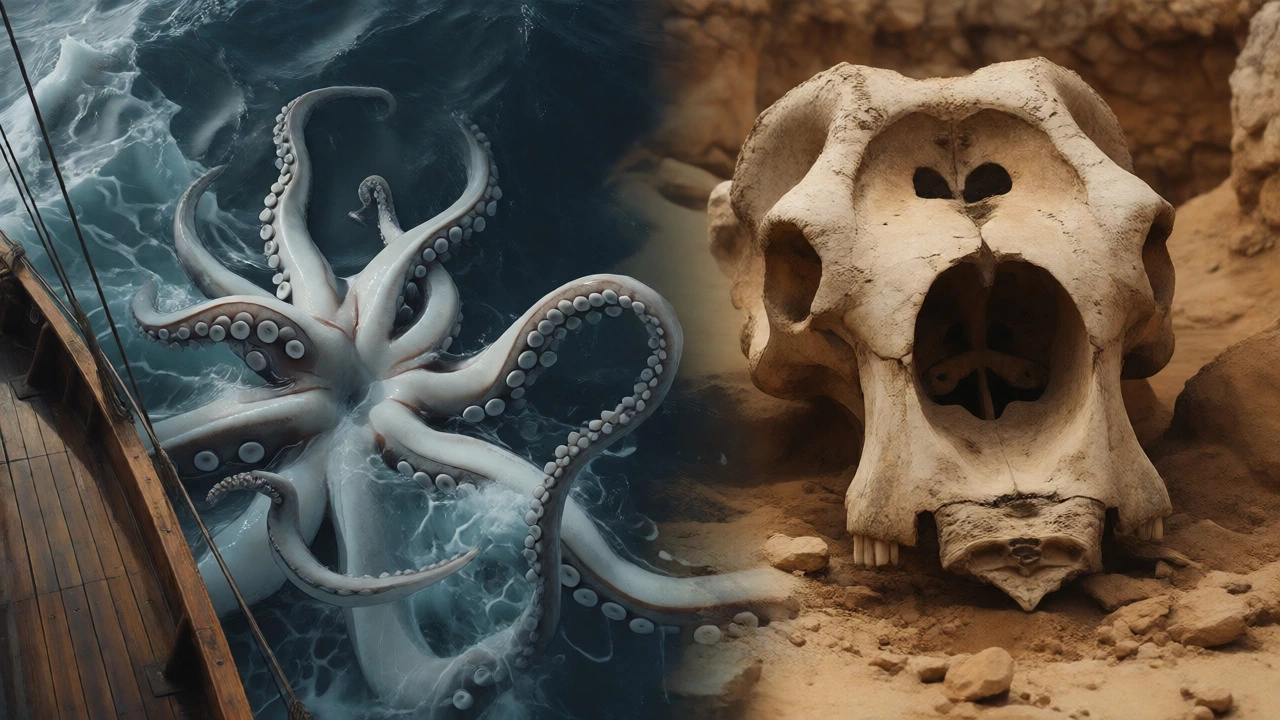
Sometimes, myths seem fake because they describe things people couldn't explain at the time. Today, science provides logical explanations for phenomena our ancestors attributed to magic. Take the myth of the Kraken, a giant sea monster said to drag ships under the waves. Sailors in the North Atlantic weren't seeing dragons; they were likely observing giant squid. These creatures can grow up to 43 feet long and have tentacles that look terrifyingly like serpents when seen from a rocking ship deck. The "monster" was real; the interpretation was mythical.
Consider the Cyclops. In Homer’s Odyssey, Odysseus encounters Polyphemus, a one-eyed giant. Many researchers believe this myth stems from fossil discoveries. Ancient Greeks digging in Sicily would find elephant skulls. These skulls have a large central hole (the nasal cavity) that looks exactly like a single eye socket. Without knowledge of prehistoric megafauna, finding such a skull would lead anyone to conclude that giants once walked the earth. Here, the physical evidence was real, but the conclusion drawn from it was a myth. This shows that myths are often early attempts at scientific observation, filtered through a lens of limited knowledge.
Cultural Memory vs. Historical Record
We judge myths by modern standards of journalism, where accuracy means matching video footage. But ancient cultures valued moral and cultural truth over chronological precision. A myth wasn't meant to be a newspaper article; it was a vessel for values. The story of Icarus flying too close to the sun isn't about aviation engineering. It’s a warning against hubris. Is it "fake" because wings don't melt from solar heat? No, it’s "true" in its psychological insight. When we ask if a myth is real, we should also ask if it carries emotional or sociological weight.
Indigenous Australian Dreamtime stories offer a powerful counter-example to Western skepticism. Some Aboriginal oral histories describe sea-level rises that occurred after the last Ice Age, roughly 7,000 to 10,000 years ago. Geologists confirm these coastlines changed during that period. Yet, these stories were passed down orally for millennia. How? Through rigorous mnemonic devices and songlines. This proves that myths can preserve accurate environmental data far longer than written records sometimes do. If a story survives that long with consistent geographical details, calling it "fake" ignores the sophisticated memory technologies of non-literate societies.
When Myths Become Misinformation
Not all myths hold up to scrutiny. Some are complete fabrications created for political propaganda or religious authority. The idea that Vikings wore horned helmets is a classic myth debunked by archaeology. There is zero evidence of horns in burial sites. The image was popularized by 19th-century opera costumes. Similarly, the notion that Napoleon Bonaparte was unusually short is largely a result of British propaganda and differences in measurement units between France and Britain at the time. He was actually average height for his era.
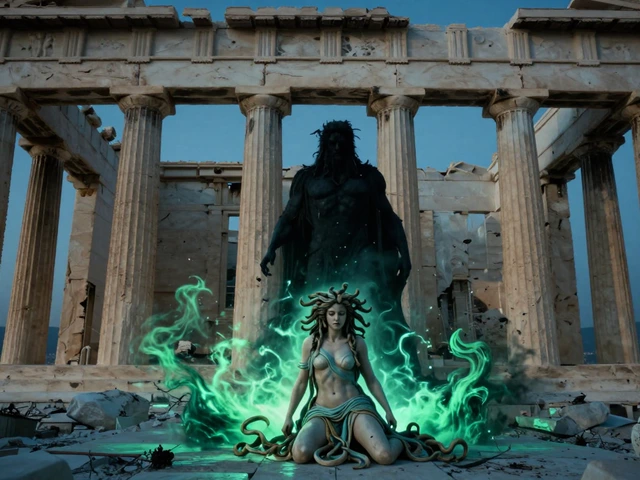
In the realm of Mythological Fiction, authors often blend these elements intentionally. Writers like Madeline Miller or Neil Gaiman take existing myths and recontextualize them. They aren't trying to present history; they are exploring character psychology. Confusing literary fiction with historical record leads to online debates that miss the point. If you read a novel about Medusa, you aren't reading a biography. You're engaging with a thematic exploration of trauma and victimhood. Distinguishing between creative reinterpretation and pseudo-history is crucial for critical thinking.

How to Spot the Difference
If you want to evaluate whether a specific myth has roots in reality, use this quick checklist:
- Archaeological Evidence: Has anything physical been found? Pottery shards, bones, or building foundations lend credibility to the setting, even if the characters are fictional.
- Cross-Cultural Parallels: Do similar stories exist in unrelated cultures? Flood myths appear globally, suggesting a shared experience of catastrophic flooding, rather than a single borrowed story.
- Scientific Plausibility: Can natural laws explain the event? Volcanic eruptions, earthquakes, and animal behavior can often account for "magical" occurrences.
- Source Timeline: How soon after the alleged event was it written down? A story written 500 years later is more likely to be distorted than one recorded within a generation.
Applying these filters doesn't kill the wonder. It actually enhances it. Knowing that the legend of Troy reflects real Bronze Age warfare makes the story more poignant. Understanding that the Phoenix might symbolize the Egyptian sun god Ra or the rising of Sirius adds layers of astronomical significance. The myth becomes a puzzle piece in human history, not just a fairy tale.
| Mythical Element | Likely Real Basis | Evidence Type |
|---|---|---|
| Trojan Horse | Earthquake weakening walls or siege tactics | Archaeological strata showing destruction by fire/collapse |
| Atlantis | Minoan civilization collapse (Thera eruption) | Geological ash layers & abrupt end of palace culture |
| Vampire Legends | Decomposition processes & disease outbreaks | Exhumation practices & historical plague records |
| King Kong/Giants | Dinosaur fossils or Megafauna remains | Paleontological findings interpreted by ancients |
Why We Still Need Myths
So, is myth real or fake? It’s both. It’s fake in the sense that literal interpretations rarely match forensic evidence. It’s real in the sense that it preserves human experiences, fears, and observations across millennia. We still create new myths today. Think about urban legends or internet creepypastas. They serve the same function: processing collective anxiety. The difference is speed. Ancient myths evolved slowly through campfires; modern myths spread via TikTok.
Embracing the ambiguity allows you to appreciate mythology on multiple levels. You can respect the historical kernel while enjoying the artistic exaggeration. Don't let skeptics dismiss these stories as mere lies, and don't let believers insist on literal truth. The power of myth lies in its ability to connect us to our ancestors' way of making sense of the world. Whether Zeus threw lightning or just got caught in a storm, the story tells us how humans felt watching the sky crack open. That feeling is undeniably real.
Are all myths based on true stories?
No, not all myths are based on specific historical events. While many contain kernels of truth, such as real places or disasters, others are purely allegorical, explaining natural phenomena like seasons or the movement of stars, or serving as moral lessons without any direct historical reference.
What is the difference between a myth, a legend, and a folktale?
A myth typically involves gods or supernatural beings and explains cosmic origins or natural phenomena. A legend is rooted in history and features human heroes, though exaggerated (like King Arthur). A folktale is primarily for entertainment, often featuring commoners and magical elements, with less concern for historical setting or religious significance.
Can science prove myths are false?
Science can disprove literal interpretations of myths, such as the existence of unicorns or magic spells. However, science often validates the underlying events, such as proving that floods described in myths actually occurred geologically. Thus, science refines the myth rather than simply erasing it.
Why do different cultures have similar myths?
Similarities arise from shared human experiences (fear of death, awe of storms) and universal psychological archetypes. Additionally, migration and trade led to the borrowing and adaptation of stories between neighboring cultures, resulting in parallel narratives across regions like Greece and India.
Is it wrong to treat myths as history?
It depends on the context. Treating them as strict historical records is inaccurate and misleading. However, treating them as cultural artifacts that reveal how ancient people viewed their world is highly valuable. Historians use myths to understand societal values, even if the events themselves are embellished.