Bible age: How old is the Bible and why it matters today
When we talk about the Bible, a collection of religious texts central to Christianity and influential across global culture. Also known as the Holy Bible, it's not just a book—it's a cultural force that has shaped laws, language, and literature for centuries. The Bible isn't one single document written at one time. It's a library of texts compiled over hundreds of years, with the oldest parts dating back more than 2,500 years. The Hebrew Bible, which forms the foundation of the Christian Old Testament, was written mostly between 1200 and 165 BCE. The New Testament, which tells the story of Jesus and the early church, was written in the first century CE, roughly 50 to 100 years after Jesus' death. So when someone asks "How old is the Bible?" the answer isn't simple—it's layered, ancient, and still alive in homes, libraries, and hotels around the world.
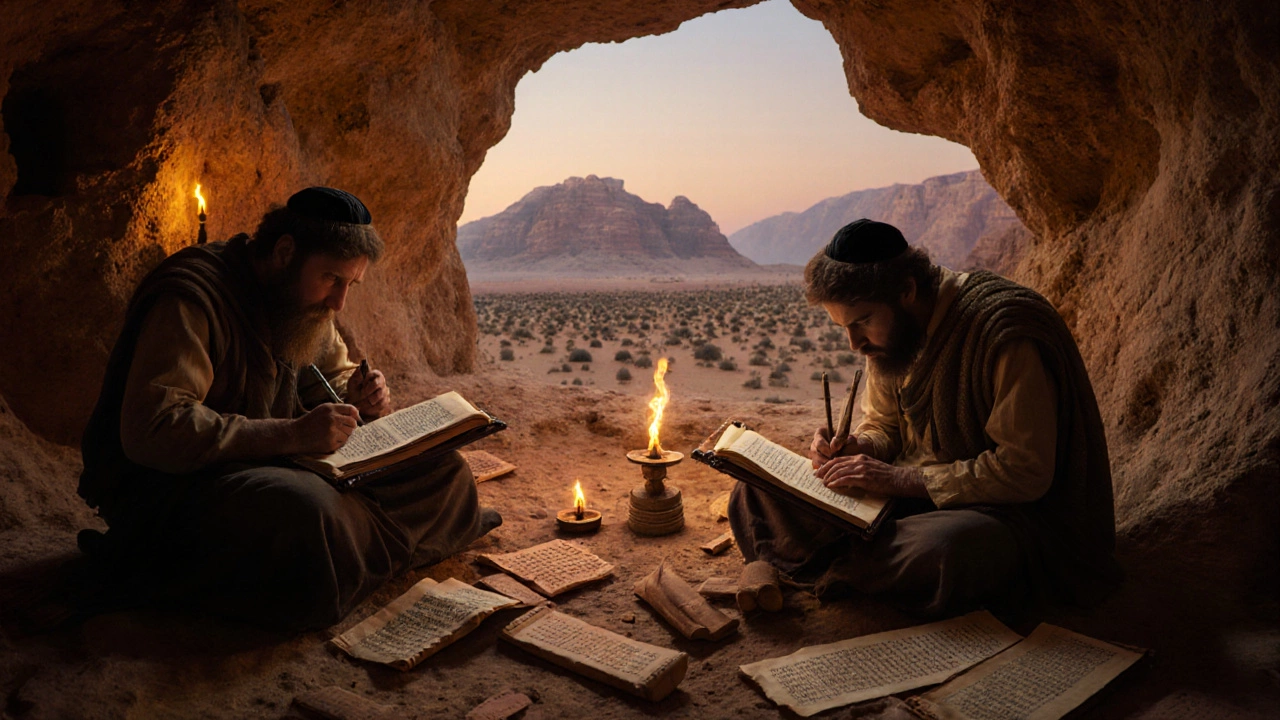
The Bible, a collection of religious texts central to Christianity and influential across global culture. Also known as the Holy Bible, it's not just a book—it's a cultural force that has shaped laws, language, and literature for centuries. is the most purchased book in human history, outselling every novel, textbook, and self-help guide combined. It's also the most stolen book—especially the Gideon editions left in hotel rooms. Why? Not because it's rare or expensive, but because it's everywhere, free, and deeply familiar. People take it without thinking, like a blanket left on a couch. Meanwhile, scholars study the oldest Bible manuscripts, physical copies of biblical texts that have survived from antiquity, including the Dead Sea Scrolls and Codex Sinaiticus. to trace how words changed over time. The Dead Sea Scrolls, found in the 1940s, include fragments from every book of the Hebrew Bible and are over 2,000 years old. They prove that the texts we have today are remarkably consistent with what was written millennia ago.
The biblical timelines, the historical sequence of events and writings that make up the Bible's development from oral tradition to printed text. aren't just for theologians—they matter to anyone who reads stories, studies history, or wonders why certain ideas keep coming back. The Bible’s age isn’t just about how long it’s been around. It’s about how deeply it’s woven into how we think, speak, and even argue. You don’t have to believe in it to feel its weight. It’s in the phrases we use, the laws we follow, the books we read, and the movies we watch. And if you’ve ever picked up a book to understand human nature, you’ve already stepped into its shadow.
What you’ll find below isn’t just a list of articles—it’s a window into why this ancient collection still holds so much power today. From why it’s stolen more than any other book to how it compares to modern bestsellers, these posts cut through the noise and show you the real story behind the pages.
Which is older, the Quran or the Bible? A clear timeline of sacred texts
The Bible's oldest texts are over 2,700 years old, while the Quran was revealed in the 7th century CE. Learn the real timeline behind these sacred books and why the difference matters.
View More