Phonics: How Sound-Based Learning Helps Kids Read Better
When kids learn to read, they don’t just memorize words—they learn to phonics, the system that links spoken sounds to written letters. Also known as sound-letter mapping, it’s the reason a child can sound out "cat" even if they’ve never seen the word before. This isn’t magic. It’s science. And it works better than any flashcard drill or whole-word memorization method when taught clearly and consistently.
Phonemic awareness, the ability to hear and play with individual sounds in words, is what makes phonics stick. A child who can hear the /k/ /a/ /t/ in "cat" can later recognize those same sounds in "cap," "cut," or "cart." Without this skill, reading becomes a guessing game. But with it, even unfamiliar words become manageable. That’s why schools that focus on phonics see bigger gains in early reading scores—especially for kids who struggle. And it’s not just for kindergartners. Kids who fall behind in third grade often need a solid phonics reset, not more reading comprehension worksheets.
Decoding skills, the ability to break down written words into sounds and blend them back together, are the engine behind fluent reading. Think of it like learning to ride a bike—you don’t memorize every turn. You learn the balance, the pedal motion, the steering. Once you’ve got that, you can ride anywhere. Same with reading. Kids who master decoding don’t need to be taught every new word. They can figure it out themselves. That’s why parents and teachers who use phonics-based tools—like simple blending games, sound sorting cards, or decodable readers—see kids gain confidence fast. No fancy apps needed. Just clear sounds, consistent practice, and patience.
What you’ll find in these posts isn’t theory. It’s real talk from teachers, parents, and researchers who’ve seen phonics work—sometimes the hard way. You’ll see what actually helps kids read, what doesn’t, and how to spot the difference. No jargon. No fluff. Just what works.
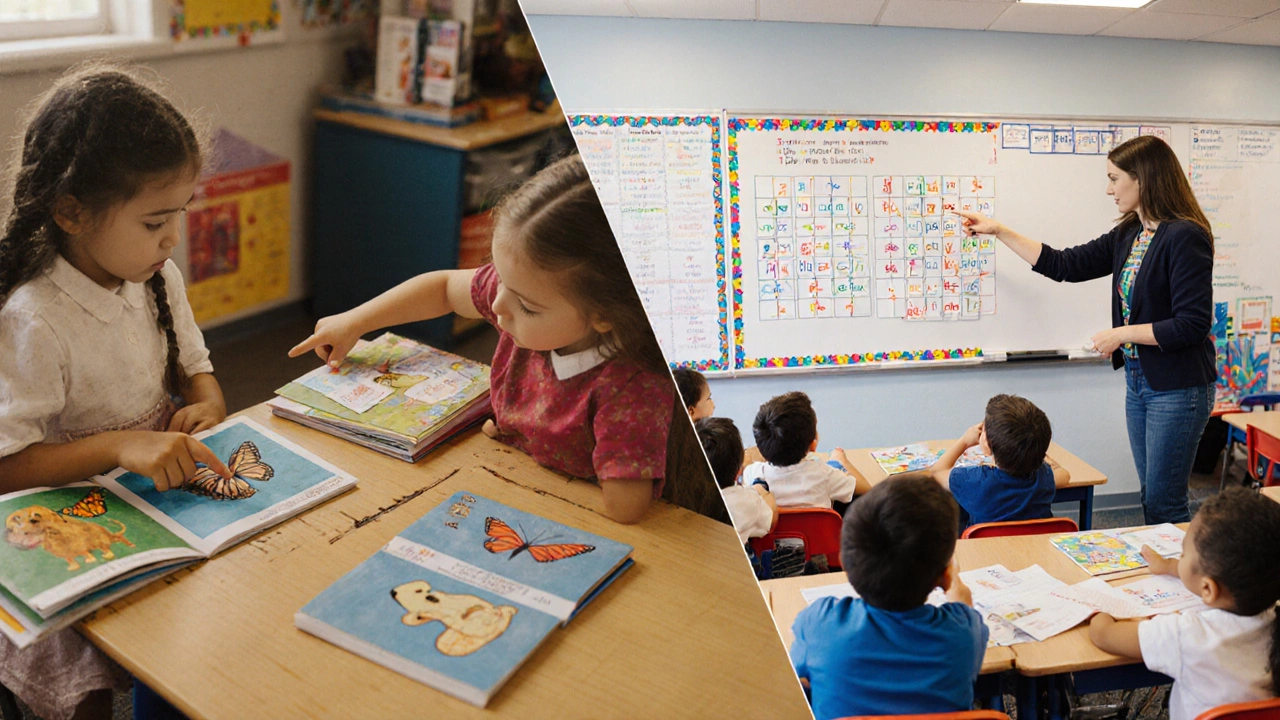
What Has Replaced Phonics in Modern Reading Instruction?
Phonics hasn't been replaced-it's been ignored. Now, the science of reading is bringing back systematic phonics instruction as the foundation for all early reading. Here's what schools are doing differently-and why it works.
View More