Quran Age: What We Know About the Age of the Quran and Its Historical Context
When people ask about the Quran age, the historical timeline of the Islamic holy text, from its revelation to its earliest written forms. Also known as the age of the Quranic text, it’s not just about when it was revealed—it’s about when it was collected, written down, and preserved across centuries. The Quran is believed by Muslims to have been revealed to the Prophet Muhammad over 23 years, beginning around 610 CE. But the physical manuscripts we have today? Those tell a different, more complex story.
One of the most important related entities is the Quranic manuscripts, the earliest physical copies of the Quran, some dating back to the 7th and 8th centuries. The Sanaa manuscripts, discovered in Yemen in 1972, contain layers of text that show corrections and variations, suggesting the text was still being standardized decades after Muhammad’s death. Another key artifact is the Birmingham Quran manuscript, a parchment fragment held at the University of Birmingham, carbon-dated to between 568 and 645 CE. That means it could have been written within decades of the Prophet’s lifetime—possibly even during his lifetime. These aren’t just old books; they’re time capsules of early Islamic history.
Then there’s the Quran history, the process of compilation and standardization under the first caliphs, especially Uthman ibn Affan, who ordered a single authoritative version around 650 CE. Before that, verses were written on palm leaves, bones, and memorized by companions. No single written copy existed everywhere. Uthman’s version unified the text, burned other variants, and sent copies to major cities. That’s why today’s Quran is nearly identical across the Muslim world—despite regional dialects and recitation styles.
So what does all this mean for someone reading the Quran today? It means the text you hold is rooted in a very real, very early history. The Quran age isn’t a single date—it’s a chain of events: revelation, oral transmission, written fragments, standardization, and global distribution. Scholars still debate minor variations in early copies, but the core text has remained unchanged for over 1,300 years.
Below, you’ll find posts that dig into related topics: how ancient texts survive, what makes a religious scripture endure, and how scholars trace the origins of sacred writings. Some of these articles look at the most stolen book in the world, others at how reading instruction evolved, and a few at the oldest adventure stories ever written. But here, you’ll find the facts behind the age of the Quran—not myths, not assumptions, but what the evidence actually shows.
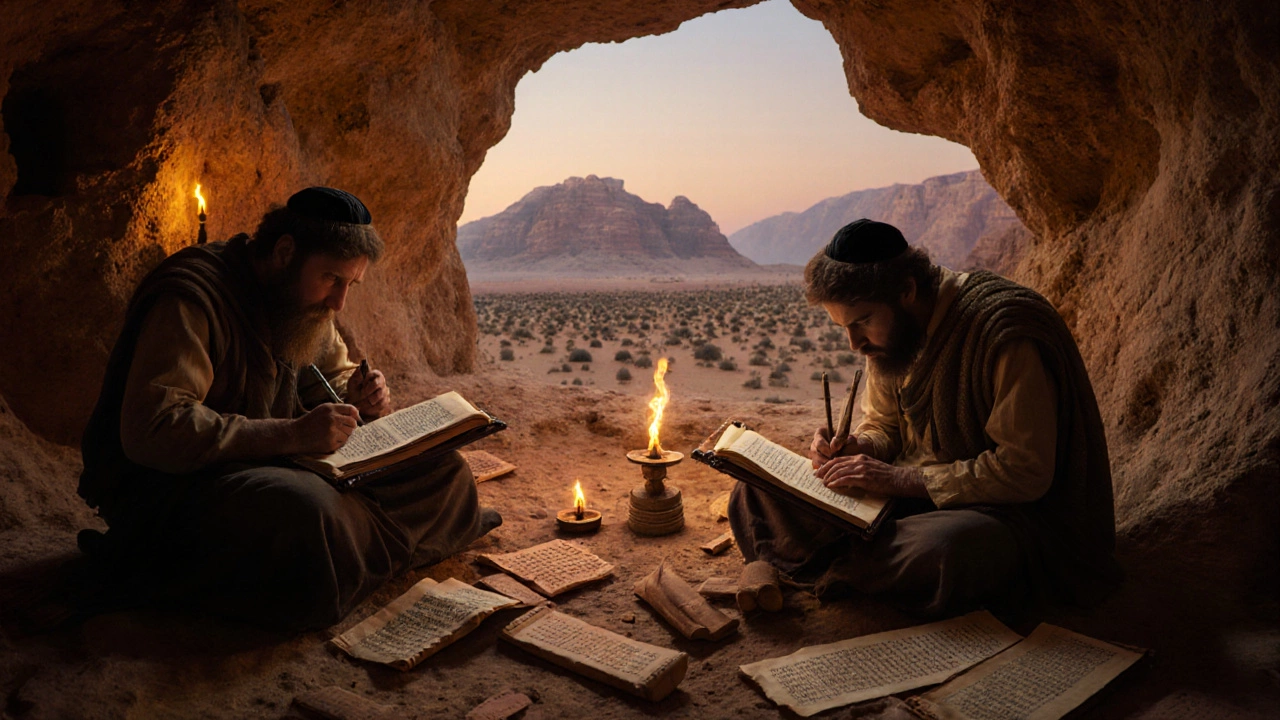
Which is older, the Quran or the Bible? A clear timeline of sacred texts
The Bible's oldest texts are over 2,700 years old, while the Quran was revealed in the 7th century CE. Learn the real timeline behind these sacred books and why the difference matters.
View More