Rick Riordan: Myth-Based Fantasy Novels and Popular Series
When you think of modern fantasy for teens, one name stands out: Rick Riordan, an American author who turned ancient myths into bestselling YA adventures. Also known as the man who made Greek gods cool again, he didn’t just write stories—he rebuilt mythological worlds for a new generation. Before Riordan, most kids saw Zeus and Thor as dusty figures in textbooks. He gave them smartphones, sarcasm, and middle school problems.
His Percy Jackson, a series about a dyslexic boy who discovers he’s the son of Poseidon didn’t just sell millions—it sparked a global wave of myth-inspired books. Kids started asking their teachers about the Twelve Olympians. Libraries ran out of copies of The Lightning Thief. Teachers used his books to teach mythology because students actually showed up ready to talk about it.
He didn’t stop with Greek myths. Egyptian mythology, brought to life in the Kane Chronicles, where siblings battle gods from the Duat got equal treatment. Then came Norse gods in The Trials of Apollo and The Heroes of Olympus, where Thor’s hammer met Zeus’s lightning bolt. Each series kept the same formula: real kids, real emotions, and ancient powers that don’t care about homework.
Riordan’s magic isn’t in the magic itself—it’s in how he makes gods feel human. They’re flawed. They’re messy. They forget birthdays. They argue. And their kids? They’re not chosen ones. They’re just trying to survive algebra, bullies, and the fact that their dad might be a god who abandoned them.
What makes his work stand out in a sea of fantasy is how grounded it is. No distant kingdoms. No prophecies written in starlight. Just locker combinations, school buses, and monsters hiding in the cafeteria. You don’t need to know the difference between a satyr and a centaur to get hooked. You just need to remember what it felt like to be twelve and convinced the world didn’t understand you.
And it’s not just kids reading him. Parents pick up his books. Teachers assign them. Book clubs debate them. Why? Because beneath the sword fights and divine curses, his stories are about belonging, identity, and finding your place—even when you’re part god, part ordinary kid.
Below, you’ll find posts that dig into the world he built: how his books changed reading habits, why myth-based fantasy works so well, and what makes his characters stick with readers long after the last page. Whether you’re new to Percy Jackson or you’ve read every book twice, there’s something here for you.
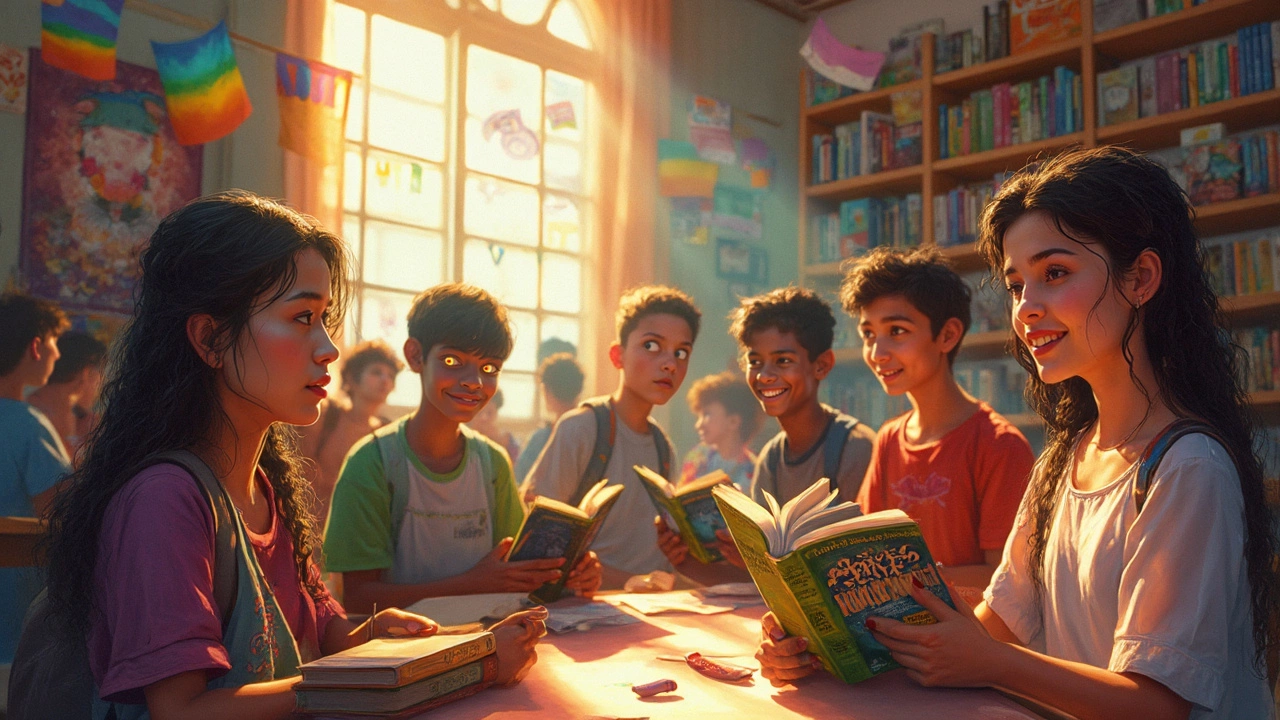
Is Percy Jackson LGBTQ? Facts, Characters, and Representation
Wondering if Percy Jackson identifies as LGBTQ? This article digs into the character's sexual orientation, the author’s intentions, and how the Percy Jackson universe handles LGBTQ representation. It also highlights key LGBTQ characters in the series and offers tips for readers seeking inclusive young adult books. If you’re curious about inclusivity and identity in Percy Jackson’s world, you’ll find practical answers here.
View More