Sacred Scriptures Timeline: Key Texts, Origins, and Their Influence
When you think of sacred scriptures, ancient religious texts that guide beliefs, rituals, and moral codes across civilizations. Also known as holy books, they are not just relics—they’re living guides that still shape how millions live, think, and connect with something bigger than themselves. The sacred scriptures timeline isn’t a straight line. It’s a web of voices from different lands, centuries, and cultures, each answering the same quiet questions: Who are we? Why are we here? What comes next?
Take the Vedas, the oldest known sacred texts of Hinduism, composed orally over 3,500 years ago in ancient India. Also known as Rigveda, they’re not just prayers—they’re the foundation of philosophy, music, and ritual that still echo in daily life across South Asia. Around the same time, in the Nile Valley and Mesopotamia, early forms of sacred writing were taking shape. Then came the Bible, a collection of texts compiled over 1,500 years, from Hebrew scriptures to New Testament letters, shaping Western law, art, and ethics. Also known as Holy Scripture, it’s the most printed, distributed, and stolen book in history—not because it’s rare, but because it’s everywhere. In the 7th century, the Quran, believed by Muslims to be the literal word of God revealed to Prophet Muhammad over 23 years. Also known as the Koran, it became the anchor for one of the world’s fastest-growing faiths, preserving language, law, and identity across continents. Meanwhile, in East Asia, texts like the Dao De Jing and the Analects of Confucius offered ethical frameworks without relying on gods, proving that sacredness doesn’t always mean divinity—it can mean wisdom that lasts.
These aren’t just old books. They’re time capsules. The sacred scriptures timeline shows how human beings have always sought meaning, and how written words became tools to hold onto it across generations. Some texts were carved on stone. Others were whispered through families for centuries before being written down. Some sparked wars. Others brought peace. All of them changed how people saw themselves and each other.
What you’ll find below are real stories about these texts—why they were written, how they spread, what they meant to the people who lived by them, and why they still matter today. No fluff. No theory. Just the facts, the history, and the human side of the books that shaped civilizations.
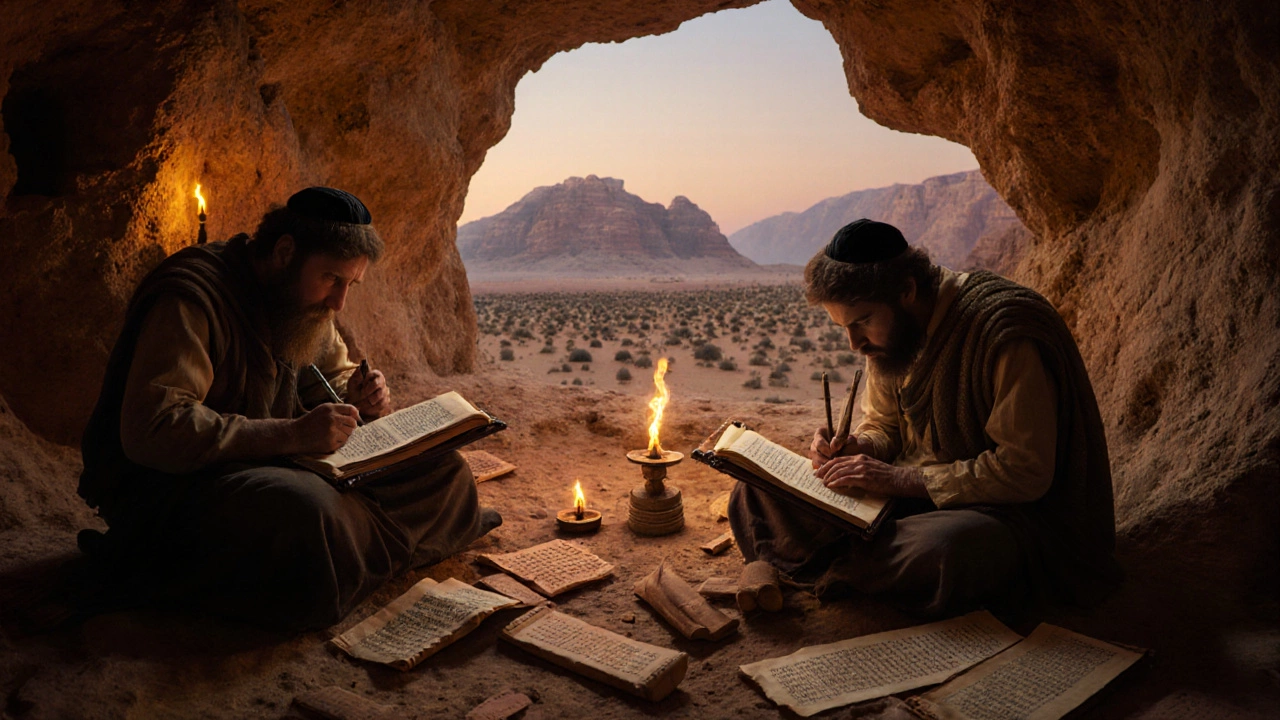
Which is older, the Quran or the Bible? A clear timeline of sacred texts
The Bible's oldest texts are over 2,700 years old, while the Quran was revealed in the 7th century CE. Learn the real timeline behind these sacred books and why the difference matters.
View More