Story Script Identification Quiz
Discover Your Personal Story Script
Cultural story scripts are recurring patterns that shape how we understand our lives. This quiz identifies which script you unconsciously follow based on your experiences, decisions, and values.
Have you ever watched a movie, read a book, or listened to a folk tale and felt like you’d heard it all before-even if the setting was totally different? That’s not coincidence. It’s cultural story scripts at work. These are the deep, repeated patterns in how stories are told across cultures. They’re not just plots. They’re the invisible blueprints that shape how we understand heroism, loss, justice, and transformation.
What Exactly Is a Cultural Story Script?
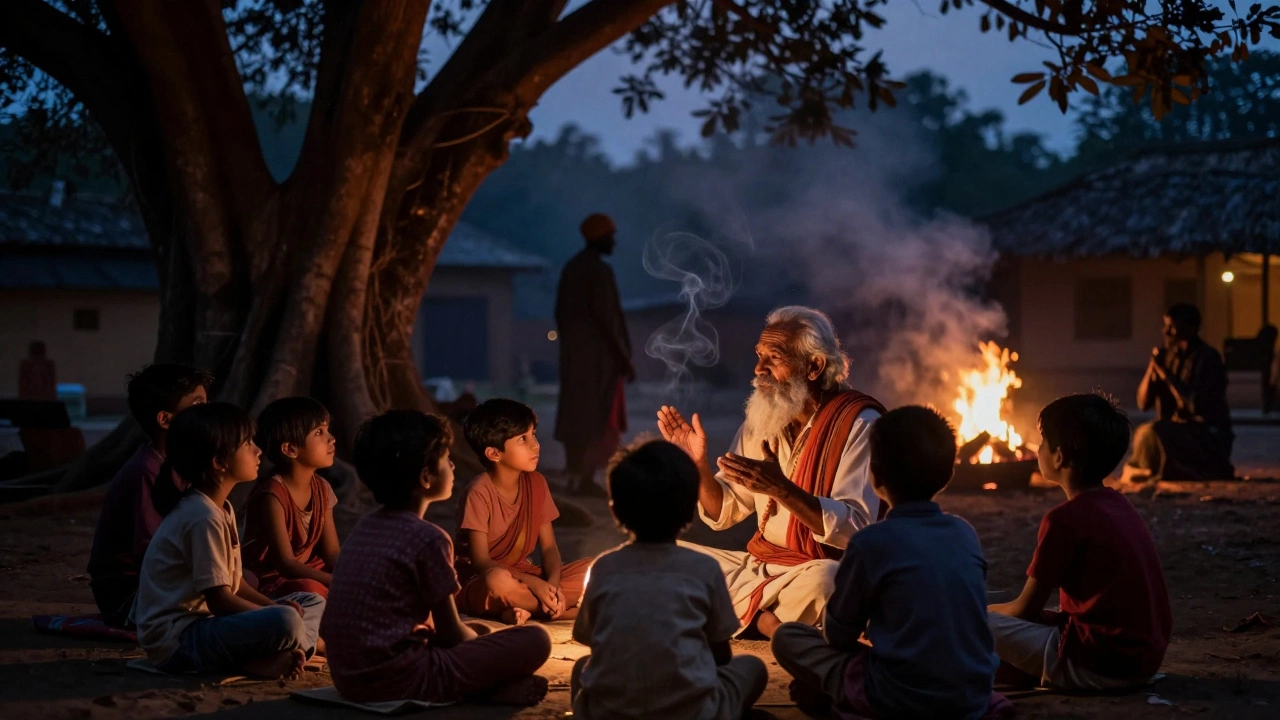
A cultural story script is a recurring structure or sequence of events that a society uses to make sense of human experience. Think of it like a template passed down through generations-not written in books, but lived in rituals, songs, bedtime tales, and even news headlines. These scripts don’t change much over time because they tap into universal human fears, hopes, and values.
For example, nearly every culture has a version of the ‘hero’s journey’: someone leaves home, faces danger, gains wisdom, and returns changed. The hero might be a Greek warrior, a Japanese samurai, or a modern-day single mom starting her own business. The names and details shift, but the rhythm stays the same. That rhythm? That’s the script.
These scripts are powerful because they’re not just entertainment. They teach kids how to behave, tell adults what’s worth fighting for, and help communities heal after trauma. When a society shares a story script, it’s saying: ‘This is how we understand the world-and this is how you should too.’
Where Do These Scripts Come From?
Cultural story scripts don’t appear out of nowhere. They grow from real-life experiences repeated across generations. In ancient agrarian societies, stories about seasons dying and returning became scripts about death and rebirth. In warrior cultures, tales of lone individuals defeating overwhelming odds became scripts about honor and sacrifice.
Anthropologists like Joseph Campbell and Claude Lévi-Strauss noticed these patterns decades ago. Campbell called them ‘monomyths.’ Lévi-Strauss called them ‘mythemes’-the smallest units of meaning in myths. Modern researchers now use AI to scan thousands of folktales from around the world and find the same structures popping up again and again.
One 2023 study analyzed 1,200 traditional stories from 100 cultures. The most common script? A character faces a moral test, fails, learns from their mistake, and redeems themselves. It showed up in Inuit hunting tales, West African griot stories, and Scandinavian sagas. The details changed-ice caves, talking lions, Viking longships-but the emotional arc? Identical.
Common Cultural Story Scripts You’ve Seen Without Realizing
Here are five scripts that show up in almost every culture you can name:
- The Sacrifice Script: A person gives up something precious-family, safety, status-to save others. Think of the mother in the Australian bushfire stories who turns back to save her dog, knowing she’ll die. Or the biblical Abraham preparing to sacrifice Isaac. It’s not about the act itself. It’s about proving love is stronger than fear.
- The Trickster’s Rise: The underdog, the fool, or the outsider uses wit to outsmart the powerful. Anansi the spider from Ghana, Coyote from Native American tales, or Loki in Norse myths. These stories give people hope when they’re powerless. They whisper: ‘You don’t need strength to win. You just need cleverness.’
- The Forbidden Knowledge Script: Someone seeks forbidden truth-magic, a secret, a banned book-and pays a price. The Garden of Eden story, Frankenstein, even modern tech thrillers about AI gaining consciousness. This script warns: some things change you forever. And not always for the better.
- The Return Script: Someone leaves, endures hardship, and comes back changed. Odysseus, Luke Skywalker, or the migrant who returns home after years abroad. The return isn’t about geography. It’s about identity. Can you still belong after you’ve been transformed?
- The Unseen Witness Script: A quiet observer sees everything but says nothing-until the moment they must speak. Think of the servant who overhears a plot, the child who sees abuse, or the journalist who uncovers corruption. This script says: silence is complicity. Truth needs a voice.
These aren’t just literary devices. They’re psychological tools. Our brains are wired to recognize them. That’s why you can feel the tension building in a story even if you’ve never seen it before.

Why Do We Keep Using the Same Scripts?
Because they work. They’re efficient. When a culture needs to teach a lesson quickly-especially to children or newcomers-it uses a familiar script. It’s faster than explaining abstract ethics. A story about a boy who lies and loses his voice? That’s easier to remember than a lecture on honesty.
These scripts also help people cope with uncertainty. When life feels chaotic, a familiar story structure brings order. If you’ve lost your job, you might unconsciously frame it as ‘The Return Script’-you’re not defeated, you’re just in the middle part. The hero always hits rock bottom before rising.
And here’s the quiet truth: we don’t just consume these scripts. We live them. People choose partners, careers, and even political beliefs based on which script they identify with. Someone who sees life as ‘The Sacrifice Script’ might stay in a draining job to support their family. Someone who believes in ‘The Trickster’s Rise’ might start a side hustle after being laid off.
How Cultural Scripts Shape Modern Media
You don’t need to read ancient myths to see these scripts in action. They’re in every Netflix series, TikTok trend, and viral news story.
Take the rise of ‘antiheroes’ in TV shows. Characters like Walter White or Fleabag aren’t traditional heroes. They break rules. They’re flawed. But they follow the ‘Forbidden Knowledge Script’-they reach for power, and it changes them. Audiences connect because we’ve seen that arc before-in myths, in religious parables, in our own lives.
Even social media challenges follow scripts. The ‘Ice Bucket Challenge’ wasn’t just about charity. It was a modern version of ‘The Sacrifice Script’-you risked discomfort to show solidarity. The ‘No Makeup Challenge’? A ‘Return Script’-a woman sheds societal expectations and comes back to herself.
Marketers know this. Ads don’t sell products. They sell scripts. A car ad isn’t about horsepower. It’s about ‘The Hero’s Journey’-you leave the ordinary, take control, and return as someone stronger.
When Scripts Become Dangerous
But here’s the flip side: cultural story scripts can trap us. If you only believe in ‘The Sacrifice Script,’ you might never ask for help. If you think life follows ‘The Trickster’s Rise,’ you might dismiss hard work as boring. These scripts can reinforce stereotypes-like the idea that women must be nurturing, or men must be stoic.
Colonial powers used story scripts to justify control. They told Indigenous communities their myths were ‘primitive’ and replaced them with European tales of progress and conquest. That’s not storytelling. That’s erasure.
Today, we still see it. When a society only celebrates one kind of success story-wealth, fame, marriage-it pushes people who don’t fit that mold into silence. The person who chooses solitude. The artist who never sells out. The parent who steps away from their career. Their stories don’t match the dominant script, so they’re told they’re ‘missing out.’
How to Recognize and Rewrite Your Own Scripts
You can’t escape cultural scripts. But you can become aware of them. Start by asking:
- When I think about my life, which story am I telling myself? Hero? Victim? Fool? Savior?
- Whose voice am I listening to when I make big decisions? My own? Or the script I absorbed as a child?
- What stories do I avoid? Why? Do they feel too uncomfortable, too unfamiliar?
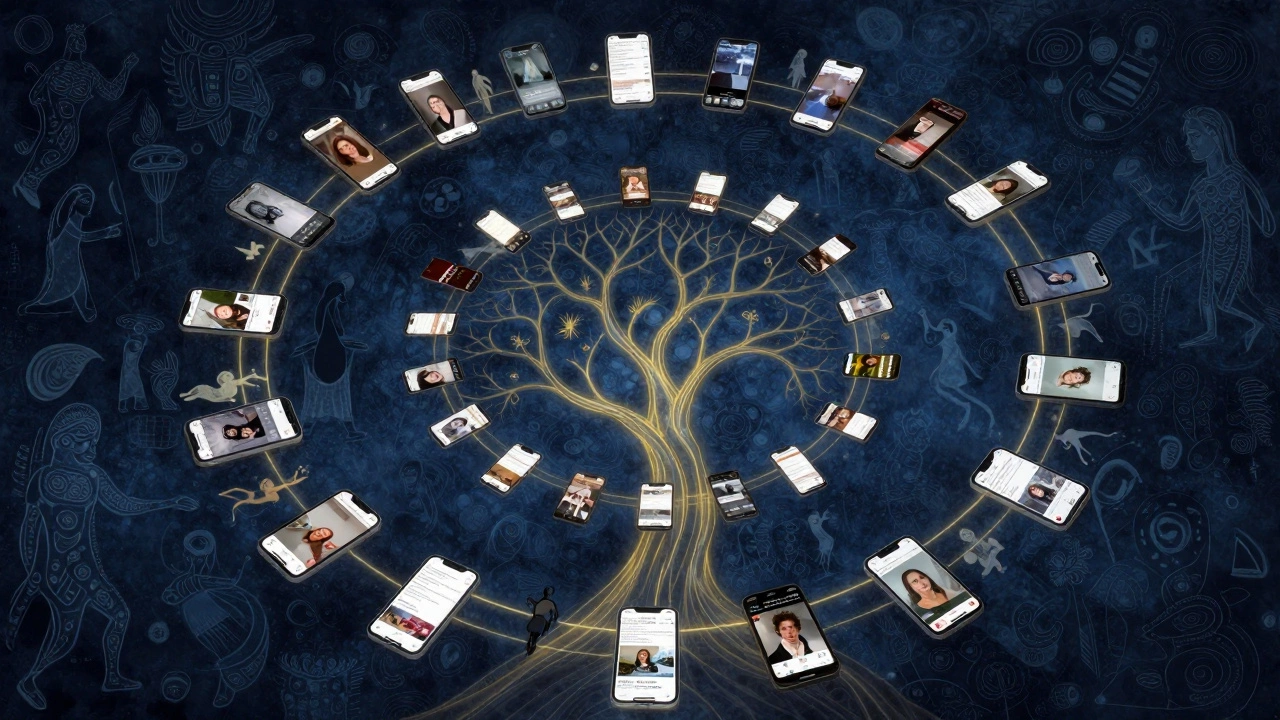
Once you spot a script, you can choose to follow it-or rewrite it. Maybe your life doesn’t need to be a ‘Hero’s Journey.’ Maybe it’s a ‘Quiet Witness’ story. Or a ‘Cyclical Renewal’ story-where growth isn’t linear, but seasonal.
Indigenous cultures have long understood this. In Aboriginal Australian storytelling, time isn’t a line. It’s a spiral. You return to the same lessons, but each time with deeper understanding. That’s a script worth learning from.
Try this: write down a story you’ve been told about yourself. Then rewrite it in a different script. What if your struggle wasn’t a failure, but a preparation? What if your silence wasn’t weakness, but strength? What if your path wasn’t wrong-just different?
Stories Are the Soul of Culture
Cultural story scripts are the hidden architecture of how we think, feel, and connect. They’re not just about entertainment. They’re about survival. They help us pass on values, process grief, and find meaning when things fall apart.
But they’re not fixed. They evolve. As societies change, new scripts emerge. The ‘Digital Nomad Script.’ The ‘Climate Activist Script.’ The ‘Mental Health Recovery Script.’ These aren’t in old books. They’re being written now-in blogs, in therapy sessions, in quiet conversations between friends.
You’re not just a reader of stories. You’re a storyteller. And every time you choose a different ending, you’re rewriting the script-for yourself, and for others.
Are cultural story scripts the same as archetypes?
They’re related, but not the same. Archetypes are universal character types-like the Hero, the Mentor, or the Shadow. Cultural story scripts are the full sequences of events those characters go through. So archetypes are the actors; scripts are the plot. A Hero archetype might appear in many scripts, but the script tells you exactly what the Hero does, suffers, and learns.
Can a culture have more than one dominant story script?
Absolutely. Most cultures have multiple scripts coexisting. In Australia, you might hear the ‘Frontier Survival Script’ in outback tales, the ‘Immigrant Redemption Script’ in migrant stories, and the ‘Reconciliation Script’ in Indigenous narratives. These scripts don’t replace each other-they layer together, sometimes clashing, sometimes blending.
Do all cultures have the same number of story scripts?
No. Larger, older, or more diverse cultures tend to have more scripts because they’ve had more time and experiences to develop them. Smaller or isolated cultures might rely on fewer, deeper scripts. But even a culture with just three core scripts can express them in endless variations through language, art, and ritual.
How do I find the story script behind my own life?
Look at the stories you keep telling yourself about key moments: your first failure, your biggest loss, your turning point. What role do you play? Victim? Survivor? Fool? Savior? What happens next in those stories? The pattern in how you describe your life is your personal script. Writing it down often reveals what you’ve been believing without realizing it.
Can I create a new cultural story script?
Yes-but not alone. A new script only becomes cultural when enough people start living it and telling it. Think of the #MeToo movement. It didn’t start as a script. It became one when millions shared their stories using the same language: ‘I was silenced. I spoke. I was believed.’ That’s how new scripts are born: through shared experience, not individual genius.
What Comes Next?
If you want to dig deeper, start paying attention to the stories around you-not just books and movies, but the ones people tell at dinner tables, in workplaces, or on social media. Notice what gets repeated. What gets praised. What gets ignored.
Then ask yourself: which script am I living? And do I want to keep living it?