YA Genre Classifier
Answer these four key questions about your story or book to see where it fits in the literary landscape.
Your story is likely: YA Fiction
Focuses on the transition from childhood to adulthood, emphasizing identity and the raw intensity of first-time experiences.
The Core Pillars of the YA Experience
To understand what makes a book young adult fiction, you have to look at the "Coming-of-Age" arc. In adult novels, characters often deal with the consequences of their established lives. In YA, the character is usually building their identity from scratch. It's about that first time you realize your parents are flawed humans or the first time you decide who you want to be regardless of what your school says.One of the biggest hallmarks is the pacing. Teenagers live in a world of high emotional intensity. A breakup at sixteen doesn't feel like a minor setback; it feels like the end of the world. YA writers lean into this. They don't shy away from the melodrama because, for the target audience, those feelings are authentic. This creates a narrative drive that is often faster and more urgent than in literary fiction.
Then there is the theme of agency. A classic YA plot involves a protagonist taking a stand against an oppressive system-whether that's a dystopian government, a strict social hierarchy in a high school, or a restrictive family tradition. It is the story of moving from being a passenger in one's own life to being the driver.
Who is the Story For? Age vs. Content
There is a common myth that YA is defined by a specific age range. While publishers target 12-to-18-year-olds, the lines are blurring. We now see a rise in "New Adult" fiction, which focuses on the 18-to-25 bracket, dealing with college and first jobs. To tell them apart, look at the central conflict. If the conflict is about discovering one's identity or navigating the first stages of independence, it's likely YA.Content complexity also plays a role. YA isn't "dumbed down" versions of adult books. In fact, some of the most complex philosophical questions-like the nature of morality, grief, and systemic injustice-are explored more rawly in YA. The difference lies in the prose. It's usually more direct and conversational, avoiding the dense, descriptive padding often found in Literary Fiction.
| Attribute | Middle Grade (MG) | Young Adult (YA) | Adult Fiction |
|---|---|---|---|
| Protagonist Age | 8-12 years old | 13-18 years old | Any age (usually 20+) |
| Primary Theme | Friendship & Family | Identity & Independence | Complexity of Life/Society |
| Emotional Tone | Wonder & Discovery | Intensity & Urgency | Reflective & Nuanced |
| Perspective | External World | Internal Struggle | Societal/Relational Context |
The Role of Genre Blending in YA
YA isn't a genre in the way that Fantasy or Romance are. Instead, it's a category that can house any genre. You can have a YA Mystery, a YA Sci-Fi, or a YA Contemporary. The "YA" part is the lens through which the story is told, not the plot itself.For example, a Dystopian novel like "The Hunger Games" is a political critique of class warfare, but it is fundamentally YA because the protagonist, Katniss Everdeen, is navigating her transition into adulthood while fighting that system. If the lead were a 40-year-old politician, the story would change from a quest for identity to a quest for power.
The same goes for Romance. In adult romance, the tension often revolves around career stability or marriage. In YA romance, the tension is about first love, the fear of rejection, and the intensity of a first crush. The emotional stakes are higher because everything is happening for the first time.
Common Tropes and Why They Work
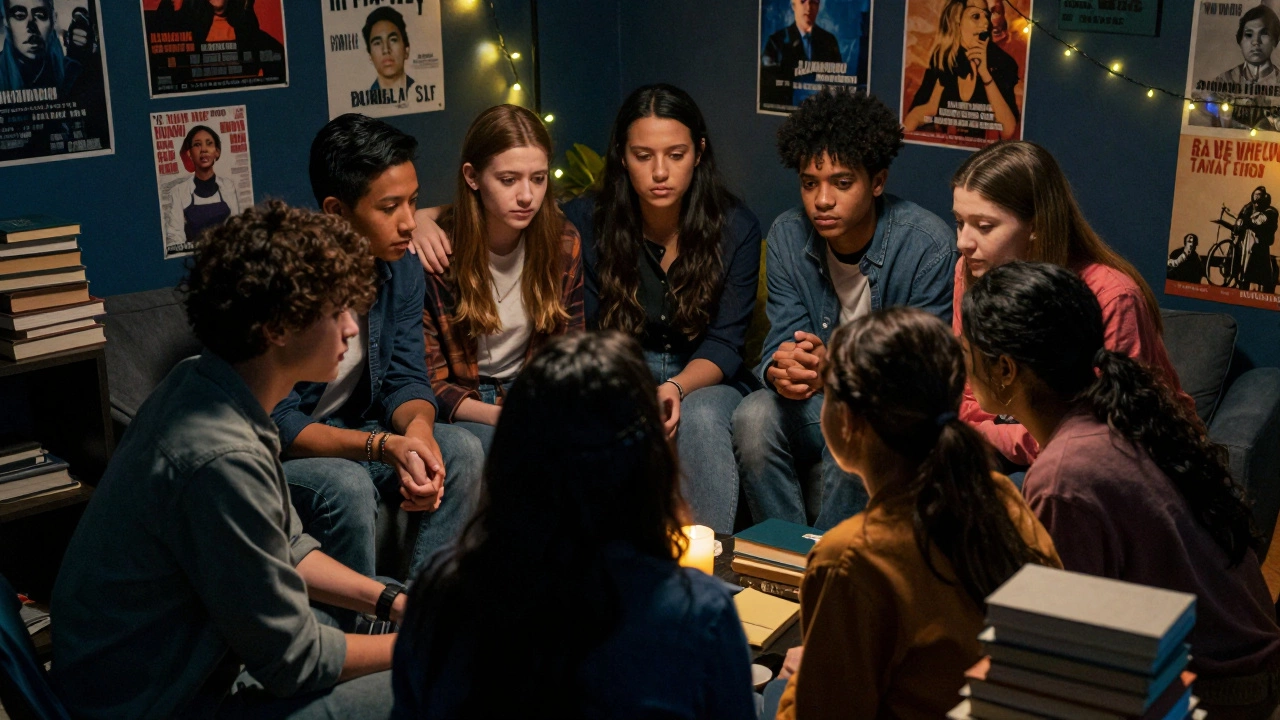
Certain patterns appear frequently in YA because they mirror the actual teenage experience. Take the "Chosen One" trope. Why is it so popular? Because every teenager feels like they are fighting a battle no one else understands, and the idea that they were *meant* for something greater is incredibly validating.Another common element is the "Found Family." This is where the protagonist finds a group of friends who understand them better than their own biological family does. This reflects the real-world shift where peers become the primary source of emotional support during adolescence.
We also see a lot of "Firsts"-the first kiss, the first betrayal, the first time failing a major test. These aren't just plot points; they are developmental milestones. When a writer nails these moments, the book transcends its plot and becomes a mirror for the reader's own life.
The Evolution of the YA Voice
In the early days, YA was often seen as didactic-books designed to teach a lesson or provide a moral compass. But modern YA has shifted toward authenticity. Today's readers can smell a "preachy" book from a mile away. They want characters who make mistakes, who are occasionally selfish, and who don't have all the answers.This shift has led to a broader range of perspectives. We are seeing more diverse voices and intersectional identities. This is crucial because the experience of "growing up" varies wildly depending on your culture, gender, and socioeconomic status. A YA novel about a queer teen in a small town deals with different identity markers than one about a privileged student in a city, but the core feeling of "trying to fit in while standing out" remains the same.
The prose has also evolved. There is a move away from overly formal language toward a style that mimics how people actually talk. Short sentences, fragmented thoughts, and a focus on internal monologue help the reader feel like they are inside the character's head, which is exactly where teenagers spend most of their time.

Pitfalls to Avoid When Identifying YA
One mistake people make is thinking that any book with a teenage character is YA. This isn't true. Consider a novel written by an adult about their own childhood. That is a memoir or a work of adult fiction, even if the protagonist is fourteen. The difference is the *intent* and the *voice*. Adult fiction looking back at youth often has a tone of nostalgia or regret. YA is written in the *present tense* of the emotion; it is about the now, not the then.Similarly, some people confuse "Children's Literature" with YA. Middle Grade (MG) books usually focus on the world outside the character-their friends, their pets, their school. YA turns the camera inward. It focuses on the internal psychological landscape. If the story is more about "How do I change the world?" it might be MG; if it's "Who am I in this world?" it's almost certainly YA.
Can adults read young adult fiction?
Absolutely. A huge percentage of YA readers are actually adults. The themes of identity, first love, and rebellion are universal. While the protagonists are teens, the emotional truths in the stories resonate with people of all ages.
What is the difference between YA and New Adult (NA)?
New Adult typically targets the 18-25 age range. While YA focuses on high school and the immediate transition to adulthood, NA focuses on the "in-between" years-college, entering the workforce, and navigating adult relationships with a level of maturity (and often explicit content) that goes beyond traditional YA.
Does YA always have to be about teenagers?
Technically, yes, the protagonists should be in the adolescent stage of life. However, the "spirit" of YA is about the transition to adulthood. If a story captures that specific energy of self-discovery and rebellion, it fits the category even if the age is slightly outside the 12-18 window.
Why is the "Chosen One" trope so common in YA?
It reflects the internal feeling of adolescent isolation. Many teens feel unique or misunderstood in a way that feels overwhelming. The trope validates this feeling by making the character's "difference" a superpower or a destiny rather than a social flaw.
Is YA fiction just for a specific gender?
Not at all. While some sub-genres like romance might skew toward one demographic, the overarching themes of identity and independence are gender-neutral. Modern YA has a massive variety of stories that appeal to everyone regardless of gender.
What to Explore Next
If you're interested in how YA is shaping the current literary landscape, you might want to look into the rise of "Cross-over Fiction"-books that successfully target both adults and teens simultaneously. You could also dive into the specific evolution of the Dystopian sub-genre, which dominated the 2010s and is now evolving into more grounded, social-realist stories. Understanding the shift from the "Chosen One" to the "Relatable Everyman" will give you a great look at how teenage culture has changed over the last decade.