Historical Fiction Checker
Is Your Story Historical Fiction?
Enter a story concept to see if it meets the key criteria of historical fiction based on the article.
Key Criteria
- Setting based on real historical events (not just background)
- Fictional main characters (not real people)
- Characters shaped by historical forces (laws, social norms)
- Respect for historical context (no modern language or anachronisms)
When people ask for an example of a historical fiction story, they’re usually looking for something real enough to feel true, but bold enough to twist the facts into something unforgettable. It’s not just a textbook with characters. It’s not just a made-up tale with fancy clothes. True historical fiction pulls you into a past you never lived - and makes you feel like you did.
One Clear Example: The Nightingale by Kristin Hannah
One of the most powerful examples of historical fiction is The Nightingale by Kristin Hannah. Set in Nazi-occupied France during World War II, it follows two sisters whose lives fracture under the weight of war. One sister joins the Resistance, smuggling Jewish children out of the country. The other stays home, pretending to be ordinary while quietly surviving. Their choices aren’t dramatic heroics - they’re quiet, desperate, and human.
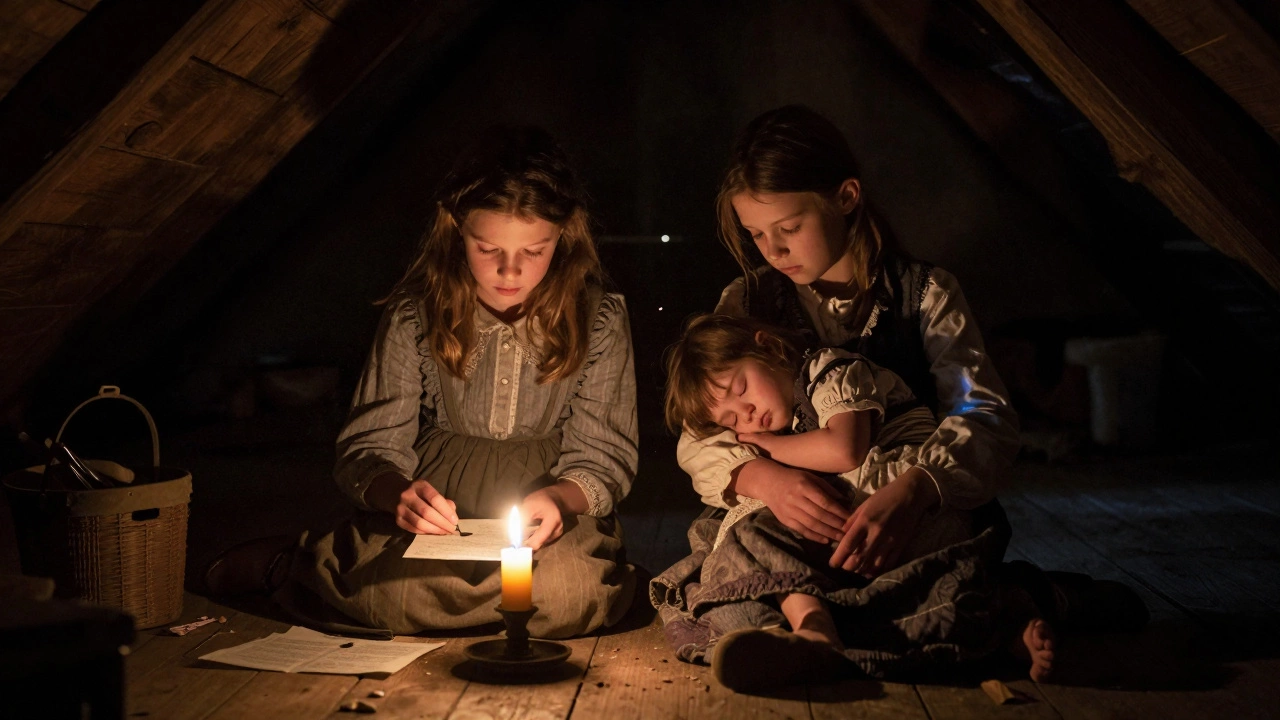
Hannah didn’t invent the Resistance. She didn’t make up the deportations or the rationing. She studied diaries, letters, and survivor accounts. But she didn’t just report facts. She gave voice to the women the history books forgot - the teachers, nurses, farmers, and mothers who hid refugees in attic crawlspaces and forged papers with trembling hands.
That’s what makes this historical fiction: the facts are anchored in real events - like the Vélodrome d’Hiver roundup in Paris in 1942 - but the emotional core is imagined. The characters? Fictional. The fear? Real. The courage? Historical.
What Makes Historical Fiction Different?
It’s easy to confuse historical fiction with biography or nonfiction. But here’s the line: if the main characters are real people, it’s biography. If the main characters are made up, but the world around them is real - that’s historical fiction.
Take The Book Thief by Markus Zusak. The narrator is Death. The setting is Nazi Germany. The boy who steals books? Realistic, but invented. The bombing raids, the Hitler Youth, the burning of books? All true. The story doesn’t change history - it lets you walk through it.
Historical fiction doesn’t rewrite the past. It reimagines it through the eyes of people who weren’t in the official records. That’s why it sticks with you. You remember the girl in the attic. You remember the bread ration. You remember the silence after a neighbor disappears.
How Historical Fiction Works
Good historical fiction follows three rules:
- Ground the world in real events - Use real battles, laws, social norms, or dates. The more specific, the better. Mentioning the year 1917 in Russia isn’t enough. Mentioning the Petrograd Soviet’s power grab on November 7th? That’s texture.
- Make characters human, not symbols - Don’t write a “brave soldier” or a “cruel tyrant.” Write a soldier who hates war but follows orders because his brother’s in it too. Write a tyrant who sings lullabies to his daughter at night.
- Respect the silence - History doesn’t record everything. What people didn’t say matters as much as what they did. A character who never speaks of her lost child? That’s more powerful than a monologue about grief.
Think of The Underground Railroad by Colson Whitehead. The Underground Railroad isn’t just a metaphor - in this book, it’s a literal train system with tunnels and stations. That’s not fact. But the fear of capture, the brutality of slavery, the cost of escape? Those are. Whitehead used fantasy to make truth louder.
Common Mistakes in Historical Fiction
Not all books set in the past are good historical fiction. Here’s what goes wrong:
- Modern voices in old clothes - Characters who sound like 2020s social media users. No one in 1865 said “That’s so not fair.”
- Overloading with facts - Pages of descriptions about lace-making or shipbuilding that slow the story. History should serve the emotion, not replace it.
- Ignoring power imbalances - Writing a romance between a wealthy white woman and an enslaved man without showing the violence behind it? That’s not romance. That’s erasure.
- Using history as decoration - A story where the war is just a backdrop, not a force that changes everything. If the characters aren’t shaped by the past, it’s not historical fiction. It’s costume drama.
Other Strong Examples
Here are a few more examples that nail the balance:
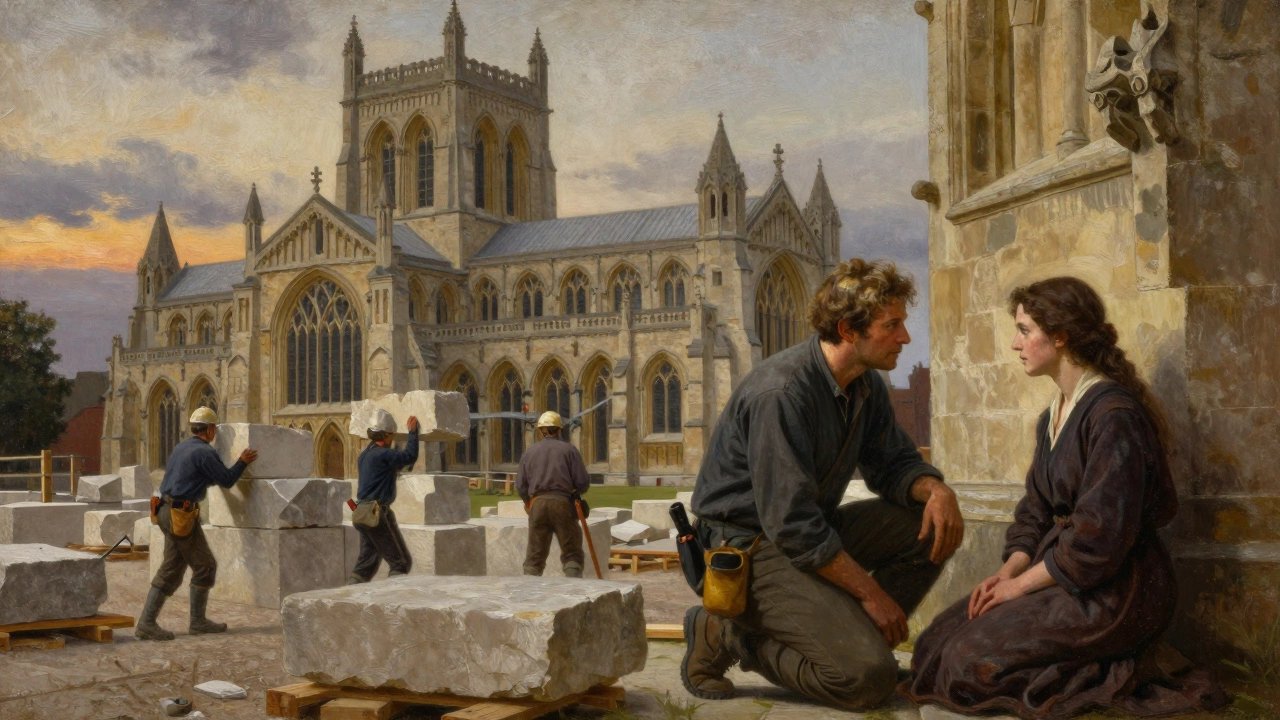
- The Pillars of the Earth by Ken Follett - Builds an entire cathedral in 12th-century England. The politics, the church corruption, the class struggles? All accurate. The master builder and his lover? Fictional, but feel real.
- Homegoing by Yaa Gyasi - Follows two half-sisters and their descendants over 300 years, from Ghana to American slavery to 21st-century Harlem. Each chapter is a new generation. Each one is rooted in real historical shifts - the slave trade, Reconstruction, the Harlem Renaissance.
- The Alice Network by Kate Quinn - Set during and after WWI, it tells the story of female spies who ran an underground network. The real Alice Dubois? A British spy. The fictional character who joins her? A wounded American nurse seeking justice. The mission? Based on actual operations.
Why This Genre Matters
Historical fiction doesn’t just entertain. It keeps memory alive. When textbooks summarize the Civil Rights Movement in three paragraphs, novels like The Help by Kathryn Stockett show you what it felt like to serve white families while your own child cried for you at home.
It lets us ask: What would I have done? Would I have spoken up? Hidden someone? Stayed silent? The past isn’t just something we study. It’s something we carry.
And that’s why the best historical fiction doesn’t end when you close the book. It lingers. It haunts. It changes how you see today.
What makes a story historical fiction and not just a novel set in the past?
A story is historical fiction when its plot, characters, and emotional core are fictional, but the setting, events, and social context are grounded in real history. It’s not enough to have old costumes or mention a war. The characters must be shaped by real historical forces - like laws, social norms, or major events - and their struggles must reflect how ordinary people actually lived. If the history is just background, it’s costume drama. If it’s the engine of the story, it’s historical fiction.
Can historical fiction change facts to make a better story?
Yes, but responsibly. Authors often invent characters, dialogue, or minor events to fill gaps in the record. But they shouldn’t distort major facts - like denying the Holocaust or inventing a peaceful resolution to slavery. The best historical fiction uses creative liberty to highlight truths that official records missed, not to rewrite them. Readers trust the story because they know the foundation is real.
Do I need to know the history before reading historical fiction?
No. Good historical fiction teaches you as you read. You don’t need to know the Treaty of Verdun to enjoy The Pillars of the Earth. The story gives you context through character actions - a monk’s fear of famine, a lord’s greed for land. The history is woven into the drama, not dumped in footnotes. That’s why it works for readers who’ve never studied medieval Europe.
Are there historical fiction books that focus on non-Western history?
Absolutely. Homegoing by Yaa Gyasi traces African and African-American history from the 1700s to today. The Samurai’s Garden by Gail Tsukiyama explores Japan during the Sino-Japanese War. Under the Udala Trees by Chinelo Okparanta is set in post-civil war Nigeria. These stories don’t just add diversity - they center histories that Western literature often ignores.
Why do people say historical fiction is more emotional than nonfiction?
Because nonfiction tells you what happened. Historical fiction makes you feel what it was like to live it. A textbook says 6 million Jews were killed in the Holocaust. A novel like The Book Thief shows you a girl stealing bread to feed a hidden Jewish man, and then watching him die in her arms. One gives you data. The other gives you grief you can’t forget.
Where to Go Next
If you loved The Nightingale, try The Alice Network or The Shadow Land by Elizabeth Kostova - set in communist-era Bulgaria. If you want something quieter, The Gown by Jennifer Robson follows seamstresses stitching Princess Elizabeth’s wedding dress in 1947. Both are deeply researched, emotionally raw, and impossible to put down.
Historical fiction doesn’t just show you the past. It shows you the people who lived it - messy, brave, scared, and alive. And that’s why, centuries later, we still need these stories.