Don Quixote Sales Calculator
How Many Copies Were Sold?
Discover how Don Quixote's sales have grown since its 1605 publication. The Bible leads at 5-7 billion copies, but Don Quixote has sold over 500 million copies across 420+ years.
The Bible is number one. Everyone knows that. But what’s the second best-selling book of all time? It’s not a thriller. Not a self-help guide. Not even a modern novel. It’s a 400-year-old Spanish story about a dreamer who charges at windmills like they’re giants. Don Quixote is the second most sold book in human history, with over 500 million copies printed since it first appeared in 1605.
Why Don Quixote Still Sells After 420 Years
Think about that for a second. The first part of Don Quixote came out before the Mayflower sailed to America. Before Shakespeare died. Before the printing press became common outside of churches and universities. And yet, people are still buying it today-in Spanish, English, Mandarin, Arabic, Swahili. Why?
It’s not because it’s a perfect story. It’s not even the most technically advanced novel ever written. But it’s the first book that made you feel like you were inside someone’s head. Miguel de Cervantes didn’t just write about a knight. He wrote about delusion, hope, and the quiet courage of holding onto dreams when everyone else calls you crazy.
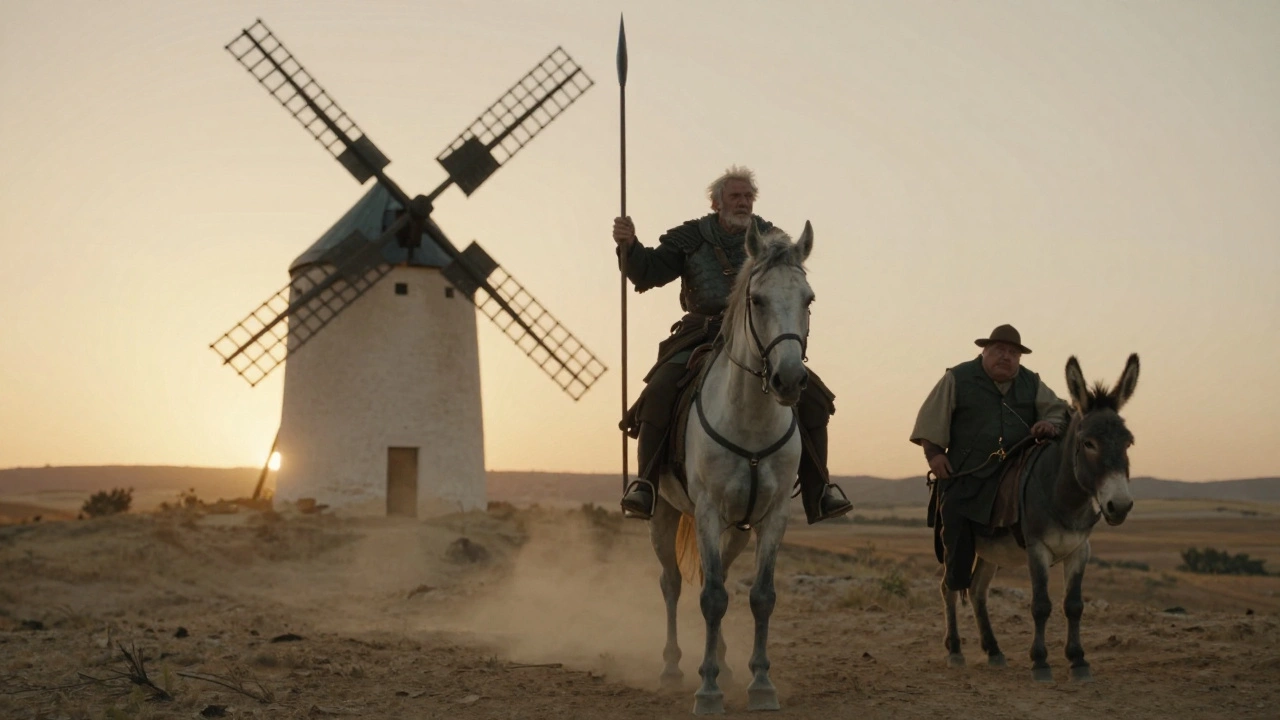
The main character, Alonso Quixano, is a middle-aged man who reads too many chivalric romances. He loses his grip on reality, renames himself Don Quixote de la Mancha, and sets off with his sidekick Sancho Panza to revive knighthood. He fights windmills. He frees prisoners who don’t want to be freed. He talks to inns as if they’re castles. He’s ridiculous. And yet, you can’t help but root for him.
The Numbers Behind the Legend
The Bible leads with an estimated 5 to 7 billion copies sold or distributed over 2,000 years. That’s not even close to fair competition. But after that? Don Quixote is way ahead. The third best-selling book? The Communist Manifesto, with about 500 million copies-tied with Don Quixote in some estimates. But most scholars agree: Don Quixote came first, and its cultural influence never faded.
There’s no single official global sales tracker for books. Publishers don’t share data like that. But researchers at the British Library, the Biblioteca Nacional de España, and the University of Oxford have cross-referenced print runs, translations, and library records. The consensus? Don Quixote has been printed in over 700 languages and dialects. More than any other work of fiction.
It’s not just about quantity. It’s about reach. In 1700, a peasant in rural China might never have heard of Shakespeare. But by 1800, a trader in Manila could buy a Tagalog version of Don Quixote. By 1900, it was required reading in schools from Mexico City to Tokyo. Even during the Spanish Civil War, both sides carried copies. The book didn’t take sides. It just asked: What if you believed in something so hard, the world had to bend to it?
How It Changed Literature Forever
Before Don Quixote, stories were either religious parables or pure fantasy. Heroes were flawless. Villains were evil. The world made sense.
Cervantes broke that mold. He wrote a book where the hero was delusional, the sidekick was practical, and the real villain was the gap between dreams and reality. He didn’t just invent the modern novel-he invented the idea that a story could be about how people see the world, not just what happens in it.
Think about modern books like The Catcher in the Rye or One Hundred Years of Solitude. They’re all descendants of Don Quixote. Holden Caulfield isn’t a knight, but he’s just as lost. Gabriel García Márquez’s characters live in magical worlds because they refuse to accept the rules of the real one. That’s Don Quixote’s legacy.
Even Hollywood gets it. Movies like The Man Who Killed Don Quixote (2018) and Terry Gilliam’s surreal take on the story show that the idea still hits hard. You don’t need to know Spanish to feel what Quixote feels. You just need to have ever believed in something no one else understood.
Why It’s Still Relevant Today
In 2025, we live in a world where algorithms tell us what to believe. Social media feeds are curated to confirm our biases. We’re surrounded by people who want us to see the world exactly as they do. And then there’s Don Quixote-riding into the wind, convinced the world is different than everyone says.
That’s why it still sells. Not because it’s a historical artifact. But because it’s a mirror. When you read it now, you might see yourself. Maybe you’re the dreamer. Maybe you’re Sancho Panza, rolling your eyes but still showing up. Maybe you’re the innkeeper who just wants to get paid and go home.
It’s a book about resilience. About the cost of staying true to yourself. About how the world treats people who refuse to fit in. And it’s funny. Really funny. Cervantes didn’t write a tragedy. He wrote a comedy with a heart so big it broke the rules of genre.
What Makes It Different From Other Classics
People read Homer. They read Dante. They read Tolstoy. But those books feel distant. They’re about gods, empires, wars. Don Quixote is about a guy who thinks a donkey is a horse and a barber’s basin is a helmet. It’s absurd. And that’s the point.
Other classics ask: What does it mean to be human?
Don Quixote asks: What does it mean to be crazy-and still be right?
It’s not a book you read once and put on a shelf. It’s a book you come back to when life feels heavy. When you’re tired of being told to be practical. When you miss the days when you believed in magic.
There’s a reason why Pablo Picasso drew over 400 illustrations for it. Why Bob Dylan named a song after it. Why a street in Barcelona is named after Sancho Panza. It’s not because it’s old. It’s because it’s alive.
Where to Start Reading It
Don Quixote is long. The full version runs over 900 pages. But you don’t need to read all of it to get the point. Most modern editions include abridged versions that cut the digressions and keep the core story: Quixote’s two journeys, his clashes with reality, and the quiet bond he forms with Sancho.
Start with the 1957 translation by John Ormsby-it’s clear, direct, and still reads like a conversation. If you want something more modern, Edith Grossman’s 2003 version is the most popular today. It keeps the humor, the rhythm, and the heart.
Or try the audiobook. Hearing it read aloud makes the madness feel real. You’ll laugh out loud at the windmill scene. And then, halfway through, you’ll stop laughing. Because you’ll realize: you’ve been fighting your own windmills too.
It’s not just a book. It’s a companion for anyone who’s ever been told to grow up-but still believes something bigger is out there.