Father God Archetype Identifier
Identify the Deity
- Culture:
- Role:
- Symbol/Attribute:
Select criteria from the form to discover which Father God archetype matches your search.
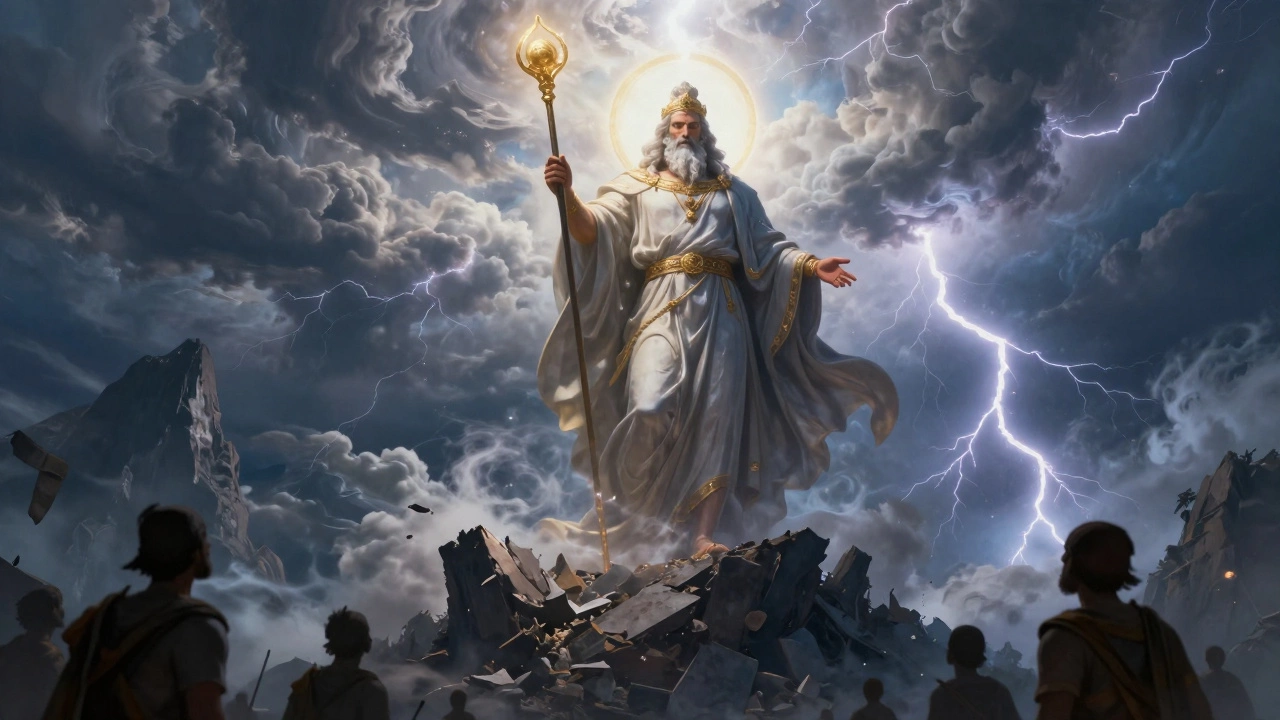
When you think of a "father god," who pops into your head? For most people raised on Western pop culture, it’s Zeus. He’s the lightning-wielding king of Olympus, right? But if you look closer at global history, that answer is only half the story. The title of "Father God" isn’t held by just one deity. It’s a role played by dozens of figures across different cultures, each with their own rules, families, and powers.
In mythological fiction and ancient belief systems, the "Father God" usually falls into two main buckets: the Sky Father (who controls weather and order) and the Creator Father (who built the world). Understanding this distinction helps you make sense of everything from Greek tragedies to Norse sagas and modern fantasy novels.
Quick Summary: Who Are the Major Father Gods?
- Zeus: The King of the Greek Gods, ruler of the sky and thunder.
- Jupiter: The Roman equivalent of Zeus, representing law and state authority.
- Odin: The All-Father of the Norse pantheon, associated with wisdom and war.
- Indra: The Vedic king of gods, ruler of rain and storms.
- Amun-Ra: The supreme Egyptian creator sun god.
The Archetype of the Sky Father
To understand who holds the title, we first need to look at why these gods exist. In ancient societies, the sky was the ultimate source of life. Rain brought crops; sunlight allowed growth; storms could destroy entire villages. It makes sense that the most powerful god would be the one controlling the sky.
This pattern is so common that scholars call it the "Sky Father" archetype. These deities are almost always male, older, and positioned at the top of a divine hierarchy. They often have a counterpart-a "Mother Earth" goddess-who represents fertility and the ground. This pairing creates a cosmic balance between heaven and earth.
Zeus is the paramount example of this archetype in Western mythology. As the king of Mount Olympus, he didn’t just throw lightning bolts; he enforced oaths and maintained cosmic order. His authority came from his position as the eldest surviving son of the Titans, having overthrown his father Cronus to claim the throne. This theme of the son overthrowing the father is repeated across many mythologies, highlighting the tension between old power and new order.Zeus and Jupiter: The Greco-Roman Kings
In Greek mythology, Zeus is the ruler of gods and men. He is the brother of Hades (underworld) and Poseidon (sea), but he took the highest prize: the sky. Zeus is complex. He’s not just a benevolent father figure; he’s impulsive, jealous, and deeply flawed. Yet, he remains the central authority figure. When humans prayed for justice, they prayed to Zeus.
The Romans adopted Zeus but renamed him Jupiter (or Jove). While Zeus was often portrayed as a romantic rogue, Jupiter was more serious. He represented the Roman state, law, and political stability. If Zeus was the family patriarch, Jupiter was the emperor. This shift reflects how Rome valued structure and governance over the emotional chaos often seen in Greek tales.
- Domain: Sky, Thunder, Lightning
- Symbol: Eagle, Oak Tree, Scepter
- Key Trait: Authority and Order
Odin: The Wise All-Father of the North
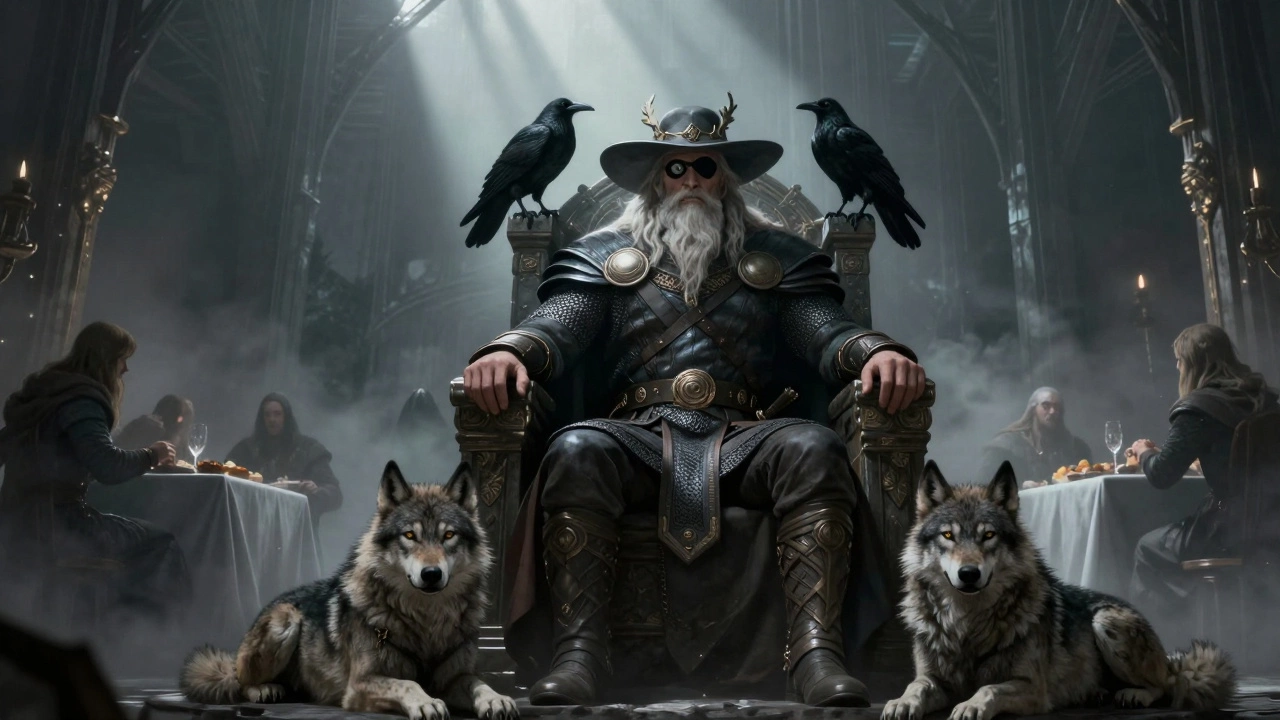
Move north to Scandinavia, and the vibe changes completely. Here, the father god is Odin, known as the All-Father. Unlike Zeus, who sits comfortably on a throne, Odin is constantly searching. He sacrificed his eye for wisdom and hung himself from the World Tree, Yggdrasil, to learn the runes.
Odin is a god of war, yes, but also of poetry, magic, and death. He doesn’t just rule; he prepares. In Norse mythology, the end of the world (Ragnarök) is inevitable. Odin’s job as the All-Father is to gather the bravest warriors (the Einherjar) in Valhalla to fight alongside him when the darkness comes. He is a tragic father figure, knowing his children-including Thor-will face destruction, yet leading them anyway.
Indra: The Storm King of the East
If we travel to the Indian subcontinent, we meet Indra. In the ancient Vedas, Indra was the undisputed king of the gods. He wielded the Vajra (thunderbolt) and fought against demons (Asuras) to release the waters trapped by the serpent Vritra. This act allowed rivers to flow, making him the god of rain and agriculture.
However, Indra’s status changed over time. In later Hindu texts, he became more of a celestial administrator rather than the supreme creator. He serves under higher concepts like Brahman or Trimurti (Brahma, Vishnu, Shiva). This evolution shows how religious beliefs adapt. The "Father God" role shifted from a warrior-king to a bureaucratic manager of heaven.
Creator Fathers vs. Ruler Fathers
Not all father gods rule the sky. Some created the world itself. This distinction is crucial for understanding mythological fiction. A "Ruler Father" manages existing creation (like Zeus). A "Creator Father" brings existence into being from nothingness or chaos.
Brahma is the creator god in Hinduism. Part of the Trimurti, Brahma fashioned the universe. However, he is rarely worshipped today because his work is done. He is the architect, not the daily manager.
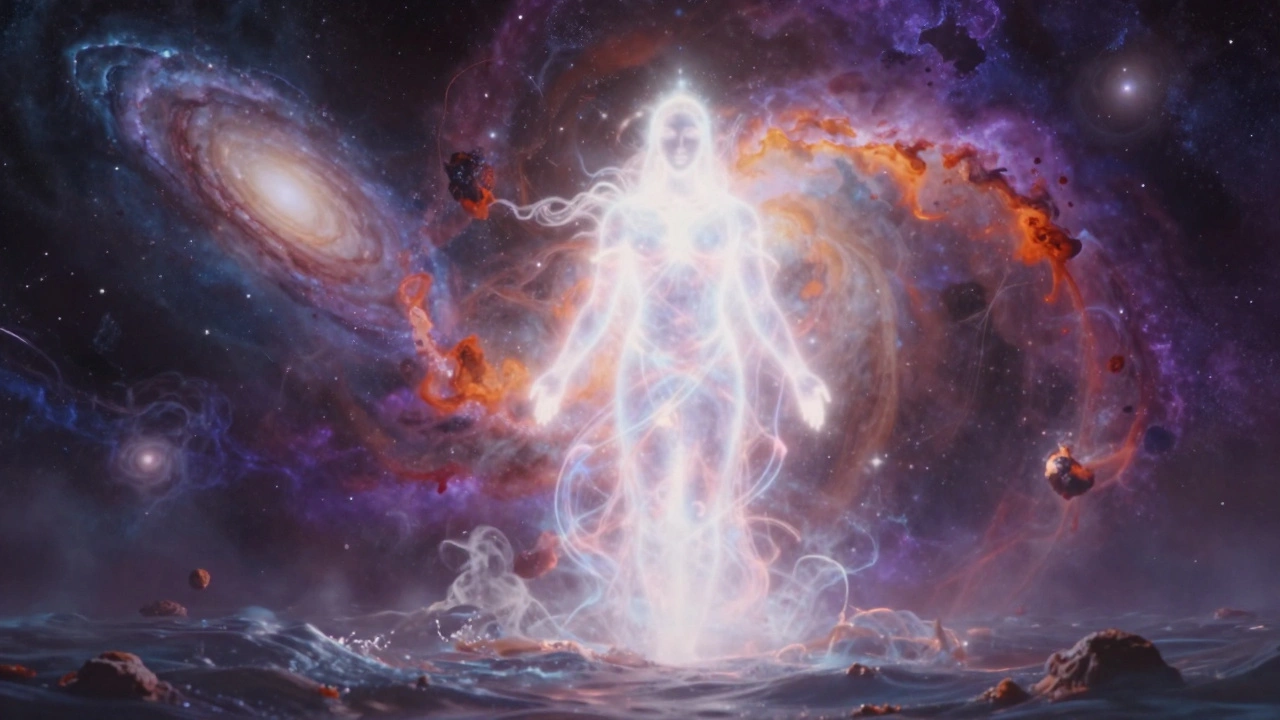
In Egyptian mythology, Atum or Ra filled this role. Ra emerged from the primordial waters (Nun) and breathed the world into existence. Later, Amun merged with Ra to become Amun-Ra, the hidden king of the gods. These creators are distant, abstract, and powerful beyond comprehension, unlike the relatable flaws of Zeus or Odin.
| Deity | Culture | Primary Domain | Key Attribute | Role Type |
|---|---|---|---|---|
| Zeus | Greek | Sky & Thunder | Authority | Ruler |
| Odin | Norse | Wisdom & War | Sacrifice | Ruler/Leader |
| Indra | Vedic/Hindu | Rain & Storms | Valor | Ruler |
| Brahma | Hindu | Creation | Knowledge | Creator |
| Amun-Ra | Egyptian | Sun & Hidden Power | Creator/Ruler |
Father Gods in Modern Mythological Fiction
Why does this matter for readers of mythological fiction? Because authors use these archetypes to build conflict. A story about Zeus is often about abuse of power and family drama. A story about Odin is about sacrifice and fate. A story about Brahma might be about the burden of creation.
Modern books like Rick Riordan’s *Percy Jackson* series or Madeline Miller’s *Circe* re-examine these father figures. They strip away the divine glory to show the human flaws underneath. Zeus becomes a negligent parent; Odin becomes a manipulative strategist. By understanding the original myths, you can appreciate how these stories twist and turn familiar tropes.
When you read a fantasy novel featuring a "High God" or "Sky Father," ask yourself: Is he a Zeus-like ruler maintaining order through fear? Or an Odin-like leader seeking wisdom at great cost? The answer shapes the entire narrative arc.
Common Misconceptions About Father Gods
One big mistake people make is assuming there is only one "true" father god. Mythology is not a single religion; it’s a collection of cultural stories. Zeus is not the same as Odin, even though both control the sky. Their personalities, symbols, and roles in society are distinct.
Another misconception is that father gods are always "good." In mythology, "good" means maintaining cosmic balance, not being nice. Zeus punishes hubris; Odin demands sacrifice; Indra kills demons. They are forces of nature, not moral saints. This complexity is what makes them compelling characters in literature.
Is Zeus the only father god in mythology?
No. While Zeus is the most famous in Western culture, other cultures have their own father gods. Odin is the All-Father in Norse mythology, Jupiter in Roman, Indra in Vedic, and Amun-Ra in Egyptian. Each has unique traits and domains.
What is the difference between a Sky Father and a Creator God?
A Sky Father (like Zeus or Odin) rules over an already existing world and maintains order. A Creator God (like Brahma or Atum) is responsible for bringing the universe into existence from chaos or nothingness. Sometimes one deity fills both roles, but often they are separate.
Who is the father god in Norse mythology?
Odin is the All-Father of the Norse pantheon. He is associated with wisdom, war, poetry, and death. He rules from Valhalla and seeks knowledge to prepare for Ragnarök, the prophesied end of the world.
Why do father gods often overthrow their own fathers?
This motif, seen in Greek (Zeus vs. Cronus) and Babylonian (Marduk vs. Tiamat) myths, represents the transition from chaos to order. The younger generation establishes new laws and stability, replacing the older, often more chaotic or tyrannical rule.
How are father gods depicted in modern fantasy books?
Modern authors often humanize father gods, focusing on their flaws, neglect, or political maneuvering. Instead of distant, perfect beings, they are shown as complex characters dealing with family drama, power struggles, and existential threats, making them relatable to contemporary readers.