Biblical Authors Explorer
Discover how the professions and backgrounds of biblical writers influenced their writing style and perspective. Click on an author card to view details.
~40
Traditional Author Count1,500
Years of Composition3
Original Languages (Hebrew, Aramaic, Greek)Background & Role
Notable Works
Writing Style & Tone
You might think of the Bible as a single book, but it is actually a library. It contains 66 books written by dozens of different people over roughly 1,500 years. So, how many authors wrote the Bible? The traditional answer is about 40 distinct individuals. This number isn't just a trivia fact; it changes how you read the text. When you understand that King David wrote psalms while weeping in a cave, and Luke was a physician writing for a Greek audience, the words gain new weight.
Most readers assume one person sat down and dictated the whole thing. That’s not how it happened. The Bible is an anthology. It includes poetry, letters, historical records, and prophecy. Each writer had their own style, vocabulary, and purpose. Some were kings, some were fishermen, and others were scholars. Knowing who wrote what helps you spot patterns and contradictions that might otherwise confuse you. Let’s break down exactly who these people were and why the count matters.
The Traditional Count: About 40 Writers
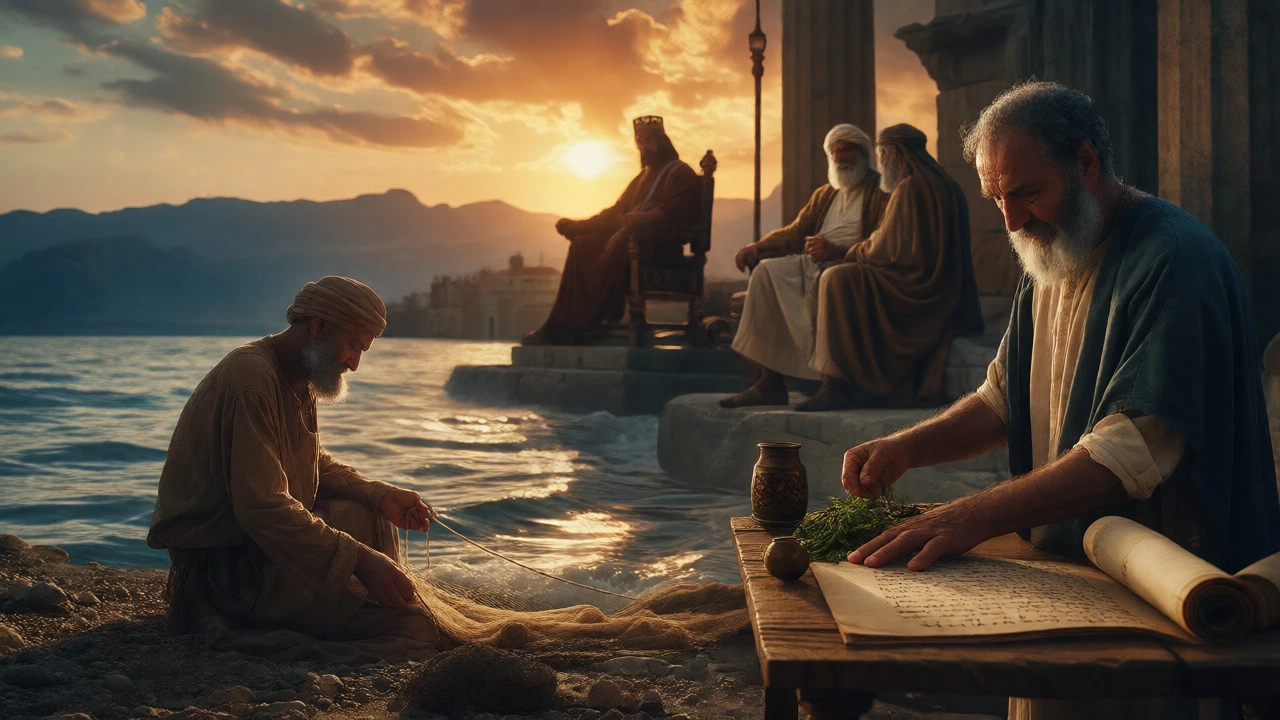
When scholars say there are 40 authors, they are referring to the traditionally attributed names found within the text or handed down through centuries of tradition. This list spans from around 1450 BC (if you accept Mosaic authorship) to the late first century AD. These writers came from every walk of life. You have Moses, a prince turned shepherd. You have Solomon, a king with unlimited wealth. You have Peter, a blue-collar fisherman. And you have Paul, a highly educated Pharisee.
This diversity is intentional. If only one type of person wrote the Bible, critics could dismiss it as the product of a specific elite class. Instead, the text reflects a broad human experience. A fisherman writes differently than a doctor. A poet uses metaphors that a historian avoids. Recognizing these voices helps you interpret the message correctly. For example, when Jesus speaks in parables, he uses agricultural imagery familiar to farmers. When Paul argues theology, he uses legal terminology familiar to Roman citizens.
Major Contributors You Should Know
While there are roughly 40 names, a handful of them account for a massive portion of the text. Understanding these key figures gives you the best entry point into biblical literature.
| Author | Role/Background | Notable Works | Style/Tone |
|---|---|---|---|
| Moses | Prophet, Leader, Lawgiver | Pentateuch (Genesis-Deuteronomy) | Narrative, Legal, Foundational |
| David | King, Musician, Warrior | ~73 Psalms | Poetic, Emotional, Worshipful |
| Paul | Apostle, Rabbi, Tentmaker | 13 New Testament Epistles | Argumentative, Theological, Urgent |
| Luke | Physician, Historian | Gospel of Luke, Acts | Detailed, Ordered, Compassionate |
| Solomon | King, Wise Man | Proverbs, Ecclesiastes, Song of Songs | Wisdom Literature, Reflective |
Moses is traditionally credited with the first five books of the Bible, known as the Pentateuch. Whether you view him as the literal scribe or the source of oral traditions passed down later, his influence on Jewish law and identity is undeniable. His writing establishes the foundation for everything that follows.
Then there is Paul. He didn’t meet Jesus during his earthly ministry, but he became the most prolific writer in the New Testament. Paul wrote at least 13 letters (epistles) that made it into the canon. His background as a trained rabbi under Gamaliel shows in his dense, logical arguments. He often uses complex sentence structures in Greek that can be tough to translate directly into English. Reading Paul requires patience, but his insights on grace and law are central to Christian theology.
Anonymous Writers and Editors
Here is where things get tricky. Not all biblical books have clear authors. Several texts are anonymous. The Gospel of Matthew, Mark, Luke, and John bear titles, but the original manuscripts likely did not include the authors' names in the body of the text. These titles were added later by church leaders to distinguish the accounts.
Furthermore, some books show signs of multiple hands. The Book of Isaiah, for instance, has such a shift in style and historical context between chapters 39 and 40 that many scholars propose two different authors: "First Isaiah" and "Second Isaiah." Similarly, the Book of Proverbs lists several contributors, including Agur and Lemuel, alongside Solomon. This suggests that wisdom literature was collected and compiled over time, rather than written in one sitting by one man.
Editors also played a crucial role. After the initial writings, scribes and compilers arranged the materials. They preserved the texts, standardized spellings, and sometimes combined separate scrolls into single volumes. When you read the end of Deuteronomy, which describes the death of Moses, you are reading an addition by someone else-likely Joshua or a later editor. Acknowledging this doesn't diminish the text's authority for believers; it simply highlights the careful process of preservation.
Why the Number Matters for Interpretation
Knowing there are 40 authors solves many apparent contradictions. If you expect a single voice, you might stumble when the tone shifts abruptly. But if you recognize that the prophet Jeremiah is writing in anguish, while the chronicler is writing with orderly precision, the differences make sense.
- Contextual Clues: Paul writes to specific churches facing specific problems. His advice on marriage in 1 Corinthians differs from his advice in Ephesians because the audiences were different.
- Literary Genre: David writes poetry. Do not read Psalm 23 expecting scientific accuracy about sheep behavior. Read it for its emotional truth and metaphorical power.
- Historical Distance: The author of Hebrews quotes the Old Testament extensively, showing deep familiarity with Jewish scripture. This helps date the letter and understand its argument for a Jewish-Christian audience.
Critics sometimes use the multiple-author theory to argue against divine inspiration. They claim humans just wrote their opinions. Believers counter that God used these diverse personalities to convey a unified message. The harmony across 1,500 years and three continents is seen as evidence of supernatural oversight. Either way, acknowledging the human element makes the study richer.
Common Misconceptions About Biblical Authorship
One big myth is that Jesus wrote any part of the Bible. He didn’t. He taught orally. His disciples wrote about him decades later. Another misconception is that the Bible was written in English. It wasn’t. It was written in Hebrew, Aramaic, and Greek. Translators have had to make choices for thousands of years, which affects how we perceive the original authors' intent.
Also, don't assume that every word in the Bible is a direct quote from God. Much of it is dialogue between characters, speeches by kings, or personal reflections. The author records what happened; they don't always endorse every action described. Judas Iscariot appears in the Gospels, but the Gospel writers aren't endorsing his betrayal-they’re reporting history.
Did Jesus write any books of the Bible?
No, Jesus did not write any books of the Bible. He taught orally, and his teachings were recorded by his apostles and other early followers, such as Matthew, Mark, Luke, and John, after his resurrection.
Who wrote the most books in the Bible?
Traditionally, Moses is credited with writing the first five books (the Pentateuch). However, in terms of the New Testament, the Apostle Paul wrote the most individual books, with 13 epistles attributed to him.
Are the authors of the Gospels eyewitnesses?
Mark and Luke are generally considered to rely on eyewitness testimony rather than being direct eyewitnesses themselves. Matthew and John are traditionally identified as apostles and thus direct eyewitnesses, though modern scholarship debates the exact timing and nature of their authorship.
What languages did the Bible authors write in?
The Old Testament was primarily written in Hebrew, with small portions in Aramaic. The New Testament was written entirely in Koine Greek, the common language of the eastern Mediterranean at that time.
Why does the Bible have so many authors?
The Bible was composed over a span of approximately 1,500 years. Different authors lived in different eras, cultures, and professions, allowing the text to address a wide variety of human experiences and theological questions relevant to each generation.