
70-20-10 Learning Strategy Calculator
Define Your Development Plan
Enter your total available resources to see how they should be distributed according to the 70-20-10 research-backed model.
$0
On-the-job challenges & projects
$0
Mentorship & coaching
$0
Courses & certifications
Detailed Action Plan
-
🚀 Experiential Learning
0 hoursAssign stretch assignments, cross-functional projects, or new responsibilities that solve real business problems.
-
🤝 Social Learning
0 hoursSchedule weekly mentorship sessions, peer feedback loops, and job shadowing opportunities.
-
🎓 Formal Education
0 hoursInvest in specific workshops, online courses, or books to fill identified technical gaps.
Ready to Plan?
Enter your budget and time constraints on the left to generate a personalized development strategy.
You hired them because they were good. Now you need them to be great. That is the core challenge of personnel development. It is not just about sending people to random workshops or hoping they figure it out on their own. It is a deliberate process of helping your team members grow their skills, confidence, and career paths so they stay with you longer and perform better.
In 2026, the workforce looks different than it did five years ago. Employees expect growth opportunities as much as they expect a paycheck. If you ignore this, you lose talent to competitors who offer clearer paths forward. But if you get it right, you build a loyal, high-performing team that drives your business forward. Here is how you actually do it, without wasting time or money.
Start with Individual Growth Plans
The biggest mistake managers make is treating all employees the same. One person wants to become a director; another just wants to master their current role and go home at 5 PM. You cannot develop personnel effectively if you don’t know what they want.
Create an Individual Development Plan (IDP) for every team member. This is a simple document that outlines three things:
- Career Goals: Where do they see themselves in 12-24 months?
- Current Skills: What are they already good at?
- Gaps: What skills or experiences are missing to reach their goals?
Sit down with each person quarterly. Ask open-ended questions like, “What part of your job excites you most?” or “What task drains your energy?” Use their answers to tailor their development. For example, if a junior analyst wants to move into data science, their IDP should include Python training and mentorship from a senior data scientist, not generic leadership seminars.
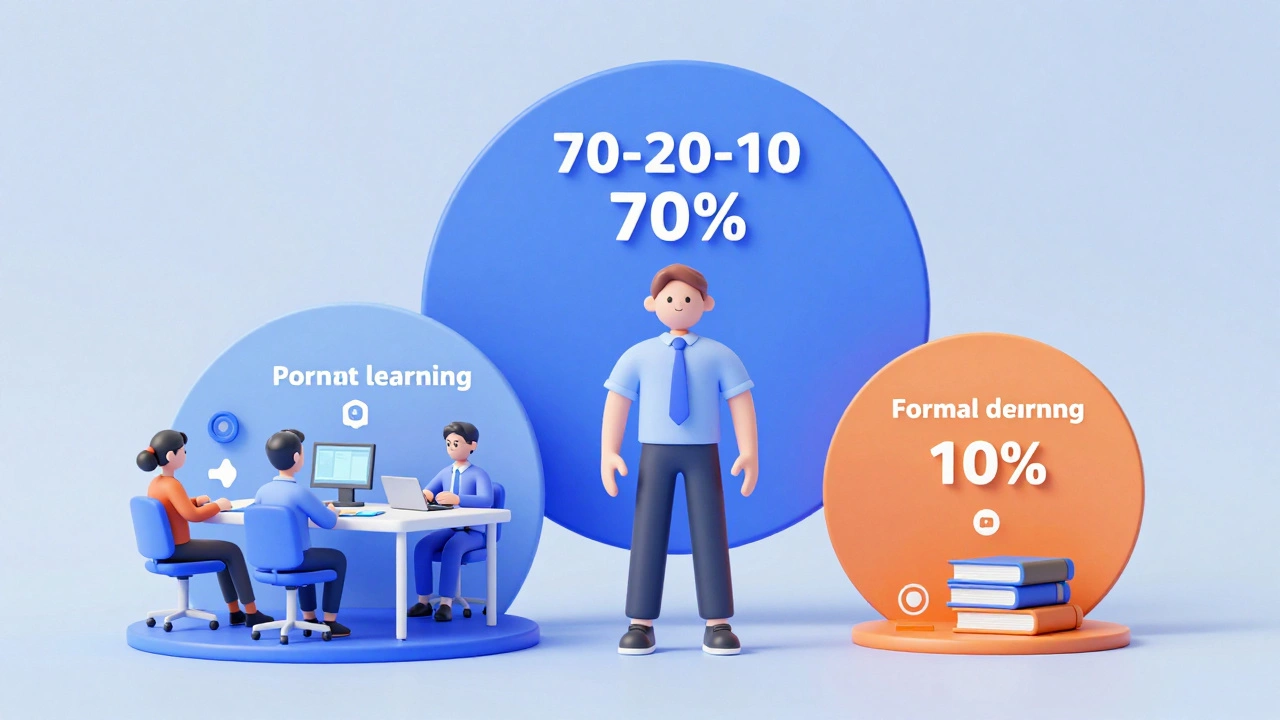
Leverage the 70-20-10 Model
Research consistently shows that people learn best through experience, not lectures. The 70-20-10 model breaks down learning into three buckets:
- 70% Experiential Learning: On-the-job challenges, stretch assignments, and cross-functional projects.
- 20% Social Learning: Mentorship, coaching, peer feedback, and observing others.
- 10% Formal Education: Courses, workshops, books, and certifications.
Most companies flip this upside down, spending heavily on formal courses while ignoring experiential learning. Instead, assign a high-potential employee to lead a small project outside their usual scope. Pair them with a mentor who has succeeded in that area. Then, let them take a short online course to fill specific knowledge gaps. This approach is cheaper, more engaging, and sticks better.
Build a Culture of Feedback
Annual performance reviews are dead. They are too infrequent to drive real change. To develop personnel effectively, you need continuous feedback loops.
Implement weekly one-on-one meetings that focus on growth, not just status updates. Use these sessions to discuss progress against IDPs, address roadblocks, and celebrate wins. Encourage peers to give constructive feedback using frameworks like SBI (Situation-Behavior-Impact). For instance, instead of saying “You were rude in the meeting,” say “In yesterday’s client call (Situation), when you interrupted Sarah (Behavior), it seemed to shut down her contribution (Impact).”
This creates psychological safety. When employees feel safe to fail and learn, they take more risks and grow faster. Studies from organizations like Gallup show that teams with regular feedback have significantly higher engagement and retention rates.
Invest in Leadership Pipeline
Personnel development isn’t just for individual contributors. You must also prepare your next generation of leaders. Identify high-potential employees early-those who show curiosity, resilience, and emotional intelligence.
Create a leadership pipeline by rotating these individuals through different departments. Let them shadow executives. Give them opportunities to manage budgets or lead cross-team initiatives. Provide them with executive coaching to refine their decision-making and communication skills.
Don’t wait until a manager leaves to scramble for a replacement. Build bench strength proactively. Companies with strong internal promotion cultures report higher employee satisfaction and lower recruitment costs.

Measure What Matters
If you can’t measure it, you can’t improve it. Track key metrics related to personnel development:
- Internal Promotion Rate: Percentage of leadership roles filled internally.
- Employee Retention: Turnover rate among high performers.
- Skills Acquisition: Number of new competencies gained per employee annually.
- Engagement Scores: Results from pulse surveys asking about growth opportunities.
Use this data to adjust your strategy. If retention is low despite heavy training investment, maybe the issue is lack of clear career paths, not insufficient skills development. Data-driven decisions prevent wasted resources.
| Method | Cost | Time Commitment | Best For |
|---|---|---|---|
| Mentorship | Low | Ongoing | Career guidance, soft skills |
| Cross-training | Medium | Project-based | Technical versatility, teamwork |
| Formal Courses | High | Fixed duration | Certifications, foundational knowledge |
| Stretch Assignments | Low | Variable | Leadership potential, problem-solving |
Avoid Common Pitfalls
Even well-intentioned efforts can fail. Watch out for these traps:
- One-size-fits-all programs: Ignoring individual preferences leads to disengagement.
- Lack of follow-through: Setting goals without checking progress kills momentum.
- Ignoring soft skills: Technical prowess means little without communication and empathy.
- No alignment with business goals: Development should support company objectives, not just personal interests.
Keep it simple. Start small. Focus on quality over quantity. And remember, developing personnel is a marathon, not a sprint.
How long does it take to see results from personnel development?
Results vary, but most organizations notice improvements in engagement within 3-6 months. Skill acquisition takes longer, typically 6-12 months for significant competency gains. Consistency is key-sporadic efforts yield minimal returns.
What if an employee doesn’t want to develop further?
Respect their choice. Not everyone seeks upward mobility. Focus on maintaining their current performance and job satisfaction. Sometimes, lateral moves or improved work-life balance are better incentives than traditional advancement.
Is external training always necessary?
No. Internal mentoring, job rotation, and peer learning often provide more relevant and cost-effective development. External courses are best for specialized technical skills or industry certifications that aren’t available internally.
How do I handle underperformers in a development program?
First, diagnose the root cause. Is it a skill gap, motivation issue, or mismatched role? Tailor the intervention accordingly. Provide additional coaching, adjust responsibilities, or set clearer expectations. If no improvement occurs after reasonable support, consider reassignment or separation.
Can remote teams benefit from personnel development strategies?
Absolutely. Remote teams require intentional connection. Use virtual mentoring platforms, asynchronous video feedback, and digital collaboration tools to facilitate social and experiential learning. Regular check-ins become even more critical in distributed environments.