When people ask about the biggest fantasy series of all time, they’re not just looking for the one with the most pages or the loudest fans. They want to know which one changed everything - the series that sold more books than any other, inspired entire industries, and stayed in the public eye for decades. The answer isn’t just about numbers. It’s about impact.
The numbers don’t lie: Lord of the Rings still leads
The Lord of the Rings by J.R.R. Tolkien is the biggest fantasy series of all time - by a wide margin. Over 150 million copies have been sold worldwide since its first publication in 1954-1955. That’s more than all other fantasy series combined. Even today, it sells about 10 million copies every year. No other fantasy book series comes close.
Compare that to Game of Thrones by George R.R. Martin, which has sold around 90 million copies across all books and spin-offs. Or The Wheel of Time by Robert Jordan and Brandon Sanderson, which sits at roughly 85 million. Those are massive numbers - but they’re still 40% below Tolkien’s total. And Tolkien’s books have been in print for 70 years. Most modern series haven’t even hit 30.
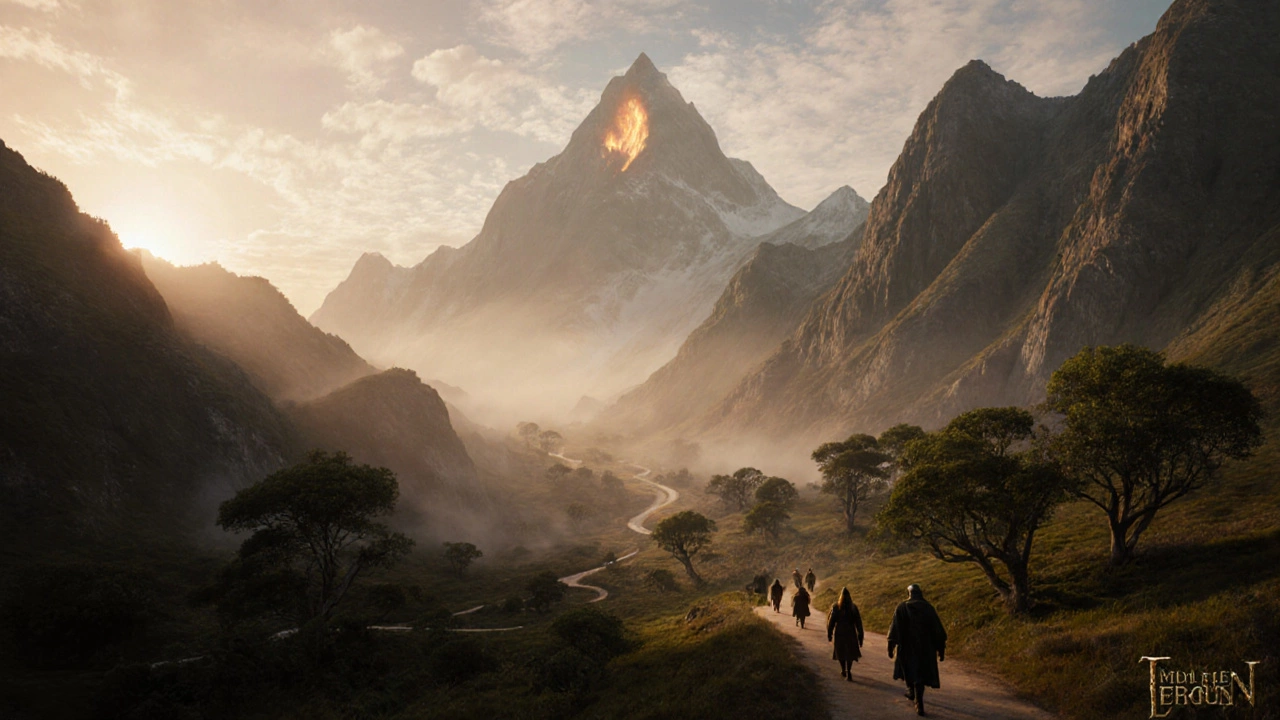
Why does it keep selling? It’s not just nostalgia. It’s because Lord of the Rings created the blueprint. Before Tolkien, fantasy was mostly fairy tales or pulp adventure stories. He built a world with languages, maps, histories, and cultures that felt real. People didn’t just read it - they lived inside it. That’s why it still dominates bookshelves, classrooms, and streaming platforms.
It didn’t just sell books - it built a genre
Think about every fantasy series you’ve ever heard of. Chances are, it borrowed something from Tolkien. The chosen hero with humble origins? That’s Frodo. The dark lord with a single goal? That’s Sauron. The fellowship of diverse allies? That’s the Company of the Ring. Even the term “high fantasy” was coined to describe his work.
Modern fantasy writers don’t just admire Tolkien - they’re working in his shadow. Brandon Sanderson, Patrick Rothfuss, and N.K. Jemisin all cite him as foundational. Video games like The Elder Scrolls and World of Warcraft use his world-building rules. Movies like Harry Potter and The Hobbit follow his pacing and tone. Even Game of Thrones, which tried to be grittier and darker, still uses the same structure: a war over a throne, ancient evils stirring, and a small group trying to stop them.
Tolkien didn’t just write a story. He invented the rules of modern fantasy. And those rules are still being followed - and sold - today.
What about newer giants? Game of Thrones and The Wheel of Time
It’s fair to ask: hasn’t something newer taken over? After all, Game of Thrones exploded into pop culture with HBO’s TV adaptation. It broke records. It made dragons cool again. It turned book sales into global events. But here’s the catch: its success was built on a foundation Tolkien laid decades earlier.
The Game of Thrones books sold 20 million copies before the show aired. After the show, they sold another 70 million. That’s impressive - but it’s still less than half of Tolkien’s total. And while the show ended in 2019, the books are still incomplete. Martin has been working on the final volume for over a decade. That uncertainty limits its long-term sales potential.
Then there’s The Wheel of Time. Robert Jordan started it in 1990. It grew into a 14-book epic with over 85 million copies sold. After Jordan’s death, Brandon Sanderson finished it. It’s one of the most ambitious fantasy series ever written. But it never reached the cultural saturation of Tolkien. It had a loyal fanbase, but no movie franchise that reached billions. No global classroom curriculum. No translations in over 60 languages.
Neither series changed the genre the way Tolkien did. They built on it. They expanded it. But they didn’t create it.
Why the gap? Depth, time, and legacy
There’s a reason Tolkien still wins. It’s not just about how many books he wrote. It’s about how much he built between the lines.
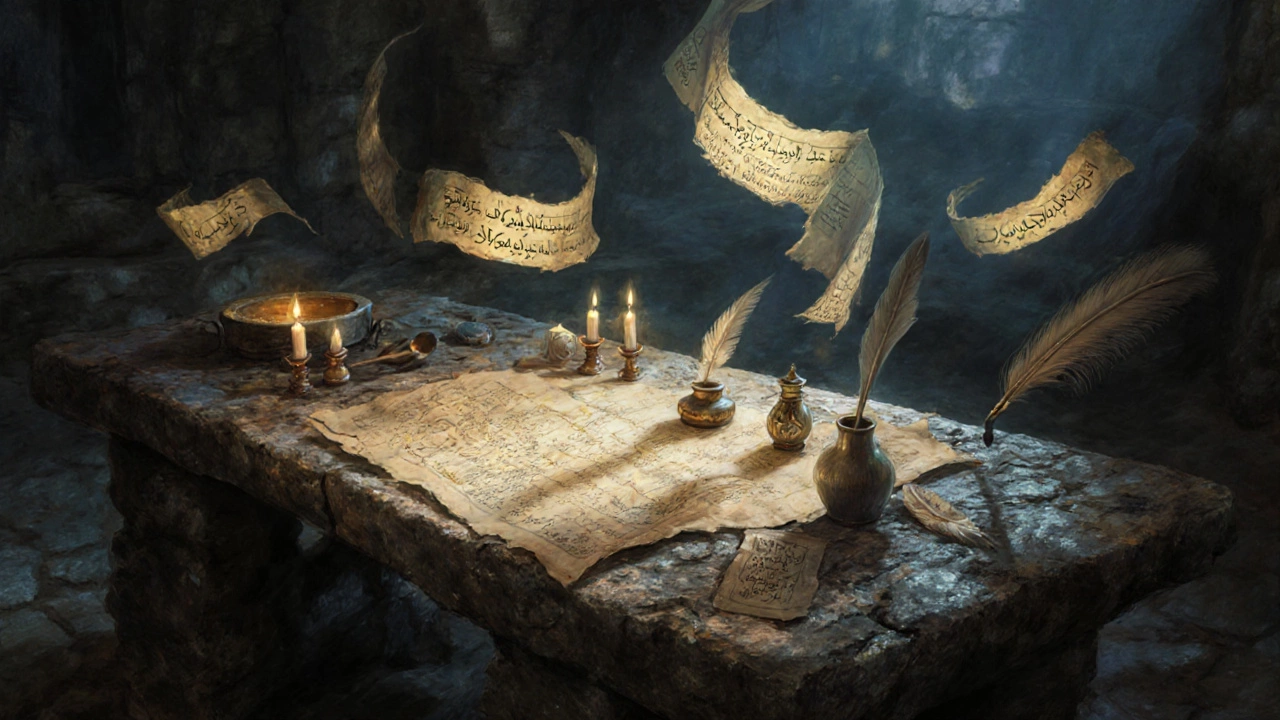
He created two full languages - Quenya and Sindarin - with grammar, vocabulary, and poetic structures. He wrote entire histories of Middle-earth, including wars, kings, and migrations that happened thousands of years before his story even began. He didn’t just imagine a world - he documented it like an archaeologist.
Modern fantasy series often focus on plot and characters. Tolkien focused on world. His world felt ancient, even when the story was just beginning. That’s why readers return to it. It’s not just a story. It’s a place you can visit again and again.
And time has helped. Lord of the Rings had decades to become part of the cultural fabric. It was taught in schools. It was adapted into films, radio plays, and stage musicals. It became a reference point for everything from philosophy to politics. No other fantasy series has had that kind of runway.
What does “biggest” really mean?
Some people argue that “biggest” should mean most influential, or most talked about, or most adapted. In those categories, Game of Thrones might win. It had the biggest TV audience. It broke social media records. It inspired memes, fan theories, and academic papers.
But when you measure by sales, longevity, cultural penetration, and influence on the genre itself - Tolkien wins. Every year, new readers discover his books. Every year, new writers cite him as their inspiration. Every year, publishers reprint his work in new formats - audiobooks, illustrated editions, boxed sets.
There’s no sign it’s slowing down.
Where does that leave other fantasy series?
That doesn’t mean other series aren’t worth reading. The Wheel of Time offers a sprawling, intricate magic system. Game of Thrones brings political realism to a mythical world. The Name of the Wind has poetic prose that lingers. The First Law trilogy flips fantasy tropes on their head.
But they’re all standing on the shoulders of one giant.
If you want to understand fantasy, you start with Tolkien. Everything else - no matter how popular - is built on top of his world. He didn’t just write the biggest fantasy series. He wrote the first one that mattered.
Is Lord of the Rings the best fantasy series ever?
"Best" is subjective. Some readers prefer the gritty politics of Game of Thrones, the magic systems of The Wheel of Time, or the emotional depth of The Name of the Wind. But "biggest" isn’t about personal taste - it’s about sales, influence, and cultural reach. In those terms, Lord of the Rings has no equal.
Why hasn’t a newer series surpassed Lord of the Rings?
Newer series have more marketing, faster releases, and TV adaptations - but they lack the decades-long head start Tolkien had. His books were the first to create a fully realized fantasy world. That originality gave them a lasting power. Plus, his work became part of education systems, film history, and pop culture before modern franchises even existed.
How many books are in The Lord of the Rings?
It’s one story divided into three volumes: The Fellowship of the Ring, The Two Towers, and The Return of the King. Each volume is often split into two books for printing, making it six books total. But it’s one continuous narrative - not a series with separate plots.
Did The Hobbit count as part of the biggest fantasy series?
Yes. While The Hobbit was written first and is more of a children’s tale, it’s now considered the prequel to Lord of the Rings. Together, they form the core of Tolkien’s Middle-earth legendarium. Sales figures for both are usually combined when measuring his total impact.
What about Harry Potter? Isn’t that bigger?
Harry Potter has sold over 600 million copies worldwide - more than Lord of the Rings. But it’s not classified as high fantasy. It’s urban fantasy with a modern setting, magic schools, and contemporary social themes. Tolkien’s work is the foundation of epic, medieval-style fantasy. The two genres are different, and Harry Potter is often grouped separately in sales rankings.
Final thought: The real legacy
The biggest fantasy series isn’t just the one with the most copies sold. It’s the one that made you believe in dragons, elves, and ancient prophecies as if they were real. It’s the one that made you want to draw maps, write languages, and imagine worlds of your own.
That’s what Tolkien gave us. And no other fantasy series has come close to matching it - not in sales, not in influence, and not in lasting power.