The Fantasy Greatness Calculator
There is no single objective answer to what makes a fantasy book "the greatest." It depends entirely on what you value most as a reader. Are you looking for cultural impact, literary depth, accessibility, or gritty realism? Select the book that appeals to you most in each category below, then click "Reveal My Verdict" to see how your tastes align with critical consensus.
You walk into a bookstore or scroll through an online list, and you see it: the greatest book of all time. But whose definition are we using? Is it the one with the most copies sold? The one critics rave about in academic journals? Or the one that made you stay up until 3 AM because you simply could not stop turning the pages?
When we talk about fantasy, this question gets messy fast. Unlike historical fiction or romance, fantasy doesn't just reflect the world-it builds new ones. So, how do we judge a book that invents its own physics, magic systems, and gods? There is no single answer, but there are heavy hitters that constantly fight for the top spot. Let's break down who actually holds the crown, why they deserve it, and why your personal favorite might be right too.
The Heavyweight Champion: Why It’s Probably Not What You Think
If you ask a random person on the street, they might say The Lord of the Rings by J.R.R. Tolkien. And honestly? They’re not wrong. In terms of cultural impact, sales, and sheer recognition, Tolkien’s epic is hard to beat. It defined what modern high fantasy looks like. Before Tolkien, fantasy was often short stories or fairy tales. After him, it became sprawling maps, invented languages, and deep lore.
But here’s the catch: being "famous" isn’t the same as being "the greatest." Critics often argue that while The Lord of the Rings is foundational, its prose can feel dense or archaic to modern readers. Its moral clarity-good vs. evil-is powerful, but some find it simplistic compared to more nuanced works. Still, you cannot ignore the fact that almost every fantasy writer since 1954 has been responding to Tolkien, either by copying him or rebelling against him.
The Critical Darling: Literary Merit vs. Genre Stigma
If you shift the metric from popularity to literary quality, the conversation changes. Suddenly, names like Ursula K. Le Guin enter the chat. Her novel A Wizard of Earthsea is frequently cited by scholars as a masterpiece of balance, philosophy, and character development.
Le Guin didn’t just write a quest; she wrote about the cost of power and the necessity of darkness. Unlike many of her contemporaries, her magic system had real consequences. You couldn’t just wave a wand and fix everything. This approach earned fantasy respect in literary circles that previously dismissed it as "escapism." If you value thematic depth and elegant prose over massive battle scenes, Le Guin might be your pick for the greatest.
The Modern Titan: George R.R. Martin and Realism
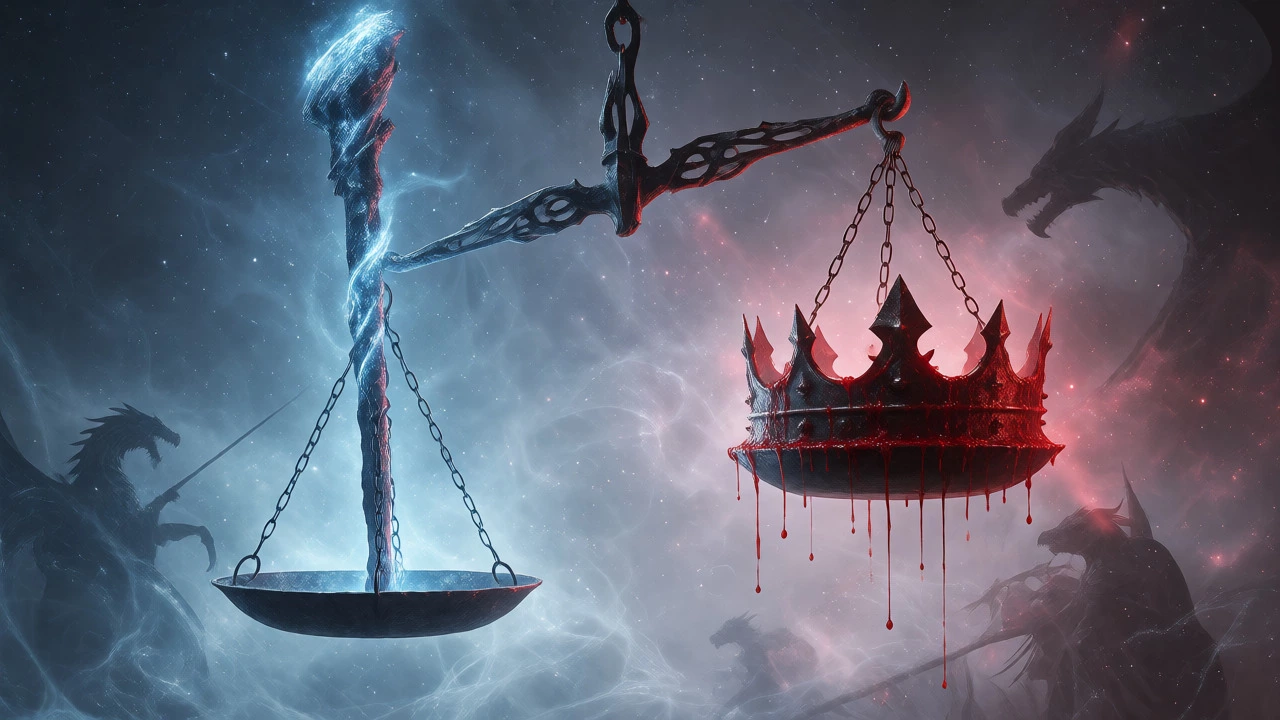
Fast forward to the late 20th century, and A Song of Ice and Fire by George R.R. Martin shattered the mold again. Martin asked a simple question: What if knights and dragons existed, but people were still petty, greedy, and mortal?
The result was a gritty, political thriller disguised as fantasy. It wasn’t about saving the world; it was about surviving the winter. The series popularized the idea that main characters could die randomly, not just at the end of their arc. This subversion of tropes brought millions of non-fantasy readers into the genre. However, calling it the "greatest" is tricky because the series remains unfinished. Can a book be the greatest of all time if we don’t know how it ends? Most would say no.
The Sales King: Harry Potter and Accessibility
We have to talk about Harry Potter by J.K. Rowling. With over 600 million copies sold worldwide, it is arguably the most read fantasy series in history. For many, this is the gateway drug to reading itself.
Rowling’s genius wasn’t in complex magic systems or deep philosophical debates. It was in pacing, relatability, and the feeling of belonging. Hogwarts feels like a place you want to go. Critics sometimes knock the prose for being functional rather than beautiful, but function serves story. If "greatest" means "most influential in creating a community," Harry Potter wins easily. It turned reading into a global event, with midnight release parties and fan theories dominating dinner table conversations.
How Do We Actually Measure "Greatest"?
To make sense of this chaos, let’s look at the criteria people usually use. It’s rarely just one thing. Here is a breakdown of the different lenses:
| Criterion | Top Contender | Why It Wins |
|---|---|---|
| Cultural Impact | The Lord of the Rings | Defined the genre; inspired movies, games, and music. |
| Literary Quality | A Wizard of Earthsea | Philosophical depth; respected by non-genre critics. |
| Sales & Reach | Harry Potter | Highest circulation; created a multi-generational fanbase. |
| Realism & Grit | A Song of Ice and Fire | Subverted tropes; appealed to adult mainstream audiences. |
| World-Building | Dune (Frank Herbert) | Ecological and political complexity; sci-fi/fantasy hybrid. |
Notice that Dune sneaks in there. While technically science fiction, its messianic themes and desert planet setting share so much DNA with fantasy that it often enters the conversation. Frank Herbert’s work is dense, demanding, and brilliant. If you think "greatest" means "most intellectually challenging," Dune is a strong contender.
The Subjectivity Trap: Why Your Favorite Matters More
Here is the uncomfortable truth: there is no objective "greatest book." Literature is art, and art is subjective. What makes a book great for you depends on what you need from it.
- Do you want comfort? Then The Hobbit or The Chronicles of Narnia might be your greatest. They offer safety and wonder.
- Do you want challenge? Then Malazan Book of the Fallen by Steven Erikson will test your patience and reward you with immense scale.
- Do you want emotion? Then The Name of the Wind by Patrick Rothfuss might hit harder because of its lyrical storytelling.
Don’t let lists tell you what to love. If a book changed how you see the world, it is the greatest for you. Period. That said, understanding why certain books are praised helps you find your next favorite. If you liked the structure of Tolkien, try Robert Jordan. If you liked the grit of Martin, try Joe Abercrombie.
Final Verdict: A Tie Between Titans
If forced to choose, most surveys and critical consensus point to a tie between The Lord of the Rings and Harry Potter, depending on the year and the demographic. Older readers and critics lean toward Tolkien for his linguistic and mythological craftsmanship. Younger readers and general audiences lean toward Rowling for her narrative momentum and cultural ubiquity.
But remember, the title of "greatest" shifts. In ten years, someone else might hold it. Maybe it will be a book written today that we haven’t even heard of yet. That’s the beauty of the genre-it keeps evolving. So, put down the rankings list. Pick up the book that calls to you. Read it. Argue about it. That’s what makes it great.
Is The Lord of the Rings really the best-selling fantasy book?
Not exactly. While The Lord of the Rings has sold over 150 million copies, Harry Potter has surpassed it with over 600 million copies sold worldwide. However, LOTR is often considered the most influential in shaping the modern fantasy genre structure.
Why do critics prefer Ursula K. Le Guin over other fantasy authors?
Critics appreciate Le Guin for her focus on anthropological detail, Taoist philosophy, and character-driven narratives rather than plot-driven action. Her work bridges the gap between literary fiction and genre fiction, earning awards typically reserved for mainstream literature.
Can a series be considered the greatest book of all time?
Yes, though it’s debated. Series like A Song of Ice and Fire or The Stormlight Archive are judged as cohesive bodies of work. However, incomplete series face criticism because the full artistic vision hasn’t been realized yet, which can affect their standing in "all-time" lists.
What is the oldest fantasy book still read today?
The Epic of Gilgamesh is often cited as the earliest known work of literature containing fantasy elements. More directly, The Golden Ass by Apuleius (2nd century AD) is an early example of fantasy fiction involving transformation and magic, still studied in universities today.
Does movie adaptation affect a book's ranking as the greatest?
It boosts visibility and sales, which can influence popularity metrics. For example, Peter Jackson’s films cemented The Lord of the Rings’ status for new generations. However, critical rankings usually separate the text from the film, judging the writing on its own merits.