Find Your Perfect Thriller Match
The article argues that the "greatest" thriller depends on what kind of anxiety or intellectual challenge you seek. Answer these questions to find out who wrote the greatest thriller for you.
Why this wins for you:
Genre Influence Score
Based on historical impact as described in the article.
There is no single answer to what constitutes the greatest thriller of all time. If you ask a detective novel purist, they will point to Agatha Christie. Ask a modern suspense fan, and they might shout Gillian Flynn. Ask someone who loves high-stakes espionage, and John le Carré enters the chat. This isn’t just about taste; it’s about how the definition of a "thriller" has shifted over the last century. We are moving from whodunits where the puzzle matters most, to stories where the psychological unraveling of characters drives the plot.
Finding the "best" one requires looking at the pillars that hold up the genre. We need to examine the classics that set the rules, the mid-century masters who broke them, and the modern authors who reinvented them for a digital age. Let’s look at the heavy hitters and decide which one truly claims the throne.
The Foundation: Agatha Christie and the Golden Age
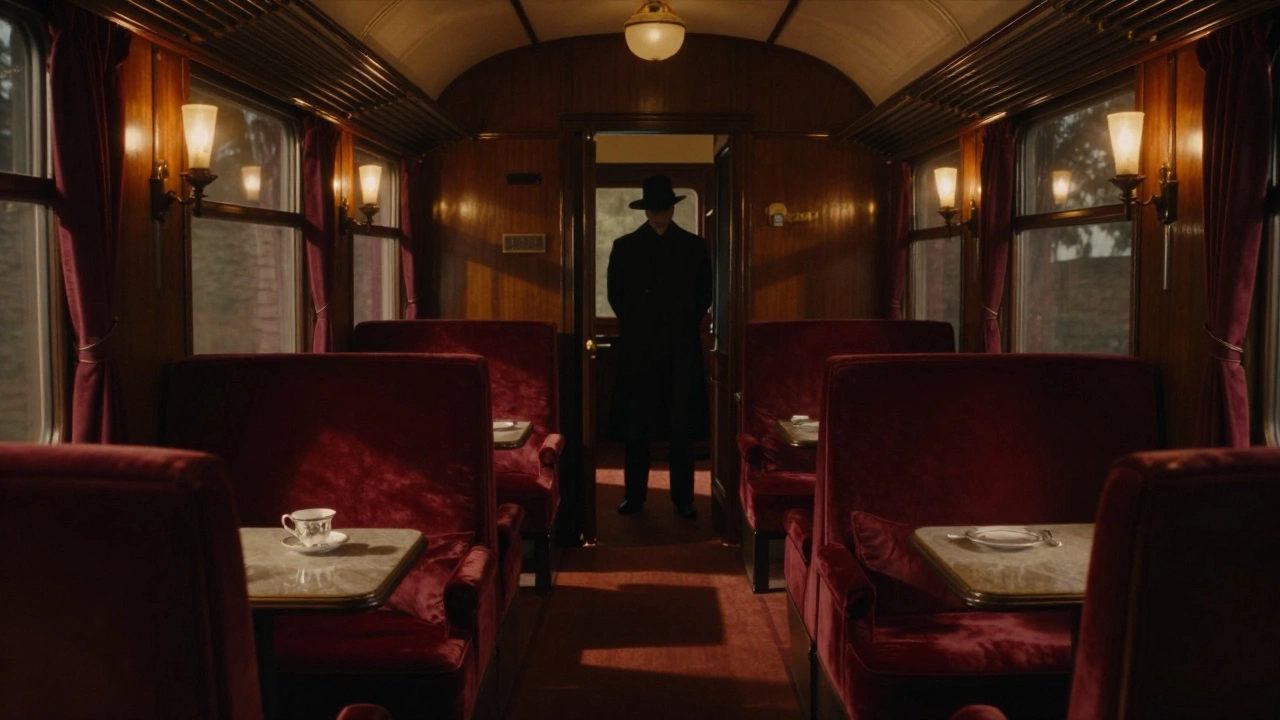
You cannot talk about thrillers without talking about Agatha Christie, the Queen of Crime whose works have sold over two billion copies worldwide. Her book Murder on the Orient Express (1934) remains a benchmark for structural perfection. In this era, the "thriller" was often synonymous with the "detective story." The tension came from the intellectual game between the author and the reader. You were given all the clues. The excitement was in solving the puzzle alongside Hercule Poirot or Miss Marple.
However, does this count as a "thriller" in the modern sense? Modern readers often find the pacing slow. The stakes are usually limited to justice being served, not global catastrophe or personal survival. Yet, Christie mastered the art of misdirection. She taught writers that the truth can be hidden in plain sight. If you value clever plotting and fair-play mysteries above all else, her work is unbeatable. But if you crave visceral fear or moral ambiguity, you might find her too clean.
The Shift to Psychological Depth: Patricia Highsmith
In the 1950s, the genre took a dark turn. Enter Patricia Highsmith, an American novelist known for creating complex anti-heroes and exploring themes of identity and morality. Her debut, The Talented Mr. Ripley (1955), changed everything. Instead of rooting for the detective to catch the killer, we were forced to root for the killer himself. Tom Ripley is charming, adaptable, and utterly devoid of conscience.
This created a new kind of tension. It wasn't "who did it?" because we knew. It was "will he get away with it?" and more disturbingly, "do I understand why he did it?" Highsmith introduced the concept of the unreliable narrator and the sympathetic psychopath. This shift moved the genre from external puzzles to internal chaos. For many critics, this makes Highsmith’s work more "thrilling" than Christie’s because it taps into our own darker impulses. It’s less about logic and more about empathy for the monstrous.
The Noir Standard: Raymond Chandler and Mickey Spillane
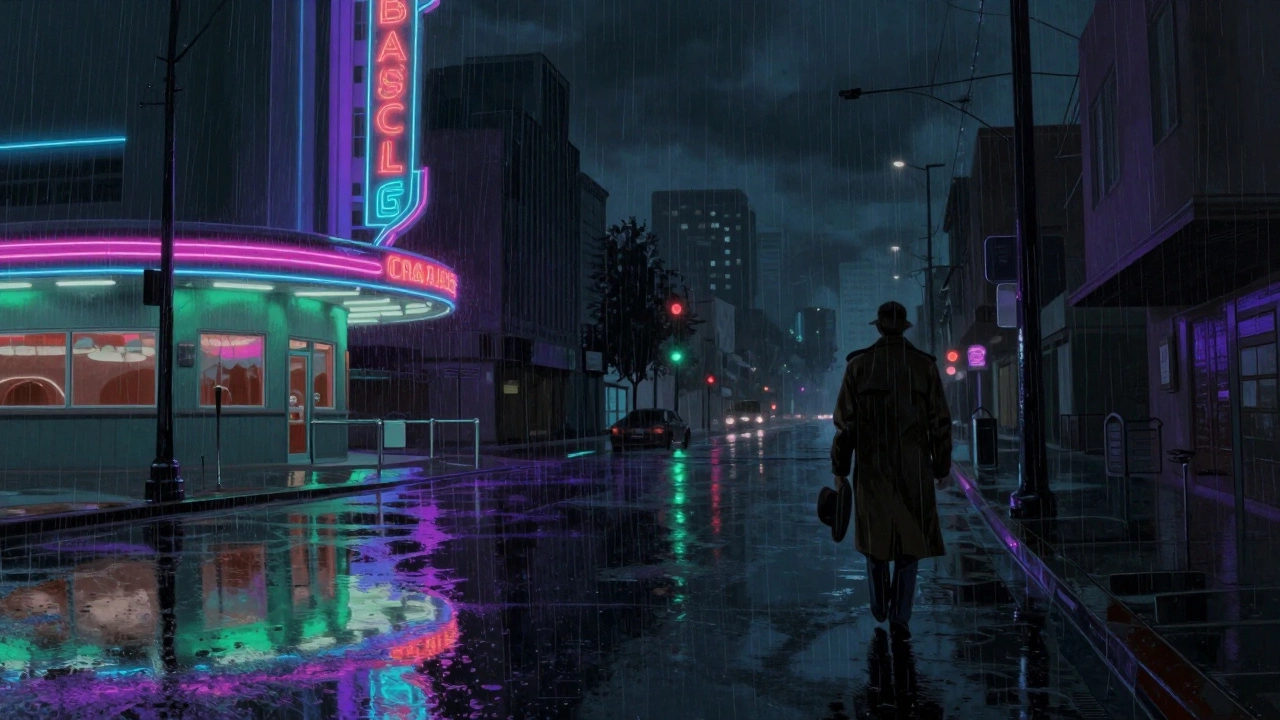
While Highsmith explored psychology, American hardboiled writers focused on atmosphere and cynicism. Raymond Chandler, a British-American writer of hard-boiled detective fiction who created the iconic private investigator Philip Marlowe, brought poetry to the gutter. His novel The Long Goodbye (1953) isn’t just a murder mystery; it’s a tragedy about loyalty in a corrupt world.
Chandler’s prose is sharp, witty, and deeply atmospheric. He painted Los Angeles as a character itself-sun-drenched but rotting underneath. Then there was Mickey Spillane, whose Mike Hammer series was pure adrenaline. Spillane didn’t care about subtle clues; he cared about violence and speed. These two represent the spectrum of noir. Chandler offers literary merit and social commentary; Spillane offers raw, unadulterated action. If your definition of a thriller relies on style and voice, Chandler is the gold standard.
The Modern Masterpiece: Gillian Flynn and Gone Girl
Jump forward to 2012. Gillian Flynn, an American author and screenwriter best known for her dark, satirical takes on marriage and media culture released Gone Girl. This book exploded the genre wide open. It combined the twisty plot of a classic mystery with the psychological horror of Highsmith and the media-savvy cynicism of modern noir.
Gone Girl is often cited as the greatest modern thriller because it deconstructs the genre while delivering a perfect page-turner. The dual timeline, the unreliable narrators, and the shocking midpoint reveal redefined what readers expected. It wasn’t just about a missing wife; it was a critique of performance in relationships and the role of media in shaping truth. Flynn proved that thrillers could be socially relevant and intellectually stimulating without losing their punch. For contemporary readers, this is likely the strongest contender for the title.
The International Perspective: Tana French and Stieg Larsson
We must also consider the global impact. Tana French, an Irish author known for her Dublin Murder Squad series, which blends police procedural elements with deep character studies brings a lyrical quality to the thriller. Her first book, In the Woods (2007), won multiple awards and revived interest in the literary thriller. French focuses heavily on the trauma of the detectives themselves, making the investigation a mirror for their pasts.
On the other side of the Atlantic, Stieg Larsson, a Swedish journalist and writer whose Millennium series, starting with The Girl with the Dragon Tattoo, became a global phenomenon brought investigative journalism and conspiracy theories into the mainstream. The Girl with the Dragon Tattoo (2005) combined a cold case mystery with a corporate conspiracy and a deeply flawed protagonist in Lisbeth Salander. Its success sparked the Nordic Noir movement, proving that slow-burn, atmospheric thrillers could outsell fast-paced American page-turners.
Comparing the Contenders
| Book / Author | Primary Strength | Key Innovation | Best For Readers Who Like... |
|---|---|---|---|
| Murder on the Orient Express (Christie) | Clever Plotting | Fair-play mystery structure | Solving puzzles and logical deduction |
| The Talented Mr. Ripley (Highsmith) | Psychological Depth | Sympathetic anti-hero | Moral ambiguity and character study |
| The Long Goodbye (Chandler) | Atmosphere & Prose | Poetic hardboiled style | Literary quality and noir aesthetics |
| Gone Girl (Flynn) | Narrative Twist | Unreliable dual narration | Modern social commentary and shock value |
| The Girl with the Dragon Tattoo (Larsson) | Investigative Scope | Complex conspiracy webs | Research-heavy plots and strong female leads |
Why There Is No Single Winner
The reason we can’t crown a single king is that the genre serves different needs. Sometimes you want a puzzle to solve (Christie). Sometimes you want to feel scared by human nature (Highsmith). Sometimes you want beautiful writing (Chandler). Sometimes you want a cultural conversation starter (Flynn).
If we define "greatest" by influence, Agatha Christie wins. She created the template. If we define it by psychological complexity, Patricia Highsmith wins. She broke the template. If we define it by modern relevance and commercial impact, Gillian Flynn wins. She updated the template for the internet age.
For me, the edge goes to The Talented Mr. Ripley. Why? Because it fundamentally changed how we view the relationship between the reader and the criminal. Before Highsmith, we were outsiders looking in. After Highsmith, we were complicit. That level of engagement creates a lasting chill that plot twists alone cannot achieve. A twist surprises you for an hour; a disturbed psyche haunts you for years.
How to Choose Your Own Favorite
To find the greatest thriller for *you*, ask yourself what keeps you up at night. Is it the fear of being trapped with strangers? Read Christie. Is it the fear of losing your identity? Read Highsmith. Is it the fear of a corrupt system? Read Larsson. Is it the fear of your partner lying to you? Read Flynn.
The genre is vast. Don’t limit yourself to one era. Try reading a classic followed by a modern take. Notice how the techniques evolve. You’ll likely find that your favorite isn’t just a book, but a specific type of anxiety that the author captured perfectly.
Is Agatha Christie still considered a thriller?
Yes, though she is more accurately described as a mystery or detective fiction writer. The terms are often used interchangeably, but Christie’s focus is on the puzzle rather than the suspense or danger typical of modern thrillers. However, her influence on the thriller genre is foundational.
What makes Gone Girl different from older thrillers?
Gone Girl uses a dual-narrator structure with unreliable perspectives, which was rare in mainstream thrillers before its publication. It also integrates modern media dynamics and social expectations into the plot, making it a satire as well as a suspense novel. Older thrillers typically had a single, reliable viewpoint or a clear distinction between good and evil.
Who wrote the first psychological thriller?
While the term evolved over time, Patricia Highsmith is widely credited with pioneering the modern psychological thriller with The Talented Mr. Ripley in 1955. Earlier works like Daphne du Maurier’s Rebecca (1938) had psychological elements, but Highsmith focused entirely on the criminal’s mindset.
Are Nordic Noir thrillers better than American ones?
It depends on what you prefer. Nordic Noir, led by authors like Stieg Larsson and Jo Nesbø, tends to be slower, more atmospheric, and socially critical. American thrillers, like those by Gillian Flynn or James Patterson, are often faster-paced and more plot-driven. Neither is objectively better; they serve different reading moods.
Why do people argue about the greatest thriller?
Because "thriller" covers a wide range of subgenres, including mystery, suspense, crime, and psychological horror. What excites one reader (a clever puzzle) might bore another (who wants visceral danger). The debate reflects personal preferences for pacing, moral complexity, and stylistic flair.