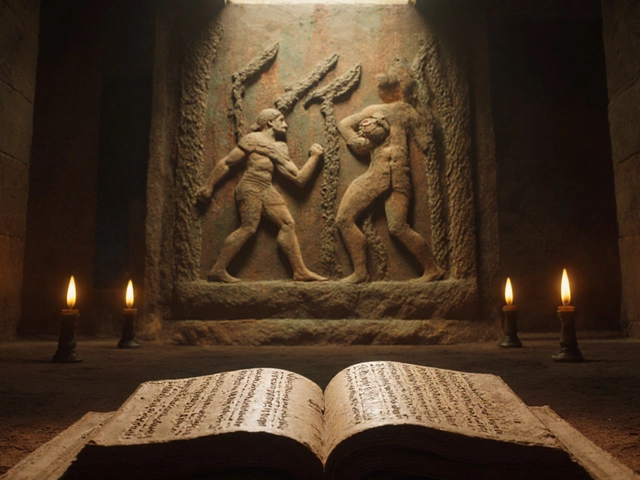
There’s no single answer to "What is the top 1 book in the world?"-and that’s the point. If you’re looking for a list that says "#1 is Bible," "#1 is Quran," or "#1 is Harry Potter," you’re missing the real story. The world doesn’t rank books like a Spotify chart. It doesn’t crown one winner. Instead, it uses books in different ways-some for faith, some for escape, some for survival. The book that touches the most lives isn’t always the one you see on bestseller lists.
It’s Not About Sales, It’s About Reach
The Bible is often called the top book because it’s sold in the billions. Over 5 billion copies printed since 1815, according to the Guinness World Records. But sales numbers don’t tell the whole story. Many of those copies were given away for free. Others were distributed by missionaries, governments, or charities-not because people were shopping for them, but because they were meant to be everywhere. That’s not a market success. That’s a cultural force.The Quran is printed in similar numbers, with estimates of over 3 billion copies since its revelation. It’s not just read-it’s memorized. Over 200 million Muslims worldwide have memorized the entire text. That’s not a reading habit. That’s a living tradition passed down through generations. No other book in human history has been preserved orally by so many people across so many languages and continents.
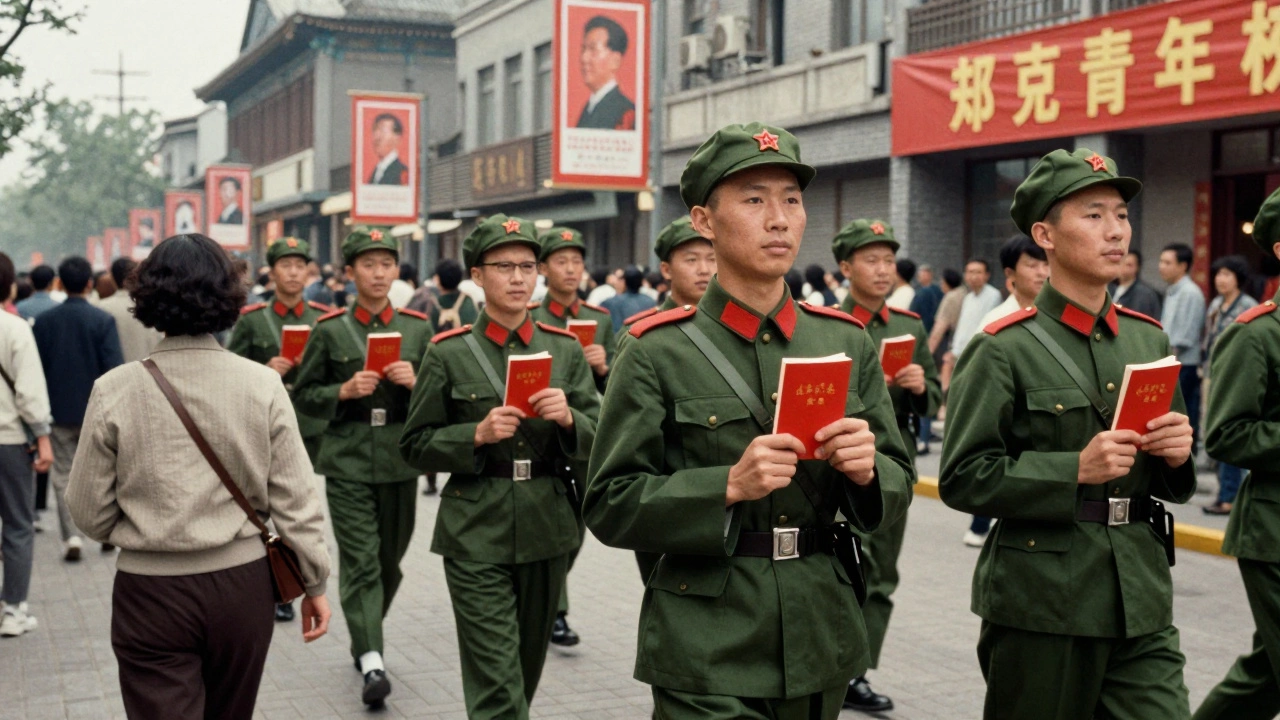
Then there’s the Chinese classic Quotations from Chairman Mao Zedong, known as the "Little Red Book." Over a billion copies were printed between 1964 and 1976. It was mandatory reading for students, soldiers, and workers. People carried it everywhere. It wasn’t chosen-it was required. And yet, for a time, it shaped the daily thoughts of nearly a quarter of the planet’s population.
What About Fiction? The Real Global Contenders
If you’re thinking of fiction, the numbers shift. Don Quixote by Miguel de Cervantes has sold over 500 million copies since 1605. It’s the most translated work of fiction ever. It’s taught in schools from Mexico to Mongolia. But it’s not a household name everywhere. Many people know the phrase "tilting at windmills" without ever reading the book.Harry Potter and the Philosopher’s Stone sold over 120 million copies. That’s more than most national populations. But its reach is concentrated in a few regions-North America, Western Europe, parts of Asia. It’s a phenomenon, yes, but not a global constant like religious texts.
The Lord of the Rings has sold over 150 million copies. It’s been translated into 70+ languages. In countries like India, Brazil, and South Africa, it’s as common as a library book. But again-it’s not something people read every day. It’s not something they recite. It’s not part of their daily rituals.
Books That Shape How We Think, Not Just What We Read
Some books don’t need mass sales to be powerful. Das Kapital by Karl Marx sold poorly in his lifetime. Today, it’s studied in universities from Havana to Hanoi. It’s cited in political movements, economic debates, and protests. It doesn’t have billions of copies-but it has billions of ideas.Same with The Art of War by Sun Tzu. Over 1,500 years old. Fewer than 10 million copies printed. Yet it’s required reading in military academies, business schools, and even competitive sports teams. CEOs, generals, and chess players all use it as a manual for strategy. It’s not popular-it’s practical.
And then there’s Atomic Habits by James Clear. Over 20 million copies sold since 2018. It’s the fastest-growing self-help book in history. Why? Because it works. People don’t just buy it-they apply it. They write down their habits, track progress, change routines. It’s not a story. It’s a tool. And tools get reused.
The Real "Top Book" Depends on Where You Are
In rural India, the Bhagavad Gita might be the most read book. In Nigeria, it’s the Bible. In Japan, it’s Ikigai. In Brazil, it’s Paulo Coelho’s The Alchemist. In China, it’s government-approved textbooks. In the U.S., it’s the latest viral self-help title.There’s no global ranking because the world isn’t one culture. It’s hundreds. Each has its own sacred texts, its own survival guides, its own escape routes. A book that’s "top" in one place is ignored in another. And that’s okay.
The only book that comes close to universal presence is the one you carry in your phone: the Bible app. Over 2 billion people have downloaded Bible apps. They read it on buses, in hospitals, during lockdowns. It’s not about paper anymore. It’s about access. And access is what makes a book truly global today.

So What’s the Answer?
The top book in the world isn’t one book. It’s the one that’s most deeply woven into the daily life of the most people. That’s the Bible. That’s the Quran. That’s the Little Red Book. That’s Atomic Habits. That’s The Art of War.It’s not about who sold the most. It’s about who used it the most. Who memorized it. Who lived by it. Who passed it down. Who relied on it when nothing else worked.
If you’re looking for the top book to read next, don’t ask for a number. Ask yourself: What do I need right now? A guide? A comfort? A challenge? A way out? The right book for you isn’t on a list. It’s the one that answers your question.
What You Should Read Instead of Chasing "Number One"
Stop searching for the top book. Start searching for the right book.- If you want to understand human behavior: read Thinking, Fast and Slow by Daniel Kahneman.
- If you want to understand power: read 1984 by George Orwell.
- If you want to understand resilience: read Man’s Search for Meaning by Viktor Frankl.
- If you want to understand change: read Atomic Habits.
- If you want to understand yourself: read The Alchemist or Ikigai.
These aren’t the bestsellers. They’re the books that stick. The ones people reread. The ones they lend to friends. The ones they underline in pen.
The top book isn’t the one everyone reads. It’s the one that changes one person’s life-and then another’s, and another’s. That’s how real influence works.