
Oscar Thriller Explorer
Explore which thrillers conquered Hollywood's biggest night. Filter by winners, nominees, or search by title.
It is a common misconception that the Academy Awards ignore thrillers. In reality, some of the most gripping, edge-of-your-seat films in cinema history have taken home the golden statue for Best Picture. If you are asking what thriller movie won an Oscar, the answer isn't just one title-it is a list of classics that defined genres and shocked audiences.
The Academy has historically favored dramas, but when a thriller manages to combine high-stakes tension with profound human insight, it becomes undeniable. From the paranoia of the Cold War to the psychological unraveling of modern detectives, these films prove that suspense can be art. This guide breaks down the major thrillers that conquered Hollywood's biggest night, why they won, and what makes them stand out against typical award-bait dramas.
Defining the Genre: When Does a Thriller Become "Award-Worthy"?
Before we look at the winners, we need to agree on what counts. The Academy doesn't have a category for "Best Thriller." They have Best Picture, Best Director, and Best Original Screenplay. A film wins because it excels in storytelling, acting, and technical craft, regardless of its genre label. However, certain characteristics make a thriller resonate with voters:
- Psychological Depth: It’s not just about car chases; it’s about the mind under pressure.
- Social Commentary: The best thrillers use fear to reflect societal anxieties (e.g., corruption, surveillance, justice).
- Technical Mastery: Editing, sound design, and cinematography must create tangible tension.
For example, while Silence of the Lambs is often categorized as horror due to Hannibal Lecter, its structure is a procedural thriller. It won Best Picture in 1992, becoming only the third film in history to sweep the "Big Five" Oscars (Picture, Director, Actor, Actress, Screenplay). This sweep signaled a shift: the Academy was ready to reward genre films if they were executed with prestige-level quality.
The Big Three: Thrillers That Swept the Academy
Only a handful of thrillers have achieved the highest honor in Hollywood. These films didn't just win; they dominated their respective years. Let's look at the heavy hitters.
| Film Title | Year | Director | Key Reason for Win |
|---|---|---|---|
| Silence of the Lambs | 1992 | Jonathan Demme | Unprecedented "Big Five" sweep; redefined female protagonist in action/thriller roles. |
| No Country for Old Men | 2008 | Coen Brothers | Elevated the neo-Western thriller to literary prestige; Anton Chigurh became an instant icon. |
| Parasite | 2020 | Bong Joon-ho | First non-English language film to win; blended comedy, thriller, and social satire seamlessly. |
Notice the pattern? Each of these films used thriller mechanics to tell a larger story. No Country for Old Men wasn't just about a hitman chasing a drug deal gone wrong; it was a meditation on fate and the changing landscape of America. Parasite used the architecture of a house to explore class warfare, turning a simple infiltration plot into a terrifying commentary on inequality. The Academy loves movies that feel important, and these thrillers felt vital.
Hitchcock’s Near Misses and Historical Context
You might wonder about Alfred Hitchcock. He is the master of suspense, yet he never won Best Picture or Best Director during his lifetime. Why? During the mid-20th century, the Academy viewed thrillers as "low brow" entertainment compared to sweeping epics like Gone with the Wind or serious dramas like On the Waterfront. Psycho (1960) was nominated for four Oscars but lost Best Picture to The Apartment. Vertigo wasn't even nominated for Best Picture.
This bias persisted until the late 80s and early 90s. Films like The Silence of the Lambs broke the ceiling by proving that a thriller could feature complex character arcs and artistic direction. Once the dam broke, other genres began to gain traction. Today, the line between "genre film" and "prestige drama" is almost nonexistent. Directors like David Fincher (Zodiac, Gone Girl) and Denis Villeneuve (Sicario) operate squarely in the thriller space but receive critical acclaim typically reserved for dramas.
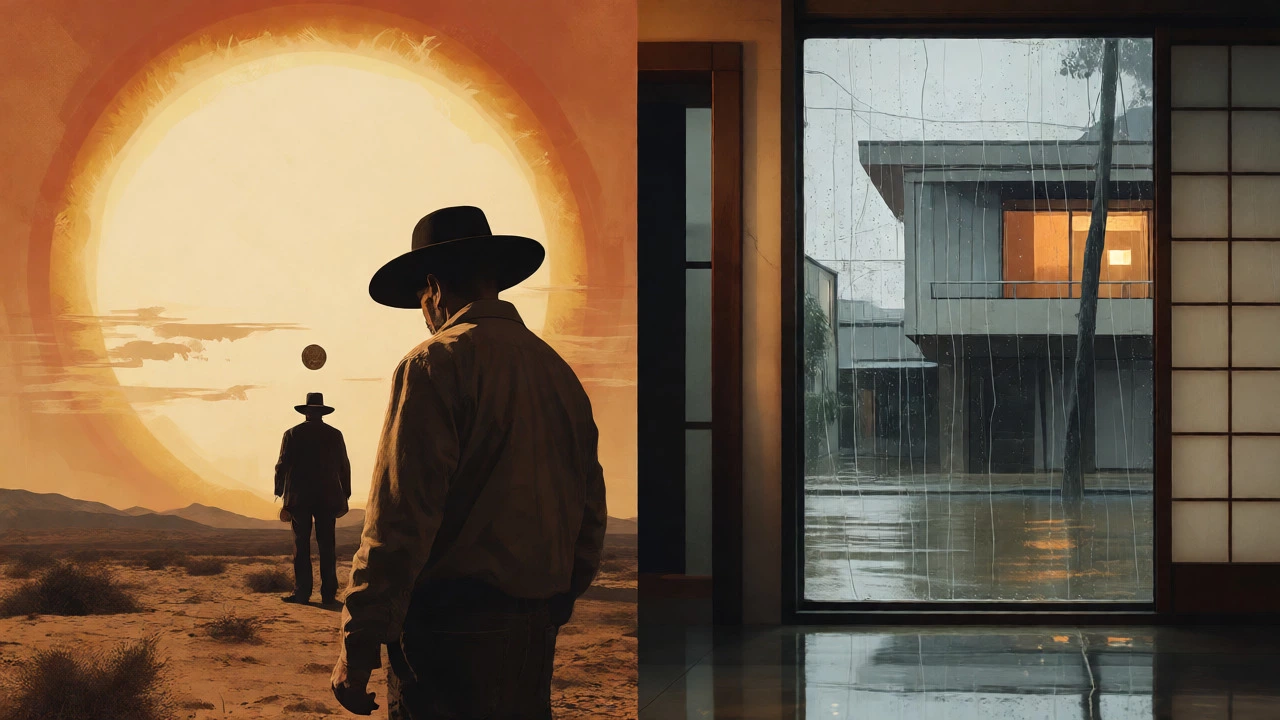
Modern Contenders: Thrillers That Came Close
In recent years, several thrillers have been strong contenders, even if they didn't take the top prize. Understanding why they lost helps predict future winners.
Memento (2001) revolutionized narrative structure with its reverse chronology. While it didn't win Best Picture, it proved that experimental editing could drive emotional engagement. Similarly, Gone Girl (2014) was a massive cultural moment. Despite seven nominations, including Best Director and Best Actress, it lost to Birdman. Critics argued that Gone Girl's cynical tone alienated voters who prefer more hopeful or emotionally resonant endings.
Then there is Killers of the Flower Moon (2023). Martin Scorsese’s epic blends historical drama with a true-crime mystery. It received ten nominations but did not win Best Picture. Its length and slow burn tested some voters' patience, highlighting that while thrillers are accepted, pacing remains a critical factor in voting decisions.
Why Crime Thrillers Dominate the Conversation
When people search for "what thriller movie won an Oscar," they are usually looking for crime thrillers. This sub-genre aligns perfectly with the Academy's love for procedural accuracy and moral ambiguity. Consider Spotlight (2016), which won Best Picture. Is it a thriller? Absolutely. It features investigative journalism, ticking clocks, and institutional cover-ups. It plays like a detective movie, but without guns or car chases.
Similarly, Manchester by the Sea (2017) uses grief as a thriller mechanism, keeping the audience anxious about the protagonist's mental state. The distinction matters because it shows how the Academy rewards tension, regardless of whether it comes from a bomb defusal or a family argument. If you want to watch a thriller that feels like an Oscar winner, look for films that prioritize character psychology over explosive set pieces.
How to Spot the Next Oscar-Winning Thriller
If you are predicting the next big winner, keep an eye on these indicators. The Academy tends to favor thrillers that:
- Feature Underrepresented Voices: Like Parasite, films from international directors or those highlighting marginalized communities often gain momentum.
- Address Current Events: Thrillers dealing with political corruption, climate anxiety, or technological dread tend to resonate with voters who see themselves as cultural commentators.
- Showcase Technical Innovation: Unique camera work or sound design can tip the scales in close races.
Don't underestimate the power of word-of-mouth. Films like Get Out (2018) started as horror-thrillers but gained traction through social media buzz and cultural relevance. Although it didn't win Best Picture, it won Best Original Screenplay, signaling the Academy's appetite for smart, socially conscious suspense.
Common Misconceptions About Oscar Thrillers
Many viewers assume that if a movie is scary, it won't win. This is false. The Shape of Water (2018) won Best Picture despite being a fantasy-romance with monster elements. The key is execution. A thriller fails at the Oscars if it relies solely on jump scares or cheap twists. It succeeds when the suspense serves a deeper thematic purpose.
Another myth is that sequels don't count. The Godfather Part II (1975) is a crime thriller sequel that won Best Picture. It proved that continuing a story can be just as powerful as starting one. So, don't dismiss franchise entries if they offer fresh perspectives on established characters.
Final Thoughts: The Evolution of Suspense
The journey of the thriller at the Academy Awards reflects broader changes in cinema. We moved from dismissing suspense as mere entertainment to recognizing it as a vehicle for serious artistic expression. Whether it is the cold calculation of Anton Chigurh or the desperate survival instincts in Parasite, these films remind us that fear is a universal language.
Next time you watch an Oscar winner, ask yourself: Where is the tension coming from? You might find that your favorite "serious" drama is actually a thriller in disguise. And that is exactly how the genre earned its place at the table.
Which thriller movie won Best Picture recently?
The most recent clear-cut thriller to win Best Picture is Parasite (2020). While Oppenheimer (2024) contains thriller elements, it is primarily classified as a biographical drama. Before Parasite, No Country for Old Men (2008) was the last pure neo-Western thriller to take the top prize.
Did Alfred Hitchcock ever win an Oscar for Best Picture?
No, Alfred Hitchcock never won Best Picture or Best Director during his career. His films, such as Rebecca (which won Best Picture but was produced by Selznick, not directed by him in the eyes of many critics regarding style vs. production), Vertigo, and Psycho, were often snubbed in favor of traditional dramas. He received an honorary award in 1968.
Is Horror considered a thriller for Oscar purposes?
Yes, the lines blur significantly. The Silence of the Lambs is technically a psychological thriller/horror hybrid and won Best Picture. Get Out was marketed as a horror-comedy but competed in general categories. The Academy judges based on merit and impact, not strict genre boxes, so effective horror-thrillers are eligible for all major awards.
Why do thrillers rarely win Best Picture?
Historically, the Academy favored "prestige" dramas with emotional catharsis over the sustained tension of thrillers. Voters often perceive thrillers as less intellectually substantial. However, this trend is shifting as directors blend genre conventions with deep social commentary, making it harder to dismiss thrillers as mere entertainment.
What is the difference between a mystery and a thriller?
A mystery focuses on solving a puzzle (usually "whodunit") after the fact, emphasizing intellect and deduction. A thriller focuses on anticipation and danger, emphasizing emotion and physical stakes. Many Oscar-winning films, like Zodiac or Spotlight, mix both: they involve investigation (mystery) but maintain constant tension and threat (thriller).