Book Finder: Sales vs. Influence
There is no single "#1 Book in the World." It depends entirely on how you measure success. Select a category below to see which book holds the title for that specific metric.
Book Title
Description goes here...
N/A
Note: Sales figures for older books are estimates. Always consider your personal taste over global rankings.
You walk into a bookstore, or scroll through an online retailer, and you see lists everywhere: "Best Sellers," "Top Picks," "Most Read." It makes you wonder-what is actually the #1 book in the world? Is it the one everyone has on their nightstand? The one that changed history? Or just the one with the biggest marketing budget?
Here’s the tricky part: there isn’t one single answer. It depends entirely on how you measure "number one." Are we talking about copies sold over centuries? Current sales velocity? Cultural impact? Or reader ratings? If you’re looking for a simple title to add to your reading list, you might be disappointed. But if you want to understand what truly dominates the global literary landscape, we need to break this down by category.
But wait. Does selling billions of copies make it the "best" book? Not necessarily. It also doesn’t tell you what people are reading *right now*. For that, we have to look at different metrics.
The Best-Selling Fiction of All Time
If you exclude religious texts and children’s literature (which often skew high due to school mandates), the race for the top fiction spot gets interesting. Many people guess Harry Potter or The Lord of the Rings. While those are massive, they don’t hold the all-time record for a single title.
Close behind is A Tale of Two Cities by Charles Dickens. Some sources claim it has sold 200 million copies, though these figures are debated among bibliographers. What’s clear is that classic literature, once embedded in educational curricula, generates steady sales for centuries. You can’t compare a 2024 bestseller to a book that’s had four centuries to accumulate readers.
The Modern Phenomenon: Harry Potter
If we shift our focus to the last few decades, one name dominates the conversation. J.K. Rowling’s series didn’t just sell books; it created a generation of readers.
Is it the #1 book? In terms of modern franchise success, yes. But it’s a series, not a single title. If we count each book separately, Harry Potter and the Philosopher’s Stone sits comfortably in the top tier of all-time sellers, but still trails behind the giants like Don Quixote in cumulative lifetime sales.
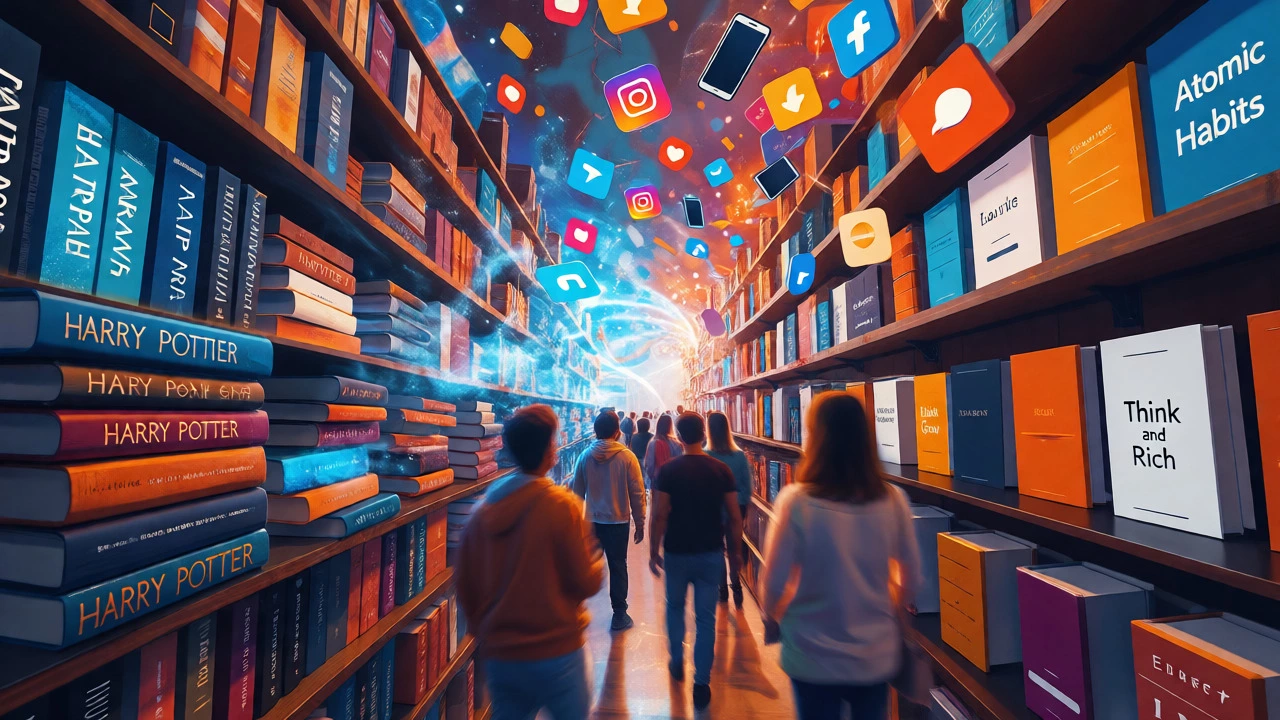
The Self-Help Titan: Think and Grow Rich
Since you’re interested in personal development, let’s talk about the non-fiction heavyweight. If you ask someone in Sydney, London, or New York what book helped them change their life, many will point to Napoleon Hill.
Other contenders in this space include The Alchemist by Paulo Coelho. Published in 1988, it has sold over 150 million copies. It’s less about practical advice and more about philosophical inspiration. People buy it as a gift, read it once, and keep it on the shelf as a reminder. Its simplicity is its strength. But does it rank as the #1 book globally? By sales, it’s up there. By influence? It’s polarizing. Critics call it simplistic; fans call it transformative.
How Do We Measure "Number One"?
This is where things get messy. There is no central database tracking every book sale on Earth. Publishers report estimates. Organizations like Guinness World Records verify some claims, but data from the 19th century is often educated guesses. Here’s how different metrics change the winner:
| Metric | Winner | Why |
|---|---|---|
| All-Time Sales | Bible / Quran | Religious distribution networks ensure constant printing and gifting. |
| Fiction Sales | Don Quixote | Centuries of continuous publication and academic requirement. |
| Modern Franchise | Harry Potter | Unprecedented cross-media synergy and global youth adoption. |
| Current Popularity | Atomic Habits | Consistently tops bestseller lists in 2024-2026 due to social media trends. |
| Critical Acclaim | Ulysses / War and Peace | Often ranked highest by critics and scholars, despite lower sales. |
Notice the pattern? The "#1" book changes based on your criteria. If you value tradition and reach, it’s the Bible. If you value narrative craft and longevity, it’s Don Quixote. If you value current relevance, it’s likely a self-help title like Atomic Habits by James Clear, which has dominated bestseller lists for years running.

The Rise of Digital and Audio
We can’t ignore how technology has shifted the landscape. Ten years ago, buying a paperback was the default. Today, audiobooks and e-books account for a significant chunk of sales. This affects what counts as "read." Someone who listens to Project Hail Mary by Andy Weir hasn’t held a physical book, but they’ve consumed the content.
Platforms like Audible and Spotify have democratized access. A niche book can go viral overnight via TikTok (#BookTok). This creates rapid spikes in sales that weren’t possible before. For example, Colleen Hoover’s It Ends with Us saw massive resurgence years after publication due to social media buzz. Does that make it the #1 book? Only for a moment. These trends highlight how fragmented our reading habits have become. There’s no longer a monoculture where everyone reads the same thing.
Why You Should Care About the "Number One" Myth
Chasing the "best" book is a trap. Reading is subjective. What works for a CEO in Tokyo might bore a student in Toronto. The idea of a single #1 book implies a universal standard of quality that doesn’t exist. Literature serves different purposes: entertainment, education, escape, or instruction.
Instead of asking "What is the #1 book?", ask "What do I need right now?" Need motivation? Pick up Can’t Hurt Me by David Goggins. Want escapism? Dive into The Name of the Wind. Looking for historical perspective? Try Sapiens by Yuval Noah Harari.
The real value lies in finding books that resonate with your current life stage. The Bible offers comfort. Don Quixote offers wit. Harry Potter offers belonging. Atomic Habits offers structure. Each has earned its place in the pantheon of human thought. None is objectively "better" than the others; they just serve different masters.
So, next time someone asks you what the #1 book in the world is, you can give them a nuanced answer. Tell them it’s the Bible for sales, Don Quixote for fiction legacy, and whatever book is currently helping them solve their own problems. That’s the only metric that really matters.
What is the best-selling book of all time?
The Bible is widely considered the best-selling book of all time, with estimated sales between 5 and 7 billion copies. The Quran is another major contender, with hundreds of millions of copies distributed annually, particularly in Muslim-majority countries.
Is Harry Potter the most popular book?
Harry Potter is the best-selling book series of all time, with over 600 million copies sold. However, as a single title, it does not surpass the cumulative sales of classics like Don Quixote or the Bible.
What is the #1 self-help book?
There is no single official ranking, but "Think and Grow Rich" by Napoleon Hill and "The Alchemist" by Paulo Coelho are among the best-selling self-help/personal development books ever, with over 100 million copies sold each. Currently, "Atomic Habits" by James Clear frequently tops bestseller lists.
Why are sales figures for old books inaccurate?
Historical records for books published before the 20th century are often incomplete. Many were printed without formal copyright registration, gifted freely, or pirated. Therefore, numbers for titles like Don Quixote are estimates based on surviving print runs and academic consensus.
Does being a bestseller mean a book is good?
Not necessarily. Bestseller status reflects popularity, marketing effectiveness, and cultural timing. Literary merit is subjective. Some critically acclaimed books sell poorly, while some commercially successful books receive mixed reviews.