Epic of Gilgamesh: Timeline & Evolution Explorer
Drag the slider to travel through 5,000 years of history, from the legendary King of Uruk to the discovery of the tablets in the British Museum.
The Historical King
...
Timeline Overview
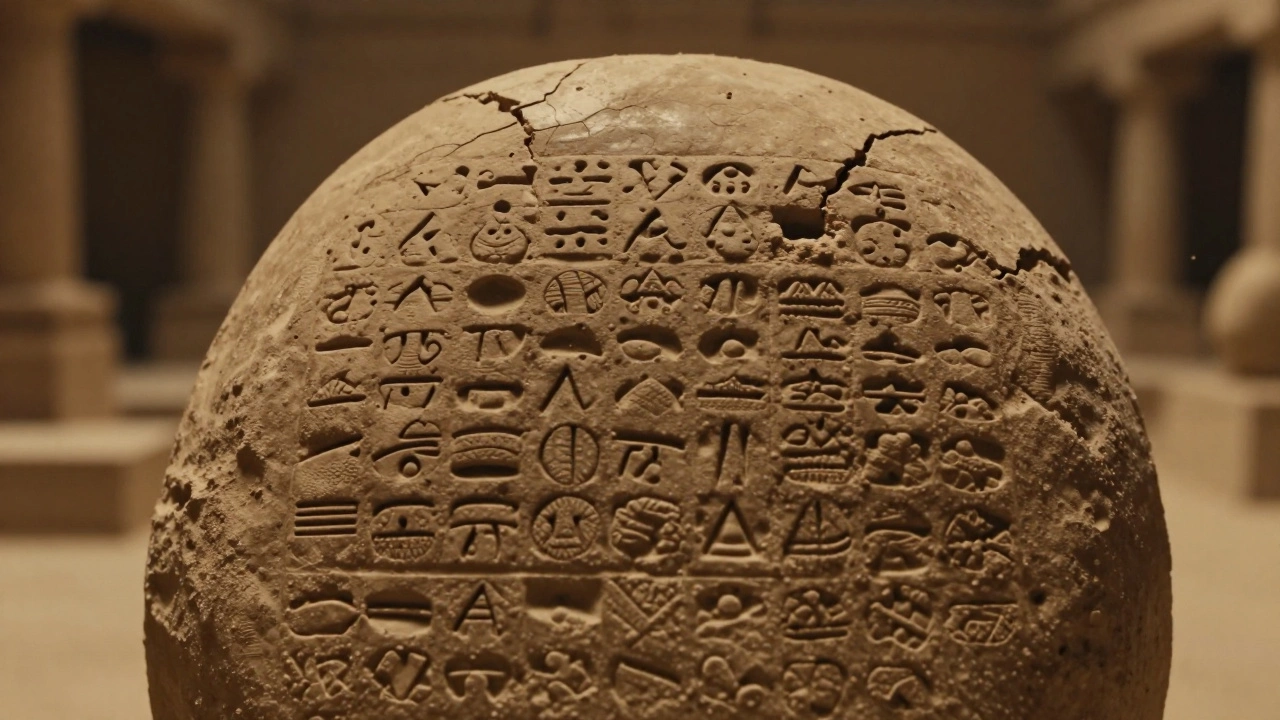
Imagine holding a tablet made of baked clay. It is cracked, covered in wedge-shaped marks, and smells faintly of dust from five thousand years ago. You are looking at the Epic of Gilgamesh, widely considered the oldest surviving great work of literature. This isn't just a historical curiosity; it is the foundation of storytelling as we know it. Before Shakespeare, before Homer, and long before the printing press, there was Gilgamesh. But what exactly is this story, and why does it still matter to us today?
The search for the "oldest story" often leads people down rabbit holes of oral tradition or cave paintings. However, when we talk about *written* stories, we are talking about texts that have survived the test of time in physical form. The answer points directly to ancient Mesopotamia, specifically to the city of Uruk, in modern-day Iraq. Here, around 2100 BCE (though based on older oral traditions dating back to 2700 BCE), scribes recorded the adventures of a king who sought immortality.
The Origins: From King to Myth
To understand the Epic of Gilgamesh is an ancient Mesopotamian poem about the friendship between King Gilgamesh and Enkidu, and their quest for eternal life., you first need to separate the man from the myth. Gilgamesh was likely a real person. He was the fifth king of Uruk, a powerful city-state in Sumer. Historical records suggest he ruled during the Early Dynastic period, roughly between 2800 and 2500 BCE. He built walls, temples, and canals. He was a leader.
But over centuries, his legend grew. In the earliest Sumerian poems, Gilgamesh is depicted as a flawed ruler-arrogant, oppressive, and physically exhausting to his subjects. The people of Uruk prayed to the gods for relief. The gods responded by creating Enkidu, a wild man raised by animals in the wilderness. This setup introduces the core conflict of the epic: civilization versus nature, order versus chaos.
| Attribute | Gilgamesh | Enkidu |
|---|---|---|
| Origin | Born in Uruk (City) | Created by Aruru (Wilderness) |
| Nature | Civilized, arrogant, political | Wild, innocent, natural |
| Role | King, two-thirds god | Equal companion, one-third god |
| Fate | Survives, gains wisdom | Dies, returns to dust |
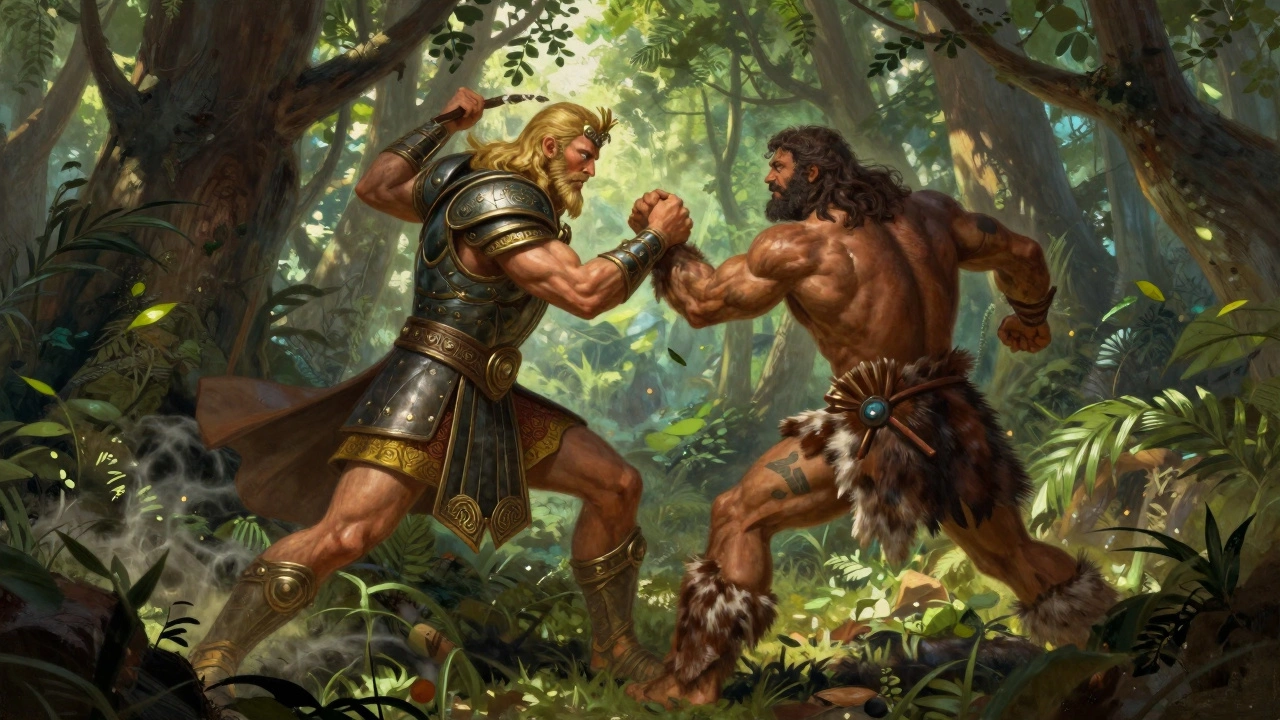
This duality is crucial. Gilgamesh represents the human drive for power and legacy. Enkidu represents our connection to the earth and our mortality. Their meeting is violent-they wrestle until the gods intervene-but it quickly turns into a deep, brotherly bond. This relationship is the emotional heart of the epic. Without Enkidu, Gilgamesh remains a tyrant. With him, Gilgamesh becomes a hero.
The Quest: Monsters, Floods, and Immortality
The plot of the The Epic of Gilgamesh moves through several key episodes. First, the pair travels to the Cedar Forest to defeat Humbaba, a monstrous guardian sent by the god Enlil. They succeed, but the gods are angry. As punishment, they send the Bull of Heaven to destroy Uruk. Gilgamesh and Enkidu kill the bull too. The arrogance continues.
Then comes the turning point. Enkidu falls ill and dies. For the first time, Gilgamesh faces the reality of death. He rolls in Enkidu's corpse like a mourning woman. He screams, "Shall I too die like Enkidu?" This grief triggers his central quest: if he cannot stay alive forever, he wants to know how to cheat death. He abandons his kingdom and wanders the desert, seeking Utnapishtim, the only human granted immortality by the gods after the Great Flood.
This flood narrative is fascinating for historians. The story of Utnapishtim bears striking similarities to the biblical story of Noah. Both involve a divine warning, the building of a massive boat, saving family and animals, releasing birds to find land, and a covenant afterward. Scholars believe these stories share a common cultural root in Mesopotamia, highlighting how ancient myths traveled and evolved across regions.
The Tablet Fragments: How We Know Today
You might wonder how we have this story at all. The original tablets were not preserved in a library like Alexandria. Instead, they were found buried in the ruins of libraries in Assyria, most notably the Library of Ashurbanipal in Nineveh. These clay tablets were baked in fires that destroyed the palaces, inadvertently preserving the text for millennia.
The standard version of the epic consists of twelve tablets. However, the discovery process was fragmented. In the mid-19th century, British archaeologist Austen Henry Layard unearthed thousands of fragments in Iraq. It took decades for scholars to piece them together. George Smith, a curator at the British Museum, famously identified the flood tablet in 1872. His excitement was so great that he reportedly stripped off his clothes and ran around the museum shouting, "I have discovered my bones!" referring to the confirmation of biblical events in ancient non-biblical texts.
The language used is Akkadian, specifically the Babylonian dialect. It is written in cuneiform, a script developed by the Sumerians. Reading these tablets requires expertise in linguistics, archaeology, and comparative mythology. The translation has evolved over time. Early translations were literal and clunky. Modern versions aim to capture the poetic rhythm and emotional depth of the original, making it accessible to contemporary readers.
Themes That Still Resonate
Why do we still read the Epic of Gilgamesh explores themes of friendship, mortality, the limits of human power, and the acceptance of death.? Because it asks the same questions we ask today. What is the meaning of life? How do we deal with loss? Can we leave a legacy that outlasts us?
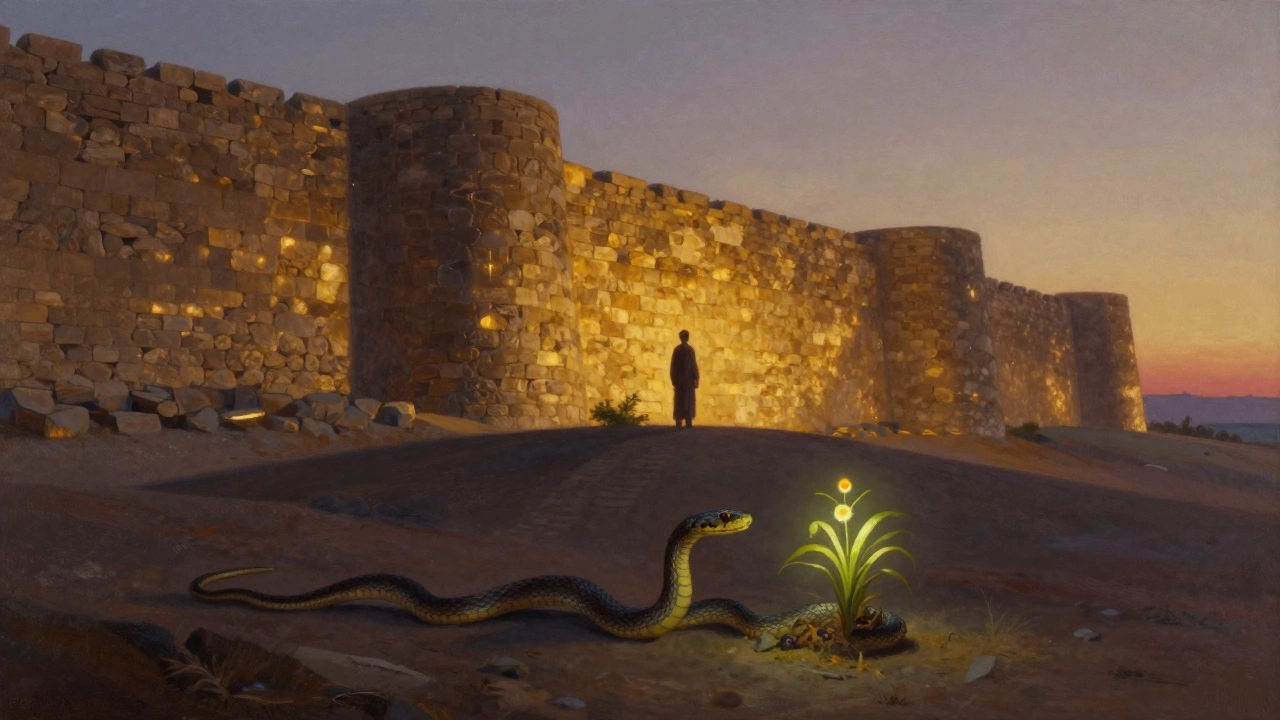
Gilgamesh fails in his quest for physical immortality. Utnapishtim tells him that death is inevitable for humans. But he offers a test: stay awake for six days and nights. If you succeed, you will live forever. Gilgamesh sleeps instantly. He is human. He cannot overcome his own biology. Disappointed, he returns to Uruk empty-handed, except for a plant of rejuvenation which a snake steals. Even then, he loses.
Yet, the ending is not entirely tragic. Gilgamesh returns to his city and looks at its walls. He realizes that while he will die, his works-the walls, the city, the story itself-will endure. This is the concept of symbolic immortality. We live on through our creations, our children, and our stories. This message is profoundly humanistic. It suggests that accepting mortality is the key to living a meaningful life.
Comparing Ancient Epics
While the Epic of Gilgamesh is the oldest *surviving* written epic, it is not the only ancient narrative. Other cultures produced similar works shortly after or in parallel. Understanding these helps place Gilgamesh in context.
- The Epic of Enuma Elish: A Babylonian creation myth that explains how Marduk became the chief god. It is slightly younger than Gilgamesh but shares the same cultural milieu.
- The Iliad and The Odyssey: Attributed to Homer, these Greek epics date to around 800 BCE. They are much later than Gilgamesh but show clear influences in structure and theme, such as the journey motif and the role of gods in human affairs.
- The Mahabharata: An Indian epic composed between 400 BCE and 400 CE. It is far longer than Gilgamesh and covers complex philosophical debates, but it emerged from a different literary tradition.
The uniqueness of Gilgamesh lies in its psychological depth. Earlier Sumerian poems focus on action and divine intervention. Gilgamesh focuses on internal struggle. The protagonist changes. He learns. This character arc is a hallmark of modern fiction, yet it appears here in the third millennium BCE.
Modern Adaptations and Influence
The influence of the Epic of Gilgamesh extends far beyond academia. It has inspired novels, films, video games, and even scientific discussions. In J.R.R. Tolkien's The Lord of the Rings, the character of Aragorn echoes Gilgamesh's journey of reclaiming a throne and facing mortality. The flood narrative influenced religious texts worldwide. The theme of the futile quest for immortality appears in Mary Shelley's Frankenstein and countless sci-fi stories.
In popular culture, references are frequent. The band Metallica named an album Ride the Lightning partly due to interest in ancient myths, though more directly, many fantasy games use Gilgamesh as a boss character or lore reference. The story provides a template for the "hero's journey" that Joseph Campbell later codified. It shows that the basic structure of storytelling-departure, initiation, return-is universal and timeless.
Where to Find the Text
If you want to read the Epic of Gilgamesh yourself, you have options. There are no single "original" manuscripts available to the public, but many translations exist. Look for versions by scholars like Andrew George, who provided a comprehensive edition in 2003, or older, more poetic versions by N.K. Sandars. Public domain translations are also available online through projects like Project Gutenberg, though their quality varies. Reading the original cuneiform is not possible for most, but digital archives allow you to view scans of the actual tablets, seeing the cracks and wedges that held this story for five millennia.
The Epic of Gilgamesh reminds us that despite our technology and progress, our fundamental fears and desires remain unchanged. We still fear death. We still seek connection. We still build things to prove we were here. That is why this old clay tablet speaks louder than many modern bestsellers.
Is the Epic of Gilgamesh the absolute oldest story ever told?
It is the oldest surviving *written* epic poem. Oral traditions certainly existed long before writing, but those stories were not recorded. The Epic of Gilgamesh dates to around 2100 BCE in its standard written form, though it draws on older Sumerian poems from 2700 BCE.
Who wrote the Epic of Gilgamesh?
There is no single author. It evolved over centuries through oral tradition before being compiled by various scribes. The final standard version is attributed to a Babylonian priest-scribe named Sin-liqe-unninni, who lived around 1300-1000 BCE.
What language is the Epic of Gilgamesh written in?
The standard version is written in Akkadian, using the cuneiform script. Earlier fragments exist in Sumerian. Akkadian was the lingua franca of the ancient Near East for centuries.
How does the flood story in Gilgamesh compare to Noah's Ark?
They share many details: a divine warning, a large boat, saving animals, and a post-flood covenant. Most scholars believe both stories stem from a common Mesopotamian source, suggesting the biblical account may have been influenced by earlier regional myths.
Can I read the Epic of Gilgamesh online for free?
Yes, several public domain translations are available on sites like Project Gutenberg or the Internet Archive. However, for a more accurate and readable experience, consider purchasing a modern scholarly translation.