Author Sales Comparison Calculator
Select Authors to Compare
Check the authors you want to include in your comparison based on 2026 data.
Comparison Results
Select authors and click Generate to see results.
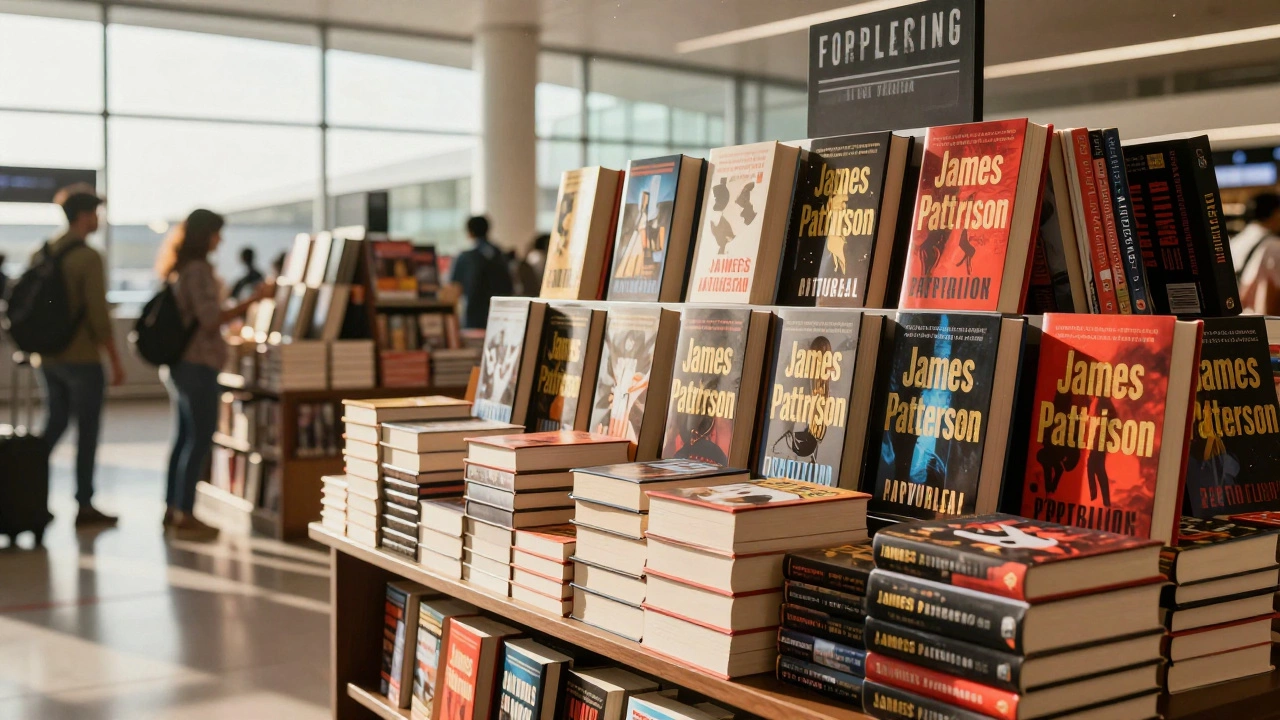
Walk into any airport bookstore or scroll through your favorite reading app, and you will see familiar names dominating the shelves. But if you want to know who actually holds the crown for the most books sold by a person currently walking the earth, the answer isn't always the one you expect. It’s not just about writing good stories; it’s about volume, longevity, and a business model that turns novels into global commodities.
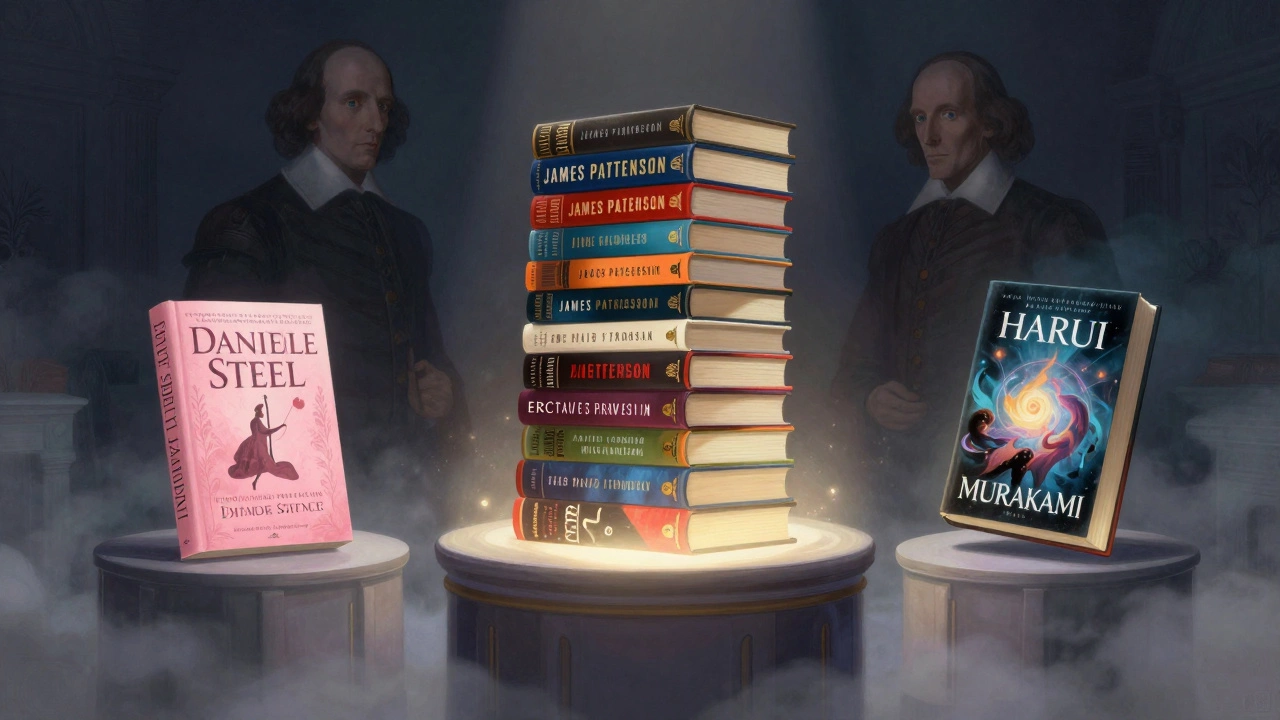
As of mid-2026, the title of the best-selling living author belongs to James Patterson, an American writer whose output is so massive it defies traditional metrics of literary production. While historical giants like William Shakespeare or Agatha Christie have higher lifetime totals, they are no longer with us. Among those still alive, Patterson has surpassed the 400 million mark in estimated book sales. That number isn’t a guess; it’s based on decades of consistent bestseller status across multiple genres, from crime thrillers to young adult series.
The James Patterson Phenomenon: Volume Over Velocity
To understand why James Patterson sits at the top, you have to look past the idea of a solitary writer typing away in a study. Patterson operates more like a media empire. He didn’t just write books; he industrialized them. Starting in the 1970s with his first novel, *Along Came a Spider*, Patterson built a brand synonymous with fast-paced, accessible thriller fiction.
His secret weapon is collaboration. For years, Patterson has worked with co-writers to produce up to two new titles every year. Some critics argue this dilutes the artistic value, but from a commercial standpoint, it ensures a constant stream of content for readers. If you buy a Alex Cross novel today, you’re getting a product refined by a team, but carrying the weight of Patterson’s name. This strategy allows him to dominate multiple categories simultaneously. He writes standalone mysteries, long-running series, middle-grade adventures, and even non-fiction. The result is a bibliography so vast that it would take an average reader over 30 years to finish everything he has published.
Patterson’s approach changed the publishing industry. Before him, authors might release one book a year. Now, many follow his lead, understanding that frequency drives visibility. His ability to maintain relevance across four decades is rare. Most authors peak early and fade, but Patterson’s sales have remained robust, fueled by movie adaptations and a keen understanding of what mass-market readers want: clear plots, quick twists, and satisfying endings.
The Challengers: Who Comes Close?
While Patterson leads in pure volume, other living authors command massive audiences in different ways. The competition isn’t just about total numbers; it’s about genre dominance and cultural impact.
| Author | Primary Genre | Estimated Total Sales | Key Series/Work |
|---|---|---|---|
| James Patterson | Thriller/Crime | 400+ million | Alex Cross, Women’s Murder Club |
| Danielle Steel | Romance/Drama | 800+ million (lifetime) | Various standalone romances |
| Haruki Murakami | Literary Fiction/Magical Realism | 50+ million | 1Q84, Kafka on the Shore |
| Stephen King | Horror/Thriller | 350+ million (lifetime) | It, The Shining, Carrie |
| J.K. Rowling | Fantasy/YA | 600+ million (Harry Potter) | Harry Potter series |
Danielle Steel is often cited alongside Patterson, and for good reason. Her career spans nearly five decades, and she has published over 200 novels. However, there is a nuance here. Many of Steel’s sales figures include older works that continue to sell steadily, whereas Patterson’s recent output drives his current growth. Steel’s audience is loyal, primarily female, and drawn to emotional dramas. She doesn’t chase trends; she provides comfort reading. Her total lifetime sales rival Patterson’s, but because her pace has slowed slightly compared to his relentless churn, Patterson edges ahead in terms of active market dominance and recent accumulation.
Then there is J.K. Rowling. It’s impossible to ignore the Harry Potter phenomenon. With over 600 million copies sold, the series is one of the best-selling book franchises in history. But Rowling is primarily known for that single series. Patterson has dozens of successful series and hundreds of standalones. When we talk about "author" as a continuous creative force rather than a franchise creator, Patterson’s breadth gives him the edge. Rowling’s influence is immense, but her catalog is narrower.
The Literary Giant: Haruki Murakami
If Patterson represents commercial volume, Haruki Murakami represents global literary prestige. You won’t find Murakami selling 10 million copies in a month, but his steady, worldwide appeal is undeniable. Translated into over 50 languages, Murakami’s books like *1Q84* and *Kafka on the Shore* have found readers in Tokyo, New York, and Berlin alike.
Murakami’s success proves that you don’t need to write 20 books a year to be influential. His work blends surrealism with everyday life, creating a unique voice that resonates across cultures. While his total sales are lower than Patterson’s-likely under 50 million globally-he commands a level of critical acclaim and cultural cachet that Patterson rarely achieves. In the world of "best-selling," Murakami shows that quality can sustain a career just as effectively as quantity, albeit at a slower financial scale.

Why Tracking These Numbers Is Tricky
You might wonder why we use estimates. The truth is, no central authority tracks global book sales in real-time. Publishers report data differently. China, for example, has a massive reading population, but its domestic sales data is often opaque to Western trackers. E-books further complicate things. A digital download might cost $9.99, but the royalty structure differs wildly between Amazon, Kobo, and local platforms.
Additionally, "sales" can mean different things. Does a library checkout count? Usually not. Does a free Kindle promotion count? No. We are looking at paid retail units. Even then, bundles matter. Patterson often sells box sets. One purchase equals three books. Do you count that as one sale or three? Most analysts count physical units, which favors authors who package their work in multi-book deals.
This lack of transparency means lists change. An author who goes viral on social media, like Colleen Hoover in the late 2020s, can surge up the rankings quickly. Hoover’s backlist saw millions of copies sold due to TikTok trends. While she hasn’t surpassed Patterson’s lifetime total yet, her trajectory suggests that modern marketing can accelerate sales in ways previous generations couldn’t imagine.
The Shift: From Print to Digital Dominance
The definition of a "best-selling author" is evolving. In the past, success meant seeing your book on a physical shelf. Today, algorithms drive discovery. Authors who adapt to digital-first strategies often outperform traditionalists. Patterson embraced e-books early, offering titles at low price points to capture market share. This strategy helped him maintain his lead even as print sales declined globally.
However, the rise of self-publishing has democratized success. Authors like Andy Weir (*The Martian*) started online before hitting traditional bestseller lists. While Weir hasn’t reached Patterson’s volumes, his path shows that the gatekeepers are weakening. The next best-selling living author might not come from a big publishing house at all. They could emerge from a web serial platform, building an audience directly without intermediaries.
This shift also affects longevity. Older authors like Stephen King remain relevant because they adapted. King continues to publish new horror novels and maintains a strong online presence. His lifetime sales are staggering, but his annual output has decreased. Patterson, by contrast, stays in the news cycle constantly, ensuring his name remains top-of-mind for casual readers.
What Makes an Author "Best-Selling" Today?
It’s no longer enough to write a good story. To reach the pinnacle of sales, an author needs:
- Brand Recognition: Your name must sell the book before anyone reads the blurb. Patterson’s name is a guarantee of a certain type of experience.
- Series Potential: Standalone books are hard to sustain. Readers invest in characters over time. Series create recurring revenue streams.
- Cross-Media Appeal: Movies, TV shows, and audiobooks extend a book’s life. Patterson’s adaptations keep his stories visible to non-readers.
- Consistency: Regular releases keep you in the algorithm. Algorithms favor fresh content. If you disappear for three years, you lose momentum.
These factors explain why Patterson leads. He checks every box. He is a brand, he writes endless series, his stories are adapted frequently, and he publishes relentlessly. Other authors may excel in one area-like Rowling’s cross-media empire-but few match Patterson’s holistic commercial machine.
The Future of the Top Spot
Will Patterson keep the crown forever? Probably not. As he ages, his output may slow. New voices are rising. Colleen Hoover has already demonstrated how social media can catapult an author to unprecedented heights. Younger readers are discovering romance and fantasy through digital communities, bypassing traditional reviews.
We are also seeing a fragmentation of audiences. Niche genres are thriving. A sci-fi author might sell fewer total copies than Patterson but earn more per book and enjoy a more dedicated fanbase. The concept of "best-selling" might become less relevant as markets specialize. Instead of one king, we may have many queens ruling specific domains.
Yet, for now, the metric remains clear. If you measure by sheer volume of books sold to paying customers, James Patterson stands alone among the living. His career is a testament to the power of consistency, adaptation, and understanding the reader’s desire for entertainment above all else.
Is James Patterson really the best-selling living author?
Yes, based on available data as of 2026, James Patterson is widely recognized as the best-selling living author with over 400 million copies sold. His high-volume output and consistent bestseller status across multiple genres contribute to this lead.
Who is the best-selling author of all time, dead or alive?
William Shakespeare is generally considered the best-selling author of all time, with an estimated 5 billion copies of his works sold. Agatha Christie is second, with around 2 billion copies sold. Both are deceased, which is why Patterson leads the "living" category.
Does J.K. Rowling sell more books than James Patterson?
In terms of total franchise sales, Harry Potter has sold over 600 million copies, surpassing Patterson’s individual book sales. However, Patterson has a much broader catalog with hundreds of titles across various series, making his overall authorial output and consistent annual sales higher in terms of variety and ongoing market presence.
How does James Patterson write so many books?
Patterson uses a collaborative model. He outlines the plot and key scenes, then works with co-writers to draft the manuscript. He edits and polishes the final product. This assembly-line approach allows him to publish multiple books per year while maintaining his brand standards.
Are Danielle Steel's sales higher than James Patterson's?
Danielle Steel’s lifetime sales are comparable, often cited at over 800 million. However, many of these sales are from older backlist titles. Patterson’s recent sales velocity and active market dominance often place him ahead in contemporary discussions of "current" best-selling power, though Steel remains a titan of romance literature.